Multifamily Investment Forum Highlights Sector’s Challenges Nationally
Developers and investors at the Commercial Observer event gave a blunt assessment of tough times for the apartment market
By Larry Getlen March 2, 2026 11:48 am
reprints
During a panel on investor sentiment toward multifamily housing in 2026, David Kramer, president of owner and developer Hudson Companies, gave the assemblage at Commercial Observer’s Multifamily Investment Forum an unexpected, if somewhat dark, mid-morning laugh.
“I don’t think I’ve been on such a grim panel,” Kramer said. “Usually it’s like infomercials.”
Kramer, speaking at the Feb. 26 event that took place within Convene’s space at 360 Madison Avenue, was referring to subjects ranging from the uphill battle to raise rents nationwide, to persistently high interest rates, to various public policy blockades, to the creation of affordable housing.
These were just some of the topics on the minds of executives throughout the multifamily investment community as they came together to share tales of victories and struggles in the face of financial and governmental uncertainties.
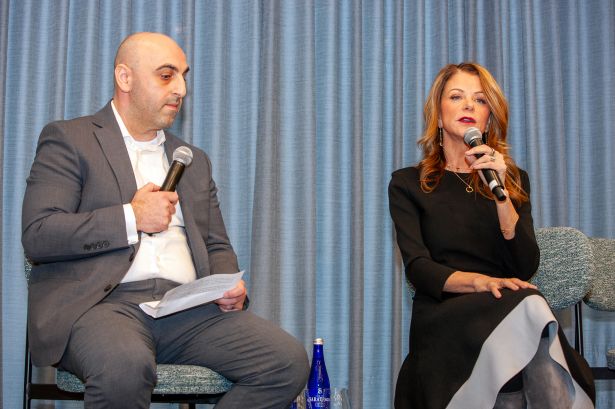
The morning began with a keynote interview with MaryAnne Gilmartin, founder and CEO at owner and developer MAG Partners, conducted by Zurab Moshashvili, a partner at accounting firm Anchin. The conversation kicked off on a sunnier note from a landlord perspective.
Gilmartin noted that New York City rental apartments currently have a 1.4 percent vacancy rate, the lowest in 50 years, which shows that demand couldn’t be stronger. But, despite the obvious need, the obstacles to creating more housing supply are just as resilient.
“We are facing really anemic public policy, and challenges around getting buildings on the drawing board because of the tax program,” said Gilmartin. “In that space, the challenges are many. We are going to have a difficult time building scale.”
Along with many speakers at the event, Gilmartin was talking about the 485x tax incentive program — which provides tax incentives for the development of multiple dwelling projects, but requires wages of at least $40 per hour for projects 100 units or larger — as being ineffective for the needs of developers in fulfilling the city’s goal of building 500,000 new housing units.
“The 485x program is existential to what we are doing. Without that program, there is not going to be any rental housing,” said Gilmartin, who noted that building permits in New York City have declined by 71 percent since 485x became law. “Yet that program will not bring a lot of housing. You can’t regulate your way to abundance.”
Gilmartin noted that the cost increase for labor is marginal when building between 99 and 149 units, but anything larger than 149 units — which then requires even higher wages — leads to cost increases of around 20 percent that don’t produce an equal benefit in efficiency.
Gilmartin also discussed how she had developed reliable capital partners in the Middle East, but noted that those investors “tend to really focus on headlines,” which provided an extra challenge in today’s headline-rich political and economic environment. This has led her to abandon that initiative and focus on domestic capital instead, because “it’s just too hard for faraway capital to keep up with us,” Gilmartin said.
The day’s first panel focused on investor sentiment. It featured Hudson Companies’ Kramer along with Yisroel Berg, chief investment officer for multifamily for HGI; Matt Ferrari, founder and managing partner at PXV Multifamily; Wes LaBar, executive managing director and head of acquisitions for TruAmerica Multifamily; Michael Trachtenberg, president of Safehold; and moderator Andrew Dansker, CEO of Dansker Capital Group.
Ferrari noted that multifamily owners nationwide have been dealing with both stagnant rents and declining amounts of new lease transactions.
“New leases continue to go down, so your renewals are really holding your top line flat or slightly down,” said Ferrari, who also noted that an inability to underwrite future growth has led sellers to hold instead of transacting.
“Sellers don’t want to transact because most have more time to wait, and that’s why the transaction market is well below the long-term average,” said Ferrari.
Toward the panel’s end, though, LaBar dropped a much-needed touch of good news.
“I’m extremely optimistic in the Class A and B space,” said LaBar. “We haven’t been as active in the Class C space the last three or four years, but we bought a 6,000-unit portfolio in San Diego in 2021, and it’s been some of the highest rent growth in our entire portfolio over the last three years, and that’s all Class C. So we’re extremely bullish.”
Next was a panel on tackling workforce and affordable housing shortages. Moderated by Grace Powers, partner at DL Partners, the panel featured Margaret Anadu, senior partner at the Vistria Group; Will Blodgett, founder and CEO of Tredway; Matan Kurman, head of investments at S3 Capital; and Page Travelstead, head of impact investing and strategy and the community lending and investment team at Wells Fargo.
Anadu noted the depth of the difficulty in creating affordable and workforce housing in New York by way of the sheer number of challenges across the landscape.
“If we talk about a list of challenges for delivering attainable housing in New York City, it’s everything,” said Anadu. “It’s the number of people who want to live here, the lack of available sites, the construction costs, the labor costs, the zoning challenges, the bureaucracy. It’s every part of that. It’s always important to acknowledge that we start from a 7 million-unit shortage across the U.S., but 2 million of those we need in New York City.”
Matthew Baron, president and founder of Baron Property Group, noted on the next panel that while “the capital markets are broken,” there is tremendous opportunity in the market.
He reinforced this by relating how his company bought two large construction projects across the street from each other in Miami. One was purchased in 2022, before rates began to rise, and the other was acquired last year for $17 million less.
He then explained the reasons for this seeming incongruity.
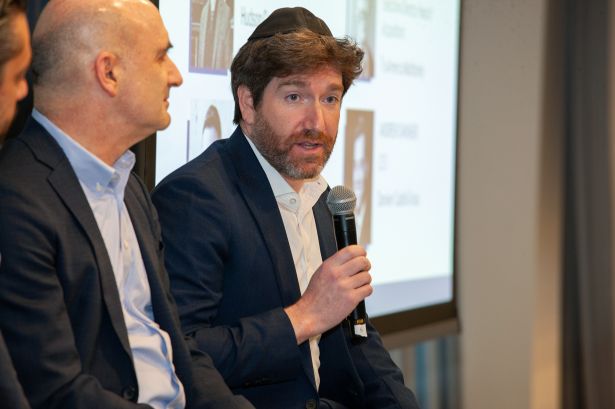
“Material prices are not lower, they’re higher, and labor costs are higher,” said Baron. “The reason is, subcontractor margins came crashing down, because a lot of those guys are busy with stuff financed in 2021, `22, and `23, and it takes three years to build these buildings. So they’re all still working, but they look at their pipeline 18 months out and it’s crickets — it’s very, very low. So from our perspective, we think there’s a tremendous opportunity.”
Others on that panel included Helen Hwang, senior executive managing director at Meridian Investment Sales; Pascual Korchmar, managing director at private equity firm GAIA Real Estate; Brandon Kearse, president, chief investment officer and managing partner at developer and owner Jonathan Rose Companies; and moderator Lawrence Movtady, founding principal at developer and investment firm Movcap.
The final panel, focusing on distressed and opportunistic strategies, featured Jon Colatrella, executive director for MEP and forensic engineering for architecture firm HLZAE; Mark Lecocq, managing director at Cypress Equity Investments; Teodora Zobel, CIO for Midwood Investment and Development; and moderator Merrie S. Frankel, president and founder of Minerva Realty Consultants.
Toward the end of the panel, Zobel gave a summary that left the event not far off in mood from the one established by Kramer early on.
“We’ve been pretty consistent over the last few years in focusing on areas that are high income,” said Zobel. “Unfortunately, we believe that with AI and all these different innovations, they will continue the trend where more wealth accumulates at the very top. We think areas like New York, L.A., and Miami will continue to boom, and there will be a lot of pain in the middle market. Luxuries and the low end will be OK, and anything in the middle will continue to get hurt.”
Larry Getlen can be reached at lgetlen@commercialobserver.com.