Why International Footprints Don’t Sell NYC Investment Properties
It’s particularly true for development sites
By Robert Knakal February 13, 2026 11:10 am
reprints![Spanish-language social distancing safety sticker on a concrete footpath stating 'Espere aquí' [Wait here]](https://commercialobserver.com/wp-content/uploads/sites/3/2026/02/footprints-RF-GettyImages-1291244648-WEB.jpg?quality=80&w=763&h=489&crop=1)
In commercial real estate investment sales brokerage, scale is often marketed as strength. The largest global brokerage firms routinely point to their offices in London, Tokyo, Paris, Hong Kong and dozens of other cities as a supposed competitive advantage. When pitching a New York City assignment, they frequently tell owners some variation of, “We will distribute your property to our colleagues around the world, and they will bring foreign capital to the table.”
It sounds powerful. It sounds expansive. It sounds global.
But, in practice, it is largely fiction.
I think I am uniquely positioned to expose this myth. Over a 42-year career exclusively focused on selling properties in New York City, I have experienced the brokerage industry from both sides of the spectrum: as an entrepreneur building a local specialist firm, and as a senior broker inside the world’s largest global platforms.
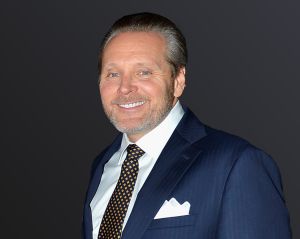
During 14 years at three of the world’s largest brokerage firms — CBRE, Cushman & Wakefield and JLL — I brokered the sale of 538 properties (in total, I have brokered the sale of 2,391 properties, generally considered the highest total for any individual broker in the United States).
And I know all too well how these global firms operate as I served as the chairman of investment sales at both C&W and JLL in New York, so I know exactly how the sausage is made.
Not one of those 538 properties was sold to a buyer introduced by a colleague from one of those global offices. Not one.
Even more striking: Across those 538 transactions, there were 9,146 offers submitted by potential buyers. Zero — not a single one — came from a broker in a foreign office within those firms.
Zero out of 9,146.
That statistic alone dismantles the talking point.
If global distribution through internal networks were truly a meaningful competitive advantage, it would show up in the data. Over 14 years, on hundreds of transactions and thousands of offers, there would be evidence. There is none.
None of this suggests that foreign capital is absent from New York City real estate. Quite the opposite.
During the 26 years and 46 days that I co-owned and ran Massey Knakal Realty Services — a firm that operated exclusively within New York City — the company sold properties to investors from 62 different countries.
Yet, Massey Knakal had no offices abroad and not even around the U.S. outside of New York City. The reason is simple: Foreign investors who buy in New York City do not rely on brokerage colleagues in Paris or Tokyo to find deals. They almost always have local representation. They have a New York-based attorney, a New York-based accountant, and either a local operating partner or a dedicated acquisitions team on the ground.
Even sovereign wealth funds and large overseas institutions typically work through established New York intermediaries or partner with experienced local operators. The decision-making, underwriting, zoning analysis, entitlement strategy and execution all happen locally. New York City is one of the most complex real estate markets in the world. Local knowledge is not optional. It is essential.
When it comes to development sites in particular, the local nature of the market becomes even more pronounced.
Foreign developers are rarely direct buyers of development land in New York City. While foreign capital may participate as equity behind the scenes, the acquisition and execution are almost always led by experienced local developers who understand zoning nuances, construction costs, union dynamics, political considerations and capital markets conditions specific to New York.
Buying a development site is not simply a capital allocation decision. It is an operational commitment. There are extremely few examples of foreign developers directly purchasing development land in New York City.
One notable case was 421 Kent Avenue in Brooklyn, where the Chinese government was the purchaser. In that transaction, I exclusively represented the seller while I was at Massey Knakal. The foreign buyer was not brought to the deal by a massive global brokerage platform with hundreds of international offices. The buyer was represented by a one-man broker based in Flushing, Queens — who also operated as a travel agent and notary public.
That anecdote perfectly captures the fallacy.
If global offices truly created a pipeline of foreign buyers for New York City development sites, that transaction would have flowed through one of the world’s largest brokerage networks. It did not.
Another example is the 2025 sale of the Spitzer site on Fifth Avenue and 62nd Street, perhaps the best development site on the planet. The brokers pitched their “international network” as a selling point. I told the seller that was BS. The buyer was Miki Naftali, a local developer I have sold five development sites to. If the best development site on the planet can’t attract a foreign buyer, what development site can?
Large firms often emphasize “global distribution.” But investment sales brokerage is not about blasting information across continents. It is about targeted outreach to qualified, active buyers.
Serious foreign investors in New York are already in the market. They are already known. They already have local representation. They are not waiting in a satellite office in Europe for a colleague to forward them a flyer on a property in New York City.
The buyers who transact consistently in New York are deeply embedded in the local ecosystem. They know who the credible listing brokers are. And in the development site sector, they know that expertise is hyper-local.
My colleagues at BKREA and I are known to virtually every active development buyer and land investor in New York City. That reputation was not built through international office distribution. It was built through four decades of specialization, thousands of transactions, and unmatched data on the local market.
The true competitive advantage in New York City investment sales, then, is not global footprint. It is: local specialization; exclusive seller representation; deep market intelligence; credibility with active buyers; and a proven ability to create competitive bidding environments
A brokerage firm can have offices in 100 countries. But if none of those offices produce a single buyer or even a single offer across 9,146 attempts, the global platform is not an advantage — it is a marketing narrative.
New York City real estate is local. Development is local. Execution is local. And relationships are local.
The numbers speak for themselves.
Zero out of 9,146.
Robert Knakal is founder, chairman and CEO of BK Real Estate Advisors.