As Trump Wades Into Single-Family Rentals, the Market for Them Fragments
Build-to-rent is growing in popularity among developers and investors — and so is build-to-sell, where builders hand off homes to the Blackstones of the world
By Brian Pascus January 8, 2026 4:19 pm
reprints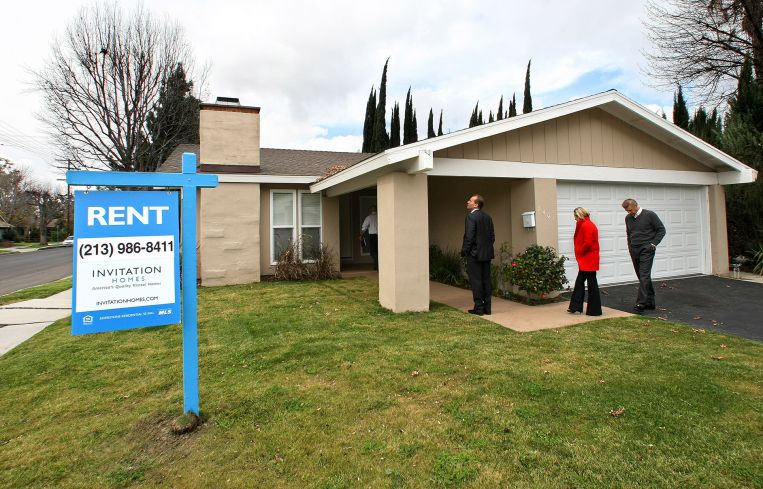
Even Donald Trump is getting personally involved.
At a time when America faces a housing crisis — Zillow estimated the nation’s housing shortage hit an all-time high of 4.7 million units in July 2025 — the president of the United States has decided to castigate the state of America’s single-family housing market.
On Jan. 7, just hours before this article went to press, President Trump announced on Truth Social that he would call on Congress to pass a law banning “large institutional investors from buying more single-family homes,” mainly due to concerns about a lack of supply stemming from an increasing amount of those same homes ending up as rentals.
Trump has good reason to zero in on single-family rentals — or SFRs. In fact, he’s not the only politician to weigh in. In 2023, Democratic senators proposed limiting institutional owners from buying 50 or more single-family houses, and New York Gov. Kathy Hochul moved early last year to prevent private equity firms and hedge funds from snapping up too many single-family houses for use as rentals.
After all, at 14.2 million homes, SFRs account for the second-largest rental housing type in the U.S, after traditional multifamily, and represent nearly one-third of all American households, per the U.S. Census Bureau.
Millions of these SFRs have been, and continue to be, owned by individual mom-and-pop owners and operators, many of whom hold only a few houses. But since the Global Financial Crisis of 2008, institutional investment firms and real estate investment trusts (REITs) have jumped in to gobble up hundreds of thousands of units. In some regions of the U.S., their share of the pie has grown significantly. Private investment firms own 25 percent of Atlanta’s SFR market, 21 percent of Jacksonville’s and 18 percent of Charlotte’s, according to the federal Government Accountability Office.
Many of these have been newly built: Roughly 39,000 new SFR homes were completed in 2024 — a 15.5 percent year-over-year increase and the highest annual total ever, per Yardi Matrix.
“[Single-family rental] is not the future of American housing, it’s a component of the future of American housing — there’s not a one-size-fits-all solution,” said Rich Hill, global head of real estate research and strategy at Principal Asset Management. “It’s become increasingly hard to buy a home, for various reasons, so what Americans started to do is rent the American dream.”
But, even amid a generational housing crunch, SFRs underperformed relative to expectations in 2025. Rents on SFRs increased only 0.9 percent from October 2024 to October 2025, far less than the nearly 3 percent increase the sector saw the prior year, according to Multi-Housing News. In fact, 40 of the nation’s 50 largest metros saw lower annual rent growth in SFRs last year.
Yet, many industry players remain bullish on SFRs, with some indications pointing to 2026 being a major year for the industry.
“It certainly is the next best thing to the American dream,” said Michael Comparato, senior managing director and head of real estate at Benefit Street Partners. “It gives you the feel of your own home. You don’t own it, so you don’t participate in increases in value over time, but it gives you flexibility and mobility, and you don’t have to live in the same building with 30 other people.”
Acronymous rex
With housing of any kind in constant demand, the main reason SFR could stand to increase its market share in 2026 comes down to another three-letter acronym: BTR, better known as build-to-rent.
BTR housing is both part of single-family rental housing and noticeably different, as this asset subclass usually consists of large numbers of SFRs, often constructed identically in planned communities, or as townhouses in subdivisions, with clubhouses, dog walks, parks and swimming pools also within large tracts of land reserved for residents.
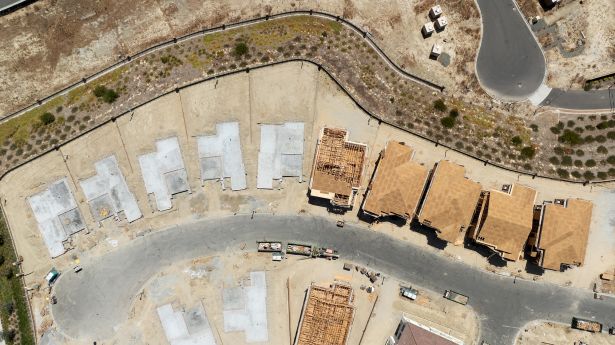
Chris Finlay, CEO of Middleburg, a firm with 32,000 multifamily and single-family units under its umbrella, began developing BTR product in 2020. He said the typical Middleburg BTR complex holds between 211 and 280 units (eight to 10 units per acre); is a combination of single-story or two-story cottages or townhomes, with an average unit size of 1,400 square feet; and that nearly 70 percent of the units are two-bedrooms.
“By having well-designed two-bedroom houses, we can keep the price within a reasonable affordability to the jobs of any particular area that we’re trying to target,” Finlay said. “We want to create housing that’s responsive to the needs and the wants of the consumer — the need being affordability, and the want being that sense of community.”
As many millennials — those born between 1981 and 1996 — have been priced out of owning their own single-family home, and as baby boomers — those born between 1946 and 1964 — have begun to age out of the headaches of maintaining the houses they scored decades ago, the BTR space has exploded in recent years on the heels of these emerging demographic trends.
New BTR home starts exceeded 130,000 in 2024, a 134 percent increase since 2019, per a report from homeowner servicer Fixr. BTR accounted for 7.2 percent of all single-family construction starts by the end of the second quarter of 2022, up from the trailing five-year average of 6.5 percent, according to Arbor Realty Trust.
“It has become a permanent part of residential rental housing in America and has certainly grown from its infancy, starting back in 2018 and 2019,” said Trevor Koskovich, president of investment sales in Northmarq’s Phoenix office. “Here we are, seven years into the cycle, and it’s become much more prolific across the Sun Belt, where it’s been hyper-focused.”
BTR’s growth has been fueled by it fulfilling a distinct market need. According to Matthew Putterman, senior managing director at JLL, until the early 2010s, if someone wanted to rent a single-family unit, their options were a garden-style walkup apartment owned by an institutional player, or a house owned by a mom-and-pop group. An entire rental community of houses like BTR was still unheard of.
“BTR is the least dense version of multifamily,” he explained, “So, as someone gets out of undergrad or grad school, and is making enough money to live in an urban core, they live in density, but then they have one or two kids, or a dog and cat, and they can’t accomplish those space needs in an apartment tower.”
Wall Street and institutional money have jumped in in a big way as the sector has matured.
Under firms like NexMetro Communities, Empire Group and Christopher Todd Capital, Phoenix initially became ground zero for the birth of BTR over the last decade. But now D.R. Horton, Tricon Residential (now owned by Blackstone) and Invitation Homes have all made large-scale BTR acquisitions or investments in recent years into all areas of the country.
Doug Faron, co-founder of Shoreham Capital in Florida, has developed and purchased BTR communities in Orlando and Naples, and said that the institutional interest in BTR has shifted from development to outright acquisition.
“Construction costs are high and costs of capital are high, so acquisition has replaced development,” he said.
And some of these BTR acquisitions today by hungry institutional carnivores are now skipping sponsors entirely to target construction builders directly.
“It’s definitely become a mainstream investment group for real estate investors,” said Jen Morgan, partner at law firm King & Spalding. “The big change is the morphing of deals being done with home builders — investors are buying the BTR communities from the homebuilders themselves. … People are now doing planned communities for sale, and they seem to be very popular.”
So, as build-to-rent advances, along with the American economy, it might soon gain the moniker “build-to-sell.”
Family history
Like so much of our modern economy, investable single-family rentals, and their increasingly institutionalized offspring of mass-produced BTR, are children of the 2008 Global Financial Crisis (GFC).
Single-family rentals have existed for quite a while, with the overwhelming amount having sat on the market as scattered sites owned by very small, independent operators who have one or two homes — usually average Americans who bought a house or two at a low mortgage rate and have chosen to rent out one or the other. Back in the day, they’d hire a property manager, or do that work themselves, and put “For Rent” signs in their yard, or place ads in the local newspaper or on Craigslist.
The trend of large-scale ownership of rental homes didn’t become operationally feasible until technology, and business systems, became functional to handle that workload. Ironically, this was right around the time of the GFC.
“You had operational capacity coinciding with large-scale lender-owned homes, that Fannie and Freddie needed to be taken care of by someone,” said JLL’s Putterman, referring to the government-backed mortgage giants. “Large investors came in and invested hundreds of thousands of dollars into homes to get them from lender-foreclosed homes and things that weren’t blights on neighborhoods, and turned them into rentals.”
The growth of social media and internet technology accelerated an evolution of SFRs. Tools now existed that allowed institutional players to manage hundreds of thousands of properties in ways that would’ve been impossible in the 1990s and early 2000s, when everyone was still using paper files and actual humans to organize the on-site real estate operations.
“Property management, business management, accounting — all coincided to be powerful enough tools to use around the time the GFC presented the opportunity for the asset class to grow,” said Putterman.
But it was the economics behind the GFC that really took things over the edge and created a new asset class with the residential space, seemingly overnight.
After falling into foreclosure, millions of homes across the country became real estate-owned properties controlled by banks, creating skyrocketing vacancies, killing demand, and plummeting prices deep into the ground. As such, investors of various sizes, from individuals to large consortiums and private equity firms, realized a generational buying opportunity. Big names like American Homes For Rent, Amherst Group and Invitation Homes were literally buying houses on the steps of local courthouses for cheap prices, without any competition, because individual homebuyers were sidelined during the crisis, recalled Jay Parsons, a rental housing economist at JPI, a rental housing development firm in Dallas.
“Contrary to the narrative today, at the time it was viewed as a way to get these homes occupied, get people back in single-family houses, and stabilize home prices, to put a floor to home pricing that was falling,” Parsons said. “This helped solve some of that.”
At the same time as this single-family splurge, firms such as Redwood Communities out of Cleveland and NextMetro in Phoenix were creating what they called “apartment communities” in the Midwest and Southwest, by building single-families on a mass scale within specific plots of land and renting them out at affordable levels — all of it centered around the thesis of providing Americans with access, rather than ownership, to high-quality houses without the cumbersome anchor of a mortgage.
“It evolved over time, and one thing that has changed is the demand for BTR has gone upmarket,” said Parsons. “The homes have gotten nice and more amenitized and, in some ways, a little larger. There’s different product types — from townhomes, to detached homes, to communities with local group centers and pools — but it’s trended to become a little more upmarket than where it started from.”
Now, with the disruption of the GFC long in the collective rearview mirror, the driver for the continued evolution and popularity of BTR within the SFR space has been mainly a demographic story.
Demographics as destiny
Jason Ross, managing director at Peakline Real Estate Funds, has raised north of $1 billion of equity for disciplined real estate strategies in the last six years. Today, he views BTR as a major investment play for the 2020s, and is targeting a new $300 million fund specifically for BTR.
“I realized this was a type of product that was, more or less, filling the hole in the doughnut for the largest renter demographic in our country: the combination of millennials and baby boomers,” said Ross. “We realized this asset type really filled the large piece of the missing middle of renters, per se.”
The prime apartment renting years are between 25 to 34, an age for many that comes just after school but before they begin a family. But the average age of the first-time homebuyer has risen from 31 years old in 2011 to 40 years old today, which is the highest age since the National Association of Realtors began tracking the figure in 1981.
“The mentality of millennials is potentially different from that of our parents’ generation, where flexibility is paramount,” said Ross. “The thought of saving up for one year to own a home and have a 30-year liability tied to one place is not necessarily desirable for our generation.”
The move of millennials out of apartments and into single-family homes, to either rent or buy, comes simultaneously as a wave of baby boomers gets older and can no longer handle the ongoing maintenance demands of homeownership.
The number of Americans older than 65 is expected to grow from more than 60 million in the 2020s to 82 million by 2050, a nearly 50 percent increase, according to the Population Reference Bureau. Those in the industry believe that many of these boomers will want to transition into single-family rental communities before moving into senior housing for their twilight years, further increasing demand for the asset class.
“[BTR] really fits the two biggest demographics we have from a population standpoint, and it delivers different things for both groups,” said Northmarq’s Koskovitch. “That’s why people find it so attractive: It can be the first step toward homeownership and the final step after a lifetime of homeownership.”
But deeper than mere demographic trends is a rapidly shifting economic landscape that has seen home prices rise to their highest levels in 30 years on the backs of radical Federal Reserve policies and generally higher interest rates across the economy.
For more than a decade after the GFC, the Federal Reserve injected liquidity into the American financial system by buying large amounts of government debt, a process known as quantitative easing, while also lowering the benchmark Federal Funds Rate for overnight lending. With both short- and long-term interest rates at historic lows during this time, mortgage rates plummeted, never rising past 5 percent from 2010 to 2022.
This led to a later wave of refinancings, in turn crippling an already sparse lack of supply once the Fed began raising interest rates in 2022 to combat COVID-era inflation.
“A million-dollar home became affordable to millions of Americans that previously it wasn’t affordable to, so this is the flip side of that,” said Benefit Street Partners’ Comparato. “Now you have tens of millions of people that have a 30-year, fixed-rate mortgage at 3 percent. It can’t be replaced, it’s not transferable. So they’ll never sell the house, and prices have skyrocketed and they haven’t sold off.”
Home prices have climbed roughly 55 percent between the first quarter of 2020, right before COVID struck, and the third quarter of 2025 (the most recent data), per the National Association of Home Builders.
Comparato emphasized that with home prices at all-time highs — and the 30-year mortgage at its highest levels in 18 years — the delta between the average cost to own a home and the cost to rent is around $1,800 per month, roughly two times the cost to rent. That math makes renting a single-family home an obvious choice for any price-conscious American.
“What we’re dealing with is a little bit sad and unfortunate,” he admitted, noting that 50 years ago a 30-year-old factory worker at Ford could own a single-family home and have a family. “And that’s off the table, seemingly forever. That affordability is gone, and I don’t think it’s coming back.”
Putting the American dream to bed
One reason why CRE players are so bullish on BTR, and why 2026 might be a great year for SFR, is because the American housing crisis simply isn’t going away.
“Look, we don’t have enough homes in the United States, and if you can build single-family rentals, that solves two things at the same time: the building stock problem and the affordability problem,” said Principal’s Hill. “We think the future of the American housing market is apartments, single-family rentals, and manufactured housing” meaning glorified trailer home communities that make up 15 percent of housing in rural communities.
While no one is denying that rentals are the present, and likely future, of a large chunk of U.S. housing, there remains the question of whether it is a good thing that many Americans will either willingly, or unwillingly, “rent” the American dream of homeownership.
Peakline’s Ross argued the American dream was always tied to homeownership in the 20th century, where the equity appreciation within that ownership was seen as the only way to create generational wealth, whereas today there are many different avenues to create a similar amount of generational wealth.

“Anyone in America can create a TikTok account and become a viral influencer and make $500,000 a year in paid sponsorships, or you could do it by investing in crypto, or the stock market,” said Ross. “Millennials still believe in the American dream, but because there are multiple different ways to create generational wealth, it just might be slightly different than our parents’ and grandparents’ version.”
In a more online and transient society, JLL’s Putterman compared SFRs to the increasingly popular trend of leasing luxury cars.
“I know high-earners and low-earners who lease their cars — some people just don’t want to own a car, just like some people don’t want to own a house,” he said. “Many people do want to own a house, and some of that is the way it’s been ingrained into the American soul and mentality, while others are more interested in spending their money in different ways.”
Parsons at JPI argued the real question here is whether Americans should have more housing options, regardless if the amount of single-family renters grows at the expense of traditional homeownership.
“If they aren’t able to buy a house in a neighborhood they want to live in, and send their kids to school in, they should still be able to access those communities,” he said. “The availability of SFR of all types helps diversify neighborhoods, and provides upward mobility for families who otherwise wouldn’t be able to access those neighborhoods if they could only buy into them.”
Middleburg’s Finlay added that the approximate distance to employment nodes and supportive services like day care is also a factor here, with SFR and BTR creating new forms of convenience if they are built near enough to city centers and downtowns.
“People drive to own, but they won’t drive an hour to rent anything,” he noted. “You still have to stay proximate to where employment is.”
And the amount of big money capital behind the SFR and BTR boom will only further entrench the rental option of American homes. Koskovich said that the money pouring into institutional SFR and BTR is coming from “every household name” in private equity investing and alternative real estate funds. Blackstone, J.P. Morgan Chase and Heitman are backing owners and operators, while big-name private players like the Carlyle Group and Mandrake Capital Group have been behind the construction and development of many large-scale sites.
“The first iteration of entrepreneurial private equity was going into development deals,” said Koskovich. “Now we’re seeing more traditional, big institutions investing as owner-operators. So it has kind of come from all areas.”
John Burns Research and Consulting found that institutional investors have bought less than 2 percent of all single-family homes available on the market, but The Wall Street Journal reported that investors, which include small-scale investors and not just private institutions, have spent billions buying single-family homes, including one in every four single-families sold in 2022.
However, as with anything in America, there’s always a wrench that can be thrown into the mix from Washington — and a uniquely Trumpian declaration could dramatically change the fortunes of SFR and BTR in the years to come.
“That American Dream is increasingly out of reach for far too many people, especially younger Americans,” Trump wrote in that Truth Social post on Jan. 7. “People live in homes, not corporations.”
Brian Pascus can be reached at bpascus@commercialobserver.com.