For Tredway’s Will Blodgett, Affordable Housing Is More Than Dollars and Cents
Let him explain — including why he's looking forward to working with the Mamdani administration in his company's New York City home
By Amanda Schiavo January 13, 2026 9:05 am
reprints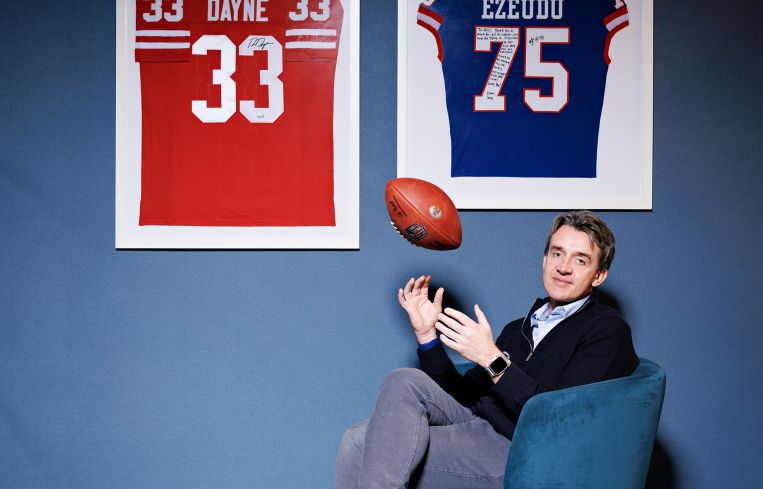
At the end of every meeting with his staff, Will Blodgett, founder and CEO of Tredway, a Manhattan-based development firm focused on mixed-income and affordable housing, closes with the same statement: “Don’t forget the mission.”
For Blodgett, the mission is to provide as many people as he can with high-quality affordable housing, because in his eyes having a safe, sturdy, beautiful and healthy home is a right, not a privilege.
“Don’t forget the mission” are the four words he has lived by since beginning his career in affordable housing in 2009, when he served as a special adviser for the New York City Housing Authority, the city’s affordable housing arm. That motto has continued to guide him as he made a name for himself at development giant Related Companies, became a founding partner of affordable housing developer Fairstead, and now as he leads Tredway, a firm he began in 2021.
You don’t need more than five minutes with Blodgett before his passion for quality affordable housing shines through. It is a passion he has cultivated from a young age and turned into a business that currently owns over 5,500 units valued at $1.3 billion, with 11,700 units under contract for a purchase total of $1.25 billion.
Commercial Observer caught up with Blodgett a week into the new year to discuss his pursuit of affordable housing equality, what Tredway has been up to, and his expectations for the new Mamdani administration.
This interview has been edited for length and clarity.
Commercial Observer: Where did your passion for affordable housing come from?
Will Blodgett: I grew up poor in Chicago with a stutter, and I only had a few friends. For the most part they lived in homes provided by the Chicago Housing Authority, most of them with their grandparents, and then their homes were torn down. My friends were there on a Tuesday, and they were gone by Thursday. That was a formative age for me, about 12 or 13, and it really sat with me my whole life. It still sits with me.
I was fortunate enough to be a good athlete — football — and that got me into Yale. When I left Yale I didn’t really know what affordable housing meant, but I just knew I wanted to do it. So I got into it, and I am still into it because the need is so great.
I really believe in the American dream, and that, to me, is upward socioeconomic mobility. I believe there are three key pillars to upward socioeconomic mobility: health care, education and housing. But, if you don’t have a home, are health care and education really that important to you? It starts with the home. That is the foundation of life.
I went back to school at MIT to get my MBA and I focused on entrepreneurship, innovation and a lot of data analytics. When I came out of MIT, I went to work for Stephen M. Ross at Related Affordable, and that’s where I really learned about affordable housing preservation.
Why is affordable housing preservation important?
Everybody’s focusing on new affordable housing, which is also important. We have to build. But in New York City alone there are 350,000 existing affordable housing units, and 90 percent of them are over 40 years old, and they are at risk. The buildings where my friends in Chicago lived were in a good area, they were just poorly run.
What is an example of a preservation project that Tredway worked on?
In 2024, we bought a 200-unit elderly building at 80 Greene Avenue in Fort Greene, Brooklyn. It’s a great area, great places to get food, great infrastructure, and great public transportation options. The affordability status was going to expire in May of 2027. For sure any buyer would have turned that building into high-end rentals, or high-end condos.
These were elderly people! These are literally the grandmothers and grandfathers of my friends that I grew up with. And so we went in there and we met with them to find out what they needed. The biggest thing was that they had these bathtubs that they had to step into, and, again, these are the elderly and disabled, people who are mobility impaired.
We had found out that over the prior year three residents had fallen in those tubs and broken hips. So we rebuilt the whole building from the inside out. We spent something like $15 million in construction, and we redid every single bathtub. Every single bathtub was converted into either a walk-in or a roll-in shower, and people were thrilled. We installed handles that were easier to turn for people with arthritis. We installed dimmer switches because some of the other feedback we got was that the units were too bright.
The dimmers cost $1.50 each. It doesn’t cost more to be more thoughtful. We’re in the service business. We’re here to serve our residents, and we want to provide them a healthy, affordable home — not just an affordable home, a healthy affordable home.
We set the affordability there for as long as I humanly could, for as long as the law would allow, and that’s another 40 years. And the average resident pays $440 per month. [The project was unveiled in October 2025.]
How complex are the affordability laws in New York City, and how is Tredway navigating them?
They are very intricate, very complicated, and come with a tremendous amount of bureaucracy. The only way that I and the people here are able to navigate this is through deep, unique subject matter expertise. Just years and years and years and years in the business.
We just hired Alex Radick as investment associate. He spent four and a half years at Blackstone overseeing their affordable housing portfolio. That was 80,000 apartments of affordable housing. And we also just hired Katie Wheeler from Related Affordable as vice president of investments. She was with Related for four and a half years.
We can’t just go to an investment bank or hire a kid right out of college. Affordable housing is just too complicated. You can be the smartest person in the world, but it takes years and years and years to understand this business.
What has been a significant issue plaguing affordable housing in New York City?
The Low-Income Housing Tax Credit is probably the best tool available to both build and preserve affordable housing. However, that tool to preserve affordable housing is no longer available here in New York City. That’s an enormous issue, because we have 350,000 affordable housing units and 90 percent are over 40 years old.
These buildings need money to be fixed, and the biggest tool available is the Low-Income Housing Tax Credit, and that’s not available in New York City anymore because they don’t have the bond capacity to be able to use it on existing buildings. They only have the bond capacity to be able to build new, and that’s because costs to build are so expensive, and a lot of that is because of the bureaucracy.
We have a new mayor in New York, Zohran Mamdani. What are you hoping to see from this administration as it relates to affordable housing?
Speed. I’m really encouraged by the picks he’s made in the world of housing. Since I’ve been in the business, it’s been politicians in the world of housing. But now we have policy wonks who cannot only speak about the need, understand the need, and get on their microphones, but they know how to fix it, because they’ve been in the weeds. They’ve been in the trenches of understanding how hard it is to build and preserve affordable housing. That’s who’s running [the Department of Housing Preservation and Development, or HPD] now.
Dina Levy [as commissioner of HPD] I am really encouraged by. She came from the state, and to build and preserve affordable housing in New York City you’re going to have to work with the state. Leila Bozorg [who was appointed the deputy mayor for housing and planning] has spent her entire career in affordable housing. She’s not a politician. I’m sure she’ll go out there and shake the hands and kiss the babies, but she knows how to do this.
She really knows, and I’m super encouraged by that.
Oftentimes when there’s a new administration, it’s us educating the new leadership about not only the needs, but how to fix it. But these folks, they know how to fix it.
What is the status of the four Coney Island properties that Tredway purchased an interest in alongside Brookfield?
So, on the Ocean Park apartments, we’re spending $25 million in work. We purchased it for $85 million, so we’re spending over 30 percent of the purchase price on work. And the same thing for the Sea Park Apartments.
I actually love it out there, because it’s one of the most diverse areas of New York City.
Many of our Coney Island projects are still in what’s called the “tax credit compliance” period. We’re spending a lot of money because the buildings are old and on the ocean, so we have to deal with the saltwater and hurricanes. They’ve gone through a lot.
In what other markets is Tredway operating?
We’re buying 1,800 units — 100 percent elderly, 100 percent affordable — in New Orleans, at a site which was previously owned by the Catholic Church. The man chosen by the archbishop to run the sale was very focused on the mission, and we hit it off right away. I had said to him “Look, these are these people’s homes. I’m just here to help them take care of these homes.”
Many of the other buyers that he was meeting with were just about the economics. We’re going to make sure that all the 1,800 homes remain affordable for the next 40 years.
We’re also starting to buy a lot in Texas. We purchased between 1,500 and 2,000 units down in North Carolina and South Carolina. We’re in Ohio and Las Vegas, and we own a lot in Pittsburgh — there is a huge need there.
We will be in 28 states by the end of this year. We’re really focused on trying to do our part to fix the affordable housing crisis in New York City, but really all over.
Amanda Schiavo can be reached at aschiavo@commercialobserver.com.