SoCal Commercial Real Estate Leaders on What’s in Store for 2026
Executives at the C-suite level from some of Southern California’s most prominent firms discussed a wide range of challenges and triumphs ahead of the new year
By Nick Trombola December 24, 2025 9:39 am
reprints


2025 was a transitional year for commercial real estate in Southern California in far more ways than one. The region is poised to look and feel no different in 2026.
Between the devastating Los Angeles Fires, state-level attempts at development regulation reform, preparation for the 2028 Olympics, the dearth of Hollywood productions, ongoing office woes, the resilience of retail and housing affordability plights — not to mention general anxiety regarding political leadership and macroeconomic concerns — Southern California was a stew of headwinds and opportunities alike over the past 12 months.
Commercial Observer caught up with five industry leaders separately before the holidays to discuss the complexities of the region and attempt to predict what the new year will bring: Corinne Verdery, CEO of Caruso; Jaime Lee, CEO of Jamison; Sandy Sigal, president and CEO of NewMark Merrill; Katie Grissom, global head of retail for Nuveen; and Dan Michaels, managing partner of Stockdale Capital Partners. Their answers, naturally, ran the gamut from optimistic to realistic.
Consensus? While results may vary, 2026 certainly won’t be boring.
These interviews have been edited for length and clarity.
Commercial Observer: What’s your first reaction when you think about Southern California real estate trends in 2026? What does your gut tell you is at the top of that list?
Corinne Verdery: People have higher expectations for where and how they want to live. The demand for housing in California is fueling our investment in multifamily. We’re going back into our properties and, where we can, adding residential. Affordability continues to be an issue for the workforce, especially in high-income, supply-constrained areas.
So at our hotel in Montecito, Calif., we are building affordable workforce housing on-site for our employees. On the mixed-use side, the strongest performers are places that provide beautiful, safe environments and unique experiences. When you create dynamic, mixed-use properties that people trust and enjoy, performance follows.
Jaime Lee: Let’s go! It finally feels like we’re transitioning from paralysis to action. The last couple of years were an extended reset: taking stock, repricing, and waiting for the fog to clear. The fog is slowly lifting now. Everyone understands the rate environment, they’ve adjusted expectations, and a very large amount of sidelined capital is ready to move again, and I believe that a lot of it actually wants to be in Southern California. Small moves on interest rates and more flexible financing will have an outsized impact on conviction here. Let’s do this.
Sandy Sigal: Uncertainty. California has a lot of crosswinds — on the positive: a lot of density, lots of individual cities (excluding L.A.) that have distinct character and supportive development and ownership mindsets, great weather, and, still, despite everything, employment diversification and job generators.
To the negative: very high tax rates, over-regulation which continues to occur, development obstacles, still no redevelopment agencies to assist with repositioning of merchant or business attraction, the flight of wealth (which can sound like not a big deal, but substitute the word “investors” with “wealth” and it says something else), crime, lack of housing and lifestyle affordability, lack of financial discipline.
I have been a Californian my whole life, and I want to be part of the solution, but the state and City of L.A. in particular make it very tough.
Katie Grissom: Southern California continues to exhibit some of the most durable real estate fundamentals in the country. Strong population density, persistent housing undersupply, and high barriers to new development create long-term demand across multiple asset classes.
Retail remains attractive given the structural imbalance between supply and demand, particularly grocery-anchored and necessity-based formats. In many ways, grocery-anchored retail has quietly become one of the most defensive income strategies in real estate, especially in dense, supply-constrained markets like L.A., Orange County and San Diego.
Dan Michaels: Southern California, and L.A. specifically, has been extremely tough from a legislative standpoint. You’ve obviously had the fires, you’ve had wage ordinance increases, you’ve had, I would say, a fairly hostile legislative environment that doesn’t necessarily want to support the growth of development. So it’s hard to broadly generalize, just given how big Southern California is, but I wouldn’t call it the most friendly investing environment by any means.
On the hospitality side, people have gotten absolutely hosed. In Hollywood, soundstages and the like, it’s been disastrous. Multifamily has had its own overhang. Transfer tax provisions have cut into people’s profit. So, honestly, I’m very nervous about 2026. There are pockets which I think are interesting, but I can’t be excited given the current legislative oversight.
California saw some substantive, state-level legislation and executive actions aimed at cutting development red tape this year, such as Sen. Scott Wiener’s California Environmental Quality Act (CEQA) reform and transit-oriented affordable housing bills. The City of Los Angeles and L.A. County have also streamlined the approvals process for certain projects (namely rebuilding in the fire-ravaged Pacific Palisades and Altadena). Are these promising signs to you that California could become more development-friendly? Or do these actions appear more like blips?
JL: There is a lot of positive momentum in California. The rhetoric has definitely shifted to acknowledge the seriousness of the housing crisis, and it seems like there is an understanding that our only solution is to build out of it. We simply do not have enough units for everyone who wants to live here, so it just doesn’t matter how low you try to suppress rates. There is also much more recognition from legislators and political leaders that regulation, cost and delay are enormous factors in why so little housing is being built even after all of the years we’ve been talking about the shortage.
But progress should be measured in units delivered, not statements issued. The only bellwether that matters is production. Is housing actually getting built at scale, of all types and income levels? I believe the City of Los Angeles is at its lowest construction starts in over a decade for the past two years, and of those, a large portion of the units being built right now are ADUs, and the owners are not renting them out. Right now, there’s still a gap between saying the right things and delivering real units that people can live in. I really hope we can move toward outcomes-based policies that actually move the needle on bringing more housing online.
SS: CEQA reform is a welcome step, and if it is part of a general policy to reduce regulatory burden, it would be a great thing. I personally am a big fan of what changed with CEQA as it related to housing, and hopefully it will spur on a lot of new apartment and housing development, which will be a great step in the right direction. That needs to be matched with significantly more action and manpower around making the streets look and feel safer. If that was matched with at least some adjustments to the tax rates to make the state be more welcoming, that would be a major signal of change.
And we need to focus on improving educational outcomes. The state used to be there, and it needs to find its way back.
KG: The direction is encouraging, particularly for redevelopment of multifamily, mixed-use, etc. Streamlined approvals and targeted regulatory reforms are most impactful when applied to existing real estate rather than ground-up construction. In practice, the most realistic path to incremental supply in California runs through repositioning and densifying underutilized assets, especially aging retail centers and large-format properties that can support mixed-use overlays. These changes help unlock value, but they don’t fundamentally eliminate the supply constraints that define the state. Those constraints continue to underpin long-term pricing power across asset classes.
Generally speaking, Southern California remains complex, but complexity often creates opportunity. For long-term investors focused on fundamentals, particularly in necessity-based retail, the region continues to offer compelling risk-adjusted returns.
DM: It’s like if you had this massive, tangled web of string and started to pull some of it out, there’s still a lot there to unwind. Yes, you’ve had state level fighting with local level and trying to find a balance. But I don’t think it’s going to unleash a wave of recovery to the same degree that it should. I’ll compare it to people like Daniel Lurie in San Francisco, who has completely changed the narrative on that city and turned it on its head. His leadership as mayor and oversight has completely changed the narrative in that city. I think L.A. and San Diego need some of that.
What’s an aspect of Southern California’s CRE industry (regarding any asset class) that doesn’t get enough attention? Are you seeing something in the markets that few others do?
CV: Beautifully designed and well-run mixed-use communities are outperforming. There’s an assumption that retail performance hinges on the economy, but our experience shows a real demand for curated environments that are beautiful, safe, clean and welcoming, which drives consistent retail foot traffic and sales.
Residential demand in our mixed-use communities is also significant, especially as people continue to value convenience and quality of life. For example, through the development process for our expansion at The Commons at Calabasas, we learned that Calabasas residents desire a true alternative to single-family homes, coupled with the dynamic, family-friendly environment that Caruso is known for. The Commons at Calabasas was an ideal location for a development of this nature, and we are moving forward with adding residences to the property.
JL: Diversity. I know that’s become a loaded word, but it’s also the truth. The real strength of Southern California is the sheer plurality of people it attracts from everywhere, of different backgrounds, industries, talents and ideas. That’s not a buzzword, that’s an economic engine. It’s literally 75 degrees and sunny today in December as I’m writing this. People want to be here. That’s why we have such an enormous university and higher-ed base, why talent keeps coming, and why industries like tech, biotech, AI, aerospace, entertainment, and the creative economies continue to regenerate and grow here.
We’re also seeing a quiet reversal of pandemic-era migration. People are leaving the places they moved to for remote work or space or taxes, and returning to density, jobs, culture, growth and energy. All of that robust excitement and opportunity drive Southern California’s CRE industry.
SS: Retail has become much more the crossroads of entertainment, human connection and community centers since the pandemic. When the “second place” — the workplace — added an at-home component, and as office work became much less mandatory, our customers looked for a place to connect. Increasingly that is at our retail centers.
KG: Retail remains underappreciated. Over the past several years, capital has disproportionately flowed into industrial and multifamily, leaving high-quality retail assets relatively overlooked. What often gets missed is that retail didn’t simply rebound after the pandemic, it structurally improved. New supply slowed meaningfully, marginal concepts exited the market, and tenant economics became more disciplined. Today, retail fundamentals are stronger than they were pre-pandemic, supported by limited construction and demand driven by essential, service-oriented uses rather than discretionary spending.
DM: Medical office is one of the most interesting asset classes that doesn’t get enough attention. You hear a lot about downtown office or multifamily, but medical office is, I think, one of the densest, richest opportunities. There’s not a ton of people doing it. You have some of the wealthiest, most successful health systems in the country all competing for this dense location of spaces across Southern California.
So the risk-reward of that opportunity, and what I think it can do to outperform — and I’m talking about outpatient medical office — relative to office, even other asset classes, is super unique and doesn’t get enough attention, but it should.
Caruso, and Rick Caruso in particular, have made rebuilding the Palisades a priority in the wake of the L.A. fires earlier this year. That includes the founding of nonprofit Steadfast L.A., as well as the push to reopen Caruso’s mixed-use Palisades Village in August 2026. Is there more to come from Caruso leadership on this front in 2026?
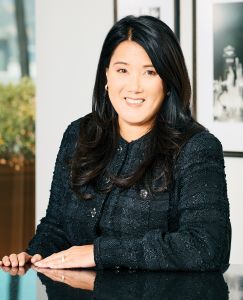
CV: Our commitment to the Palisades community remains a top priority. We are charging towards the reopening of Palisades Village in August 2026 with a mix of familiar faces, like Erewhon, and exciting new tenants, like Nancy Silverton’s Spacca Tutto restaurant and Elyse Walker’s flagship boutique.
In the coming weeks and months, we will share more announcements on new tenants and property enhancements. Our team is focused on ensuring the grand reopening of Palisades Village matches the energy and excitement of when the property first opened.
Retail assets in general have strong fundamentals right now, and experiential, town square-style assets in particular are becoming popular for developers seeking to capture post-pandemic consumer trends. In Southern California, Caruso properties like The Grove and Americana at Brand are the high-water mark for these types of developments. What lies at the core of that success, and what do you make of other projects looking to those assets as a model? Is Caruso planning similar developments?
CV: We remain selective and intentional about where we grow, always prioritizing long-term value and community impact. Our mission is not just to grow, but to grow intentionally in a way that serves communities and strengthens the Caruso brand, which is why we’re investing in expanding our residential portfolio. Our model emphasizes thoughtful and community-centered design, hospitality, one-of-a-kind programming and strong tenant partnerships.
Those fundamentals drive results across our entire portfolio and makes us different in a real estate landscape focused too often on square footage.
Jamison is a market leader for office-to-residential conversions in the region, at a time when more and more adaptive reuse projects are hitting the pipeline. Does Southern California have the potential to become the top hub for conversion projects nationwide? What would it take to get there?

JL: Absolutely. The potential here is enormous, not only because of our many dense office centers, but because of the tens of millions of square feet of lower-lying, underutilized office buildings along all of our major boulevards and in all of our neighborhoods. To really unlock it, however, conversions need to be faster, predictable, and by-right. We need jurisdiction-wide adaptive reuse policies that don’t turn every project into a one-off science experiment. Just as importantly, we can’t keep layering on new requirements, fees and delays that scare development away.
The past two years have shown what happens when everyone is pencils down. When there are no projects, there are no jobs. It’s that simple. If the rules are clear and stable and the goal of each municipality is to see completed projects on the other side, capital will flow, and Southern California can lead the country in converting obsolete buildings into much-needed housing.
Jamison is a family-run firm that has primarily operated in L.A. since its founding in the mid-1990s. Are there any plans, or even any interest, to expand the firm’s reach to other parts of the state or beyond?
JL: Yes, our portfolio spans Southern California and once extended into Nevada and Texas as well, though we like to call L.A. home. People tell us all the time that if you can build in L.A., you can build anywhere, so I’m very interested in testing that theory and looking to other states.
We’ve also rapidly become one of the larger Low-Income Housing Tax Credit affordable housing developers locally, winning allocations for our first 1,200 units this year, and while we’re committed to building here, it’s actually been very difficult to stack the financing and move these projects forward. To the extent there are states that genuinely want more affordable housing and are willing to support it with workable policies and ready capital, we’re actively exploring those markets.
Sandy, the last time you sat down with CO, at ICSC Las Vegas earlier this year, you positioned yourself as more of a realist about retail’s future, and economic conditions in general, than many others at the conference. You said that we could be on “on the wrong side” of the inflation story by the ICSC 2026, that interest rate relief would be lackluster, and that the next 12 months would overall be a “transition year.” Do you still agree with those comments, or has your perspective changed?
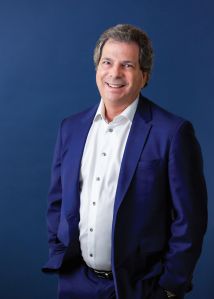
SS: Nothing in my view has changed. Interest rate relief, which was once predicted to be six reductions, became two, and even the Fed said after the second one they would need more evidence on where the economy is going.
And, even with lower short-term rates, long-term rates have struggled to come down materially, as we still have a huge and growing deficit to finance. It’s so hard to price risk — I love to buy and develop, but our forecast does not include large decreases in interest rates.
NewMark Merrill is often cited as one of the fastest-growing privately owned companies in Southern California, and most of its assets are located here. Yet most other markets in the U.S. have a lower cost of doing business, and are often more conducive to development projects. Your firm owns properties in Colorado, Illinois and Washington already, But given those conditions, could its future lie beyond California?
SS: Our future will always have a California component. I have lived here my whole life, I have done business here for over 40 years, my family and friends are here.
But we have never been tested like this before — the negative business sentiment is huge, the regulatory environment is slow and cumbersome, and attracting and keeping talent and making sure they can afford a decent lifestyle in this state is challenging. So, yes, we are in other markets, and when we allocate funds it is hard to ignore other states, including the ones mentioned, and others we are planning to expand into, and putting more funds there. Hopefully that analysis will change, but it will take our leaders actually leading.
Nuveen has been an active investor in grocery-anchored retail in Southern California. Is that a response to macro uncertainty or a longer-term strategic view?

KG: It reflects long-term conviction. Grocery-anchored retail combines high barriers to entry, durable daily-needs demand, and consistent cash flow. In supply-constrained markets with strong or growing demographics, like Southern California, those attributes matter even more. These assets offer stability across cycles with embedded growth opportunities through re-merchandising, leasing, and selective redevelopment. The goal isn’t to chase trends, it’s to own real estate that performs in both strong and uncertain environments that’s positioned in strong micro-locations.
How is Nuveen using AI, data and analytics to inform investment decisions, particularly in retail?
KG: Retail has historically been an observational business, but data advancements like Placer AI, Esri, and other industry-leading groups allow us to be more precise. We mostly use analytics to better understand how consumers interact with properties: how often they visit, how long they stay, who they are, when they visit, and how centers function within their broader trade areas. We also leverage data directly from our retail partners, which has proven the most helpful.
In Southern California, the data reinforces what strong retail fundamentals already suggest: Consumers prioritize convenience, proximity, and essential services. And the region has demographic tailwinds. Those insights help guide both investment decisions and asset management strategies to ensure portfolios remain aligned with evolving consumer behavior.
Stockdale has pursued an aggressive acquisitions strategy lately for all types of assets, such as its $157 million deal for The Oaks mall in Thousand Oaks, or its all-cash, $110 million deal for The Quincy at Kierland multifamily complex in Scottsdale, Ariz. Does it seem like there’s going to be more opportunities like this to come for you?
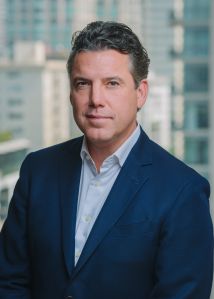
DM: I don’t see any slowdown in this extremely elongated, what I would call great reset. Not only in the real estate manager world, but just in the ownership of real estate, there is an incredible washout and reset occurring. When you quintuple interest rates from zero to 5 percent in terms of the underlying Fed funds, no one is immune from that. That just completely re-rates valuations that impact lender relationships vis-a-vis carry costs.
And that’s been the double whammy: increase in capex and inflation in capex, and then massive secular headwinds in the way of office and life science. Supply/demand dynamics and things like multifamily too — I don’t see it going away for many years.
Southern California is obviously massive, saturated with institutional-level investors and developers, and has a high barrier to entry. How does a real estate firm stand out and build momentum here?
DM: It all comes down to money. As someone once told me, you control the capital, you control everything. So there may be a lot of good real estate guys, but there’s not a lot of good capital formation, global fundraisers. And that’s the distinction. I know 1,001 real estate guys that may know industrial in the South Bay or multifamily in the Inland Empire. Few of them just don’t necessarily prioritize fundraising to the degree that we have.
Fundraising and the building of a private equity business is a scale game. And, so, you can be super smart, you can print out 1,000 offering memorandums, but unless you have the money it doesn’t mean much. And, conversely, you could sit on $750 million or $1 billion of equity, and you’ll be shown deals that you may not otherwise see because you have the capital and your taxi light is on.
Nick Trombola can be reached at ntrombola@commercialobserver.com.