Retailers Are Seizing on Splits Among Consumers: ICSC
But servicing different price points can’t smooth over higher operating costs forever — ‘The rubber is going to meet the road at some point’
By Mark Hallum December 11, 2025 3:36 pm
reprints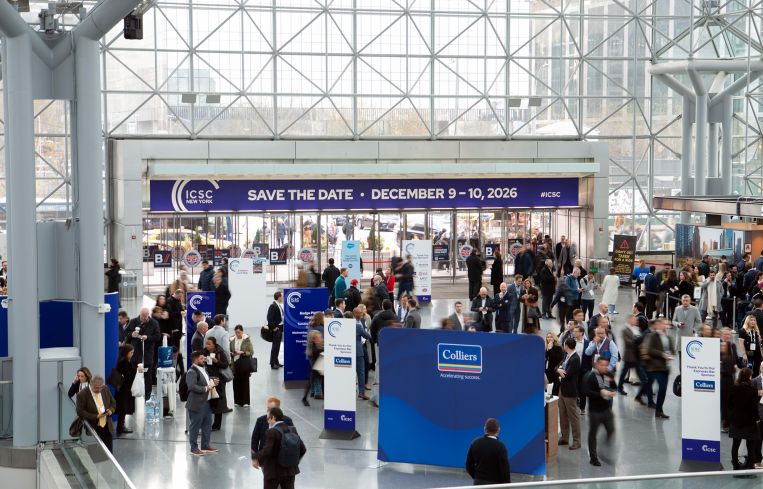
Is consumer confidence in good standing? No. But, there seems to be a retailer for every bank balance it seems.
For instance, about 10 percent of shoppers make up about 50 percent of retail transactions. That means 90 percent of Americans can’t afford products that aren’t deeply discounted unless they take on debt.
So where can cash-strapped consumers get basics like clothing and food? Companies like Aldi and Primark are seeing success serving those demographics and expanding to where the shoppers are, real estate execs explained at ICSC New York on Thursday.
Due to this success, those brands are expanding by taking available space while other industries like medical and cosmetic services — known as “medtail” — take conventional retail space.
“[Brands like Aldi and Primark] are backfilling spaces that went vacant and they’re all too happy to take the space,” Newmark’s Brandon Isner told Commercial Observer. “A lot of time, it’s a great space, it’s just that the previous retailer had to pull back some stores… There are a lot of fitness brands that are filling that space because they like the larger footprint.”
But the luxury market may have some weak points as well, illustrated by a September 2025 survey conducted by J.P. Morgan Global Research that stated that 60 percent of shoppers in both the U.S. and Europe are using resale platforms like The RealReal and Poshmark to buy secondhand luxury goods.
The luxury industry is looking to close the revenue hole in secondhand sales as well, which seems to be good for consumers in that income bracket.
“Even some luxury operators are starting their own division of resale and it feeds into the authenticity of ‘I have something that nobody else has’ and having their own identity,” Isner said. “I think people find solutions for what they’re looking for.”
“Retail remains resilient, and it’s not like it’s resilient in a calm sea, there are a lot of obstacles being thrown at it since coming back to the pandemic,” Isner said. “Not that they’re not a factor, but a lot of retailers, a lot of them after their quarterly earnings have raised guidance and a lot of the REITs have done the same because things are holding together and consumers have remained resilient.”
Landlords are looking past the immediate cycle of potential distress, including potential turbulence from tariffs or consumer sentiment, according to Isner.
Property owners are starting to turn to their tenants whose leases are up as late as 2028 to find out whether or not they want to renew. If not, the landlord has the opportunity to raise the rent on a new occupant.
Meanwhile tenants are looking to enter new markets at a faster rate, according to Todd Siegel of Savills, as easing interest rates put landlords in a position where they can provide a little more to potential tenants in terms of construction.
“We see that contributing to higher velocity in terms of the U.S.-based dealflow,” Siegal said. “As a firm, our transaction volume has been up in the fourth quarter over the previous three quarters. We see that momentum continuing into 2026 and we’re also seeing that on a global basis.”
European tenants are a major factor in the growth in the U.S. retail market, especially Italian and Asian clothing brands and foreign capital, according to Siegel.
“The value proposition of general mercantile coming out of Italy has that value proposition,” Siegel said. “Some of the oldest brands that have been transacting in the United States happen to be Italian mercantile, suiting and clothiers. That same perception of quality and luxury was embedded generations ago and passed down, aside from the luxury mills that exist today and continue to grow their footprint. A lot of what we’re seeing coming out of Italy is a lower pricepoint, a discounted version of our grandparent Italier.”
This continued growth is again contingent on tariffs.
But, unless something changes with some of these underlying threats to stability in retail, there could be issues in the offing, according to Datex Property Solutions CEO Mark Sigal.
“With the continued health of tenants in terms of paying their rent and the deterioration in sales and occupancy costs rising, we’re heading toward a collision,” Sigal told CO. “If you were to ask tenants how they feel they’re doing, they would say they’re struggling but they’re still going to pay their rent because it’s not like there’s a better space available in the market or that there’s a ton of development. Seeing the weakening in terms of sales, the cost of occupancy and the fact that it’s occurred in five of the last six months is a worrying sign.”
Mom-and-pop shops without the balance sheet to absorb additional costs are most exposed to this trend along with enclosed malls and movie theaters, according to Sigal.
“The rubber is going to meet the road at some point,” Sigal said.
Mark Hallum can be reached at mhallum@commercialobserver.com.