Ian Ross of SomeraRoad: 5 Questions
By Amanda Schiavo December 30, 2025 9:00 am
reprints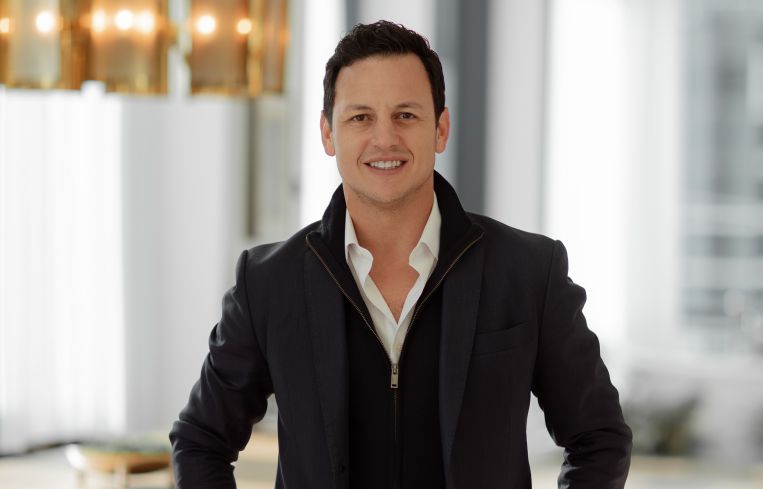
As a founder and managing principal at SomeraRoad, Ian Ross is on a mission to grow the commercial real estate investment firm’s platform with unique acquisitions and property turnarounds.
Ross recently reconnected with Commercial Observer to discuss the firm’s success since its founding in 2016, its current projects, how SomeraRoad identifies assets in the first place and then redevelops them, and more.
This conversation has been edited for length and clarity.
Commercial Observer: Give us some background about yourself.
Ian Ross: I grew up in Los Angeles, and I’ve been in New York now for about 20 years. I went to Emory University for my undergrad work and to Wharton for my MBA. I did some investment banking work at Morgan Stanley and then at Jefferies. I got into real estate just after the crash in 2009, and was heavily focused on distressed credit, unique commercial mortgage-backed securities (CMBS) structures, nonperforming loans, real estate-owned assets, and value-add and opportunistic real estate.
What is SomeraRoad all about?
I launched SomeraRoad in 2016, and we are a diversified real estate investment and development platform. I think we are one of the fastest-growing firms, if not the fastest-growing firm in the industry, over those last nine years.
Today, we’re about 50 to 55 people headquartered in New York. Myself and my partner Fergus Campbell run our office here, but with co-headquarters in Nashville that my two partners, Jon Reeser and Andrew Donchez, spearhead. We also have five satellite offices: Austin, Texas, which is the center of our acquisitions team, led by Brock Kenyon; an asset management office in Tampa, led by Andrew Marchetti; an asset management office in Kansas City, Missouri; and an office in Las Vegas; as well as an office in Indianapolis.
We’ve now done about 160 projects across the country in over 50 markets across really all assets. We’ve done about $3 billion of total investment and development scale, and have about $1.5 billion of equity deployed across all of those projects.
We are diversified by asset class, geography and strategy. We are real estate generalists that are looking for alpha or arbitrage or asymmetry or some edge or angle, some opportunistic return angle. But, at our core, we are generalists — so we invest across all asset classes, all geographies, up and down the capital structure across a variety of different strategies. We have experience in gateway markets like L.A., New York, Chicago and South Florida, but we definitely have a skill set in high-growth secondary markets. So we’ve been a very active group in places like Nashville, Austin, Kansas City, Indianapolis, Pittsburgh, Louisville and D.C.
Give us some details on some of the deals SomeraRoad has done and the strategies behind them.
We did a large deal with Gibson guitars, where we acquired all of their real estate in Nashville and in Memphis. We acquired the Hotel Bossert in Brooklyn Heights, which was a distressed mortgage. We recently acquired a distressed asset through a CMBS trust in Austin, 801 Barton Springs, which is this gorgeous office building that we’re executing a value-add strategy on. We just closed on an apartment building in Kansas City, also distressed through the debt, with a collateralized loan obligation. But we’ve done about $1.5 billion of nonperforming loans, a lot of common deals, and any kind of nuanced distress out of that platform. And, opportunistically, we then created three parallel affiliated platforms.
What are those three platforms?
Our development business, which is run by my partner Andrew Donchez. In that business, we’ve either delivered or are in production on a $1.5 billion of new vertical construction, including the Pendry Nashville, which is a $375 million, 30-story tower with Montage Hotels & Resorts. It’ll be the highest-quality hotel and condo tower that the market’s ever seen. It will be delivered in 24 months. We did an amazing deal with Equinox to bring the first Equinox fitness club to Nashville right in front of that, and we put a restaurant on top of Equinox, which already opened.
Another exciting condo project that we’re working on is at the Bossert Hotel in Brooklyn Heights, which will be 70 luxury, top-of-market, insanely amenitized, branded condos.
We have a net-lease business, too, which owns about $700 million of single-tenant, net-leased industrial assets owned below replacement costs and with long-term, stable tenants. That’s more like a cash-flow vehicle.
And, lastly, we have a really exciting platform called SomeraRoad Aviation Infrastructure, or SRAI. This is a platform that we created opportunistically through the acquisition of our first aviation asset in Las Vegas — that’s 37 jet hangars that are right off the Las Vegas Strip at Las Vegas’ Harry Reid International Airport. Last November we bought the hangars that are fully leased to everybody from Wynn Resorts to the who’s who of Las Vegas billionaires and casinos and businesses.
We realized not only was that a phenomenal real estate opportunity, but there was a whole new category open to us. Instead of just opportunistically acquiring this asset, we said, “Hey, let’s create a whole business here.” And today, we own about $320 million of private jet hangars, and we’re building a business that will acquire about $1 billion of that product.
Throughout our conversation you have used the word “opportunistic” a lot. How did you determine that SRAI was an opportunity where SomeraRoad could succeed?
We take a lot of pride in knowing our markets and studying the data, both from a product type and the geography. When we unpacked the Vegas aviation asset, and really started learning about the category nationally, what we realized was the supply and demand fundamentals around private aviation real estate is unparalleled.
There’s so much demand for private aviation that continues to grow, especially as commercial aviation gets worse and worse. The wealthy are getting wealthier. The demand for luxury goods and the willingness to pay for luxury goods continues to grow. Private aviation is growing in tandem with that. On an inflation-adjusted basis, private aviation is actually becoming more attainable to a larger swath of the population, as you have these jet-share programs and different charter options. More people are flying private.
I always joke about private aviation by saying you don’t park your Ferrari in your driveway. If you’re a well-to-do individual, you definitely don’t park a $50 million jet out on the ramp at an airport. You want to protect it, and you want to minimize the repairs and maintenance necessary for it. The best way to do that is to protect it from the elements. You want to maximize the resale value, and the best way to do that is to hangar your airplane.
The willingness to pay in this luxury segment is extraordinarily high, and there’s so much demand, but there’s no supply of private hangars anywhere. And what we’ve realized is if you control the supply, and there is so much demand, there’s a really positive impact on pricing.
You have a consumer base that’s very price inelastic, and you’re controlling what’s really their superpower. Having a jet is a true superpower, and their willingness to pay is really high. They don’t have a lot of alternative options.
I know it sounds like we’re taking advantage of the situation, but we’re talking about a very high-cost operation, and we’re a very small fraction of that operation, and we’re a necessary component to it. And it’s just very hard to replicate this kind of real estate.
Amanda Schiavo can be reached at aschiavo@commercialobserver.com.