

South Florida Starchitect Kobi Karp: 5 Questions
He's worked with the region's most prominent developers on projects such as the Four Seasons at the Surf Club, 1 Hotel South Beach, Four Seasons Fort Lauderdale and Wynwood 25
By Jeff Ostrowski September 24, 2026 2:55 pm
reprints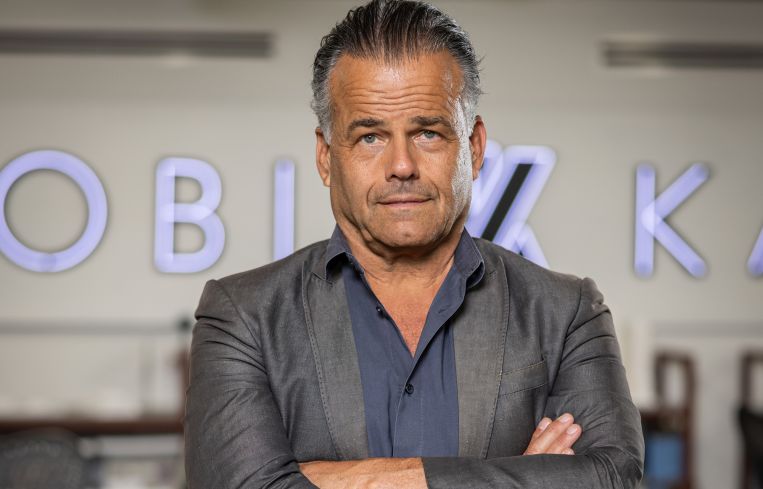
Kobi Karp, founder of Kobi Karp Architecture and Interior Design, has been designing buildings in South Florida for more than three decades.
His portfolio includes projects such as Four Seasons at the Surf Club in Surfside, 1 Hotel South Beach, Four Seasons Fort Lauderdale, Wynwood 25 and Moxy Wynwood, and he has worked with many of the region’s most prominent developers over the course of his career.
Commercial Observer recently caught up with the star architect to discuss his next big projects, the Live Local Act, and how development in South Florida has changed over the decades.
The following conversation has been edited for length and clarity.
Commercial Observer: What are the big projects on the horizon for your firm?
Kobi Karp: Right now, the projects that have been financed and seem to be moving forward are multifamily apartments. We just finished one on the Miami River, where Flow is the operator.
It’s interesting because it’s about 635 units. They leased out 80 percent of the apartments in approximately 80 days. And that is pretty phenomenal, because also the rents are traveling between $5 to $6 a foot. And the demand is substantial, and also what people are seeking in those buildings are amenities and functions that create a lifestyle.
The people who rent there are in their early 20s to late 30s. A substantial amount are folks who have jobs in Downtown Miami and are looking to stay there for an extended period of time. So that’s a very interesting sort of scenario.
We have another one that we started construction in Omni District. We have another one that is in Edgewater in Miami. We have projects in Broward County and West Palm Beach.
The residents get up in the morning and they go to their offices and then come back in the afternoon. There are activities there for the people who live there, and they also bring their friends over. It’s interesting. There’s a lounge, and there’s a library, and there’s a place where you can sit down.
Florida’s Live Local Act has generated a lot of discussion, a lot of controversy. What are you seeing on that front? Are there Live Local projects coming out of the ground now?
Yeah, a number of Live Local projects have been financed and are coming out of the ground.
We just received two projects approved in Wynwood where the community said, “Wow, we’d really like to have this development here.” And they understand that 40 percent would be more affordable units, and then the other 60 percent would be the market rate.
So I think that Live Local is a business performer that does seem to be working out quite well for quite a few developments and developers.
I do believe that Live Local seems like a very, very financially feasible and plausible direction for the developers and the developments to go — and even the projects in Miami Beach, which are now going through the process, and some of them have been approved. The Live Local workforce units are being used by individuals in the community that otherwise would have had to live elsewhere further away.
How do the buildings look different now compared to what you were designing in South Florida maybe 10, 15, 20 years ago?
I think that the quality of the materials both inside and outside has stepped up substantially. The finishes and the materials on the outside are so critical. And they do have stone and metal and bronze on the outside face of the buildings. They’re actually cladding them in a way that there is no stucco just left to be painted. And when people walk by, they feel better about architecture and design.
Those kinds of details and materiality creates a value in just the pedestrian walking by, or the owner who lives there. It feels better. It’s a better finish, it’s a better material, on the outside of the building as well as the inside.
Every floor is finished, every wall is finished. And it’s contemporary style. The finished product is a better product, and people expect that, people want it, people desire it, whether it’s a multifamily condominium or a rental project.
What’s your biggest challenge?
My biggest challenge right now is being able to deliver the quantity of units that we need to supply in Florida. Whether it is in West Palm Beach or Miami Beach, whether it’s in Sarasota, or it is in Satellite Beach. I see a demand, and the people are just coming in, and they’re living in existing homes and apartments, older ones. They’re not happy there, and they would like to have something newer and fresher. But that’s all that’s available right now. The demand is greater than the supply.
Did the Champlain Towers collapse affect your approach to designing buildings?
I think the Champlain Towers collapse was a game-changer in a sense that it made people understand that buildings are like people. Buildings are like your body. As you get older, you can make a decision to either take care of your body and build up your muscle and health, or you can just say, “I don’t care. I don’t want to maintain it. Let it go to shit.” And that’s what they did there, where there was the rusting, the no-impact glass, the failure of the beam. Just not maintaining it for years and decades — that took its toll.
As you get older, if you don’t take care of yourself, guess what? You are going to hit a wall, and in this event, regretfully as it happened, and it was a collision of events, right?
People now are cognizant that all buildings need to be maintained and taken care of. And a building that was built 40, 50, 60 years ago, you need to look into it.
Sometimes it’s in great shape, and buildings can be maintained. You can walk around Europe, and you can see buildings that are thousands of years old. You can walk around the United States and you can see buildings that are hundreds of years old. There’s no reason for a 40-, 50-, 60-year-old building to fall. They just need to be maintained.
In Florida now, more than ever before, there’s the pendulum in an extreme direction, but it’s going to swing the other way, back to the middle, where it should be.
Jeff Ostrowski can be reached at jostrowski@commercialobserver.com.


