Gibson Dunn Embraces Client Complexity With Breadth and Specialization
Growing 30 percent over the past two years, Gibson Dunn’s real estate group wants to be all the lawyers real estate clients need
By Larry Getlen August 11, 2026 7:00 am
reprints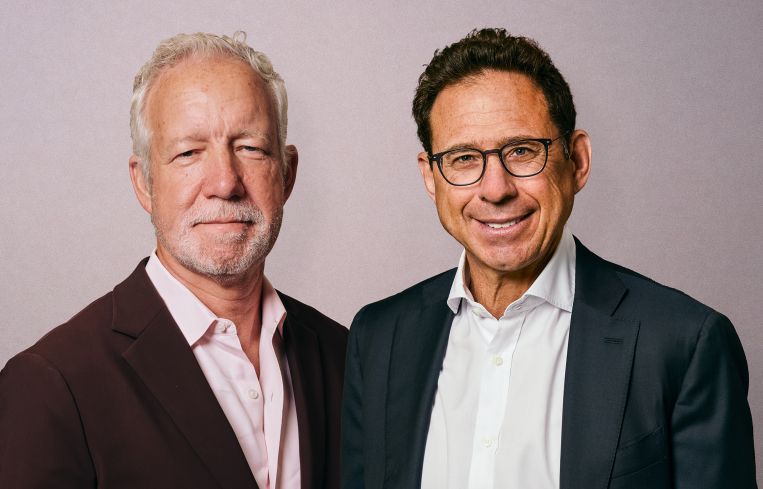
The real estate department at law firm Gibson Dunn has grown by 30 percent over the past two years, giving the group over 200 lawyers throughout 17 of the firm’s 23 offices worldwide, including in New York, Washington, D.C., Los Angeles, San Francisco and London, where the department has grown from six attorneys in 2021 to 21 today.
This growth was organic, spurred by the client needs of a firm advising on some of the largest and most complex transactions in real estate.
Recent examples include Blackstone’s acquisition of Safe Harbor Marinas, the largest marina and superyacht servicing business in the U.S., from Sun Communities for $5.65 billion in April 2025; Related Companies’ joint venture with Oxford Properties Group for the development of the 1.385 million-square-foot 70 Hudson Yards (which is going to be accounting giant Deloitte’s new U.S. headquarters); and RXR’s $540 million recapitalization of three New York City office towers collectively valued at over $3.5 billion.
The firm also completed more than 225 data center transactions in 2025, including advising on a $16 billion joint venture between Blackstone and Related Digital.
All told, the firm’s real estate department did $462 million in business in 2025, according to firm partner and department co-chair Jesse Sharf, who will celebrate his 40th year at Gibson Dunn in September. Sharf estimates that that number will rise to “well over $500 million” this year.
Gibson Dunn’s real estate group — which, according to the firm, comprises over 10 percent of its total business — has long pursued expertise in the widest possible array of disciplines.
“We do a lot of complicated transactions. It’s one of the things that distinguishes us from a lot of our competitors,” said Sharf, 63, who noted that institutional investors make up the largest aspect of the real estate group’s practice, followed closely by lenders and operators/developers. “I think most of our competitors do not have the development function that we do: joint ventures, fund formation, M&A. We do a ton of M&A work.”
Addressing all these functions, Sharf believes that Gibson Dunn’s real estate department has the deepest well of legal expertise in commercial real estate.
“There are plenty of law firms that are very good at representing users and developers of real estate,” said Sharf. “There are fewer firms that are really good at representing lenders, and far fewer for equity investors.”
Sharf added that a decrease in recent sales activity most likely led to the marked increase in the firm’s lending business.
“People wind up needing to refinance their existing assets upon the maturity of their loans, and there’s been more of a focus on financing,” said Sharf. But the nature of the business is cyclical, he said, saying that in two years’ time the priority mix for product types could easily change. A prime example is the recent explosion of data center work, another significant component of the firm’s growth.
“Data centers blur the line between real estate, infrastructure and finance,” said Sharf. “They’re a form of infrastructure that is inherently planted in real estate, because there is a facility, a physical location, which is tied into energy. Data centers have really shown the breadth of our development work and our ability to bring together different disciplines, including energy, development, land use, entitlements, financing and leases. Most firms can’t offer all that.”
Eric Feuerstein, also a firm partner who has co-chaired the department with Sharf since 2014, adds tax and litigation to that list.
“When you’re working on multibillion-dollar transactions, they draw on all these disciplines simultaneously,” said Feuerstein, who is 57. “I like to think we have become indispensable in how we utilize all those disciplines for the benefit of our clients.”
Gibson Dunn’s ability to handle deeply complex cases has led to a growth in demand for the firm’s services on all fronts, which in turn led to the recent hiring spree.
“Our real estate clients are doing more and more sophisticated transactions,” said Sharf. “Real estate M&A has really heated up over the last couple of years with take-private transactions — which also land between real estate, finance and corporate M&A — and the lending practice has grown substantially. The rest of the practice has either stayed the same or grown at a rate comparable to the rate of inflation. And data centers have become a big and intentional part of our growth.”
Sharf pointed to the hiring of Emily Naughton, who joined Gibson Dunn in December 2024 and whom Sharf refers to as “one of the premier data center leasing lawyers in the country,” and Tory Lauterbach, a leading energy regulatory lawyer, as a key aspect of the firm’s targeted expansion for serving data center clients.
“Those types of outstanding specialists give us even more heft in an area that requires particular knowledge of energy and the revenue stream for data center developments,” said Feuerstein. “You need all these disciplines, and we are enhancing it with outstanding specialists.”
Sharf mentions their hiring of Naughton as an example of just how targeted the firm can be in its desire to master every possible specialty that might benefit clients.
“We had tons of leasing lawyers, and we had tons of leasing lawyers who were doing data center leases,” said Sharf. “But we didn’t have somebody who had spent the last 10 years doing only data center leasing.”
Sharf added: “What I’ve seen three or four times while I’ve been practicing law is large institutional law firms making the decision to shrink their real estate departments, to really de-emphasize real estate, because of their perception that it was a commodity business. But, when you are representing the most sophisticated lenders, developers, equity investors and users, they don’t treat real estate as being any less sophisticated than other asset classes they concentrate on.”
Sharf offers the example of private equity.
“What they’re doing on the real estate side is no less sophisticated than what they’re doing on the corporate and more traditional sides of their business,” said Sharf. “They hire high-end, sophisticated lawyers for those other product types, and they do no less for real estate.”
Therefore, during several of the past few economic recessions, Gibson Dunn chose to continue growing while other big firms “jettisoned a bunch of their real estate lawyers,” Sharf said.
“Whenever somebody else that was sophisticated retrenched in this area, we would generally double down on what we were doing,” he said. “We’ve been doing this forever. We have very rarely lost real estate lawyers to other firms, whether at the associate level or otherwise.”
Part of this might be due to what Feuerstein characterized as a collaborative and entrepreneurial bent within the firm that emphasizes passion for the work over any sort of rigid structure.
“One of the beautiful things about Gibson Dunn is that lawyers are given the freedom to work in a way that suits the individual,” said Feuerstein. “The working relationships are less structured, with more of a friendship-partnership that is organic.”
This extends to the firm’s current use of artificial intelligence in everyday work.
Krystyna Blakeslee, a partner at the firm and a member of the real estate group, said the group tries to not only secure value from AI, but to also increase its use within the department by making people more comfortable with the technology.
“We’re thinking about AI as something we can leverage to bring value, and we’re defining value as efficiency, speed, accuracy and reliability,” said Blakeslee. “We’re using AI to do two main things: to lift the floor, meaning to lift the number of people that are using AI and incorporating it into their work lives, and to raise the ceiling with some of our power users, people who build custom workflows or the like, and really push the envelope on what can be done with AI.”
Along with several colleagues, Blakeslee has built workflows that handle repeatable administrative tasks, basically using AI as an administrative assistant in a way that frees up more of her time for higher-level strategizing on behalf of clients. She also uses it for programs that directly benefit clients.
She mentioned work she did for one particular private equity client as an example.
“We can take every single intercreditor the client had and run it through AI to create a database of every single provision in every intercreditor, and how they did on each particular deal,” said Blakeslee. “So, if we had 100 intercreditors, we were able to tell them, ‘These are the deals where you got the most mezz-friendly position for each item.’ And, when the client said, ‘What have we gotten on transfer restrictions?’ I could say, on a data-driven basis, ‘The best you ever got was in deal X, and this is what you got.’”
After creating functions like these, she then shares programs she created with others in the group.
This is just one process that reinforces what Feuerstein described as an “indoctrination of intense collaboration,” which he believes is the department’s true competitive advantage. “That has always been the case at Gibson Dunn, and I really believe that is the differentiator,” said Feuerstein. “It is within the bloodstream of our group and the firm to always work together.”
Jason Barnett is vice chairman and chief legal officer at longtime Gibson Dunn client RXR, and has worked closely with the firm since the late aughts. RXR uses Gibson Dunn for a variety of complex transactions, including fund work, tax issues and corporate M&A. Barnett said that the variety of specializations, along with the firm’s collaborative nature, have made them a valued adviser.
“It’s a global firm that has superstars in all areas,” said Barnett. “If I need a bankruptcy partner, or a European M&A lawyer, or a real estate lawyer out west or a tax person, they all come together and work as a team for our benefit in a way that’s seamless, which I appreciate.”
As an example, Barnett discussed RXR’s acquisition/recapitalization of a portfolio of Class A office buildings in New York City last year that was, he said, “as complicated a deal as I’ve done in my 30-plus years.”
“It involved property-level debt, property-level JVs, acquisitions of JV interest, acquisition of fee simple, corporate-level debt, securitized-level debt, preferred equity, common equity, multiple parties, institutional capital, entrepreneurial capital, international capital — all those pieces together, and under a very constrained timeline,” said Barnett. “They brought together such resources, both in manpower and brainpower, and were able to work through nights and weekends with such dedication. It really was a once-in-a-lifetime effort — the kind of effort that builds loyalty for life. They’re trusted friends and partners who live and die in your success with you.”
Much of the real estate team’s die-hard collaborative nature derives from the pairing of the New York-based Feuerstein and Sharf, his Los Angeles-based counterpart.
Speaking to them separately for this article, it is clear that both have similar verbal gifts and deep wells of expertise.
Feuerstein said that Sharf was an important part of why he was able to feel comfortable at Gibson Dunn early on.
“I was always impressed that a California lawyer was able to have important clients on the East Coast,” said Feuerstein. “The base in Los Angeles that Jesse had grown gave me the comfort at a young age to take the leap to help build this department.”
Feuerstein describes their partnership as a close one.
“In a constantly evolving business, you want and need to have that partnership where you can work through evolving issues in the business of law every day,” said Feuerstein. “We talk all the time, and that relationship is a tremendous advantage for our group.”
In many ways, said Feuerstein, it is the contrast between the two that makes the partnership work.
“There is a yin and yang that I feel grateful for,” said Feuerstein, who cites his own “New York intensity” in describing the contrast. “We’ve evolved this business tremendously over a long period of time, and that yin and yang has worked particularly well. It’s been a great partnership.”
Part of that yin and yang comes from the pair’s wildly different backgrounds and paths toward the law.
Feuerstein, an Upper East Side native, was heavily influenced by his lawyer father, a generalist who focused on litigation and small partnership disputes. Hearing his father discuss work provided a tremendous benefit for him that he realized only years later.
“It was through osmosis,” Feuerstein said. “At dinner, I would hear about what it’s like to work in a law firm and grow a business. In retrospect, that probably helped influence me in what I took on later in life. He was a wonderful person who treated everyone at every level of life with respect. It was his example that probably influenced me subconsciously to want to do what he did.”
Feuerstein, who graduated Cornell University in 1991 and then earned his law degree at Yeshiva University’s Cardozo School of Law in 1995, had an interesting opportunity to parody his career success thanks to his close family ties.
His younger brother, Mark Feuerstein, is an actor who starred on a television show called “Royal Pains” on the USA Network from 2009 to 2016, playing a concierge doctor for the ultra-rich in the Hamptons. (According to Deadline, a reboot of the show with Mark attached was in the works for NBC as of April 2025.)
On one episode, Eric played “some fancy yuppie guy in a suit” who watched as his plane was repossessed. His role had him running down a runway screaming, “Hey, that’s my plane!”
“My brother says I held up the entire production for a conference call,” said Feuerstein.
Sharf, the son of Polish immigrants whose education ended before high school, seems like he could not have had a more different path.
“My dad moved to whatever you want to call Israel in 1934 when he was a few months old,” said Sharf. “My mom was born in 1940, and she grew up in a ghetto, a labor camp and concentration camp during the war, then a refugee camp after the war. Her father was killed in Sobibor [an extermination camp]. She moved to Israel in 1947 when she was 6 and a half years old.”
Years later, they met when Sharf’s father picked up his mother hitchhiking in Tel Aviv, and the couple married in Brooklyn one year later.
Sharf’s upbringing was chaotic.
“I went to seven different schools in three different countries and two states within the United States between kindergarten and seventh grade,” said Sharf. “If there was a book on raising children, nobody gave it to my parents. They just moved from place to place.”
Sharf describes his father as a serial entrepreneur, though not a successful one.
“My dad would find out about a business 3,000 miles away or further, and he would buy it out of bankruptcy. Eventually he would run it into bankruptcy himself,” said Sharf. “But he would come home one day and tell us we’re moving. ‘Where are we moving to?’ ‘Canada.’ ‘New Jersey.’ ‘Los Angeles.’ ‘Israel.’ ‘When are we moving?’ ‘Monday.’ ”
The upside to all this is that many of his father’s attempts at business were in real estate, and Sharf was intrigued and influenced by what he heard. It’s here where he and Feuerstein’s legal origins seem to converge.
“My interest in law developed when I was probably in junior high school or high school,” said Sharf, who earned his bachelor’s degree at the University of Pennsylvania in 1982 before graduating from New York University School of Law in 1986. “My father was a real estate operator, modest scale, and I used to talk to his lawyers all the time about stuff they were doing for my dad, whether it was litigation, leases, acquisitions or financings. At some point, I started helping them out. And probably when I was in college, I supplanted much of the work his lawyers were doing by doing leases with my father. I enjoyed it a great deal.”
Both Sharf’s and Feuerstein’s intense fulfillment from digging deep into legal matters, alongside their collaborative natures, are a driving force in what they believe will keep Gibson Dunn’s real estate group in high demand as real estate continues to evolve in breadth and complexity.
“Real estate today is becoming far more interdisciplinary, involving investors playing up and down the capital stack at every level of investment,” said Feuerstein. “It draws on so many disciplines that it creates many more issues that have to be thought through. That requires lawyers to think outside the box, and to cover numerous issues they traditionally hadn’t worked on. This is a result of how our clients have grown as global asset managers, global banks, investment banks and developers.
“The sheer breadth of what clients are doing requires dealing with so many more issues and drawing upon our colleagues in special areas, and that is why our collaborative culture is essential.”
Larry Getlen can be reached at lgetlen@commercialobserver.com.