Ran Eliasaf of Northwind Group: 5 Questions
By Isabelle Durso June 9, 2026 10:00 am
reprints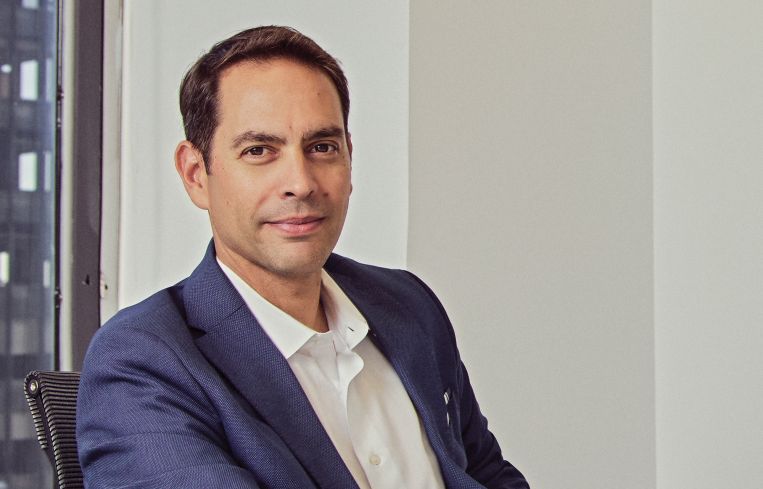
Northwind Group is a big lending name in New York City’s luxury residential real estate market, but it’s also been bullish on a different asset class over the past decade.
Ran Eliasaf, founder and managing partner at Northwind, said the private equity firm and debt fund manager has been an active investor in health care lending platforms since 2016 — specifically senior housing and skilled nursing facilities. Northwind is involved in more than 300 health care properties in 25 states.
“It’s a need-driven industry,” Eliasaf said, adding that there’s actually a current undersupply of skilled nursing properties in the country.
Besides the health care sector, Northwind announced last week a new $300 million institutional capital partnership with Atlas SP Partners, a warehouse finance and securitized products business that’s majority-owned by Apollo.
The partnership is part of the capital stack for Northwind’s latest real estate debt fund, and it’s already producing some deals. This week, the firm announced a $132 million first-mortgage acquisition loan for 333 South Grand Avenue, 601W Companies’ 55-story Class A office tower in Downtown Los Angeles.
Commercial Observer sat down with Eliasaf last week to discuss the new partnership, Northwind’s investment in the health care sector, and why it’s still bullish on New York City.
This interview has been edited for length and clarity.
Commercial Observer: Can you tell me more about Northwind’s new deal with Atlas? What types of properties will the partnership focus on?
Ran Eliasaf: Sure. We actually just closed on the first deal on that partnership — a deal in Los Angeles.
We were looking for a long time for a capital partner that will be able to provide us a warehouse facility that fits our needs, and also has the kind of guardrails we were looking for, where we have no mark-to-market events, nonrecourse, a lot of stuff like that. Warehouse lines sometimes can create some pitfalls, so we’re able to structure something that really works for us, and it’s a very flexible solution. We can put loans on that line and partner with Atlas on the type of deals and loans that make sense for us.
It gives us really attractive pricing for the marketplace on an even larger scale, and it’s part of the capital stack for our latest real estate debt funds.
The L.A. deal is at 333 South Grand Avenue. It’s a 1.4 million-square-foot office building in Bunker Hill in Downtown L.A. It’s anchored by Wells Fargo and Gibson Dunn. It used to be owned by Brookfield. A repeat sponsor of ours had bought the debt on it at this kind of heavily discounted price, and we gave them the acquisition loan.
It’s targeted at different sectors. Our types of loans are acquisition bridge. We do a lot of residential condo inventory, completion loans, value-add, multifamily bridge acquisition, and it will be our standard. Office is not a big part of our portfolio. It’s less than 10 percent, but it just made sense for this specific deal.
Northwind has been an active investor in health care lending platforms across the country, specifically senior housing and skilled nursing lending. Why do you see this as an attractive investment?
We started investing in health care in 2016, so a decade ago. We gradually grew our portfolio.
We’re involved in over 300 health care properties, mostly as a lender, so we do bridge to HUD loans on existing income-producing portfolios of skilled nursing and senior housing across the country. We’re active in 25 states, and we just really believe in the asset class.
It’s much-needed social infrastructure. In the states we focus on, with the type of operators we finance, I think it’s a very compelling opportunity. It’s a need-driven industry — obviously, the demographics in the U.S., the aging population, needs these types of services. There’s actually a lack of supply mostly on the skilled nursing side, so we like the dynamics. I think Medicaid rates are more consistent now to underwrite, and we’re very bullish on the asset class in the next five to 10 years.
I think the perception 10 years ago, when we started investing, was that assisted living is safer and skilled nursing was riskier. I think what the market is seeing now is that skilled nursing is truly need-driven, whereas assisted living is more of a choice. No one wants to put their parents in assisted living.
And we’re seeing assisted living was actually overbuilt, and there is an oversupply in a lot of areas, and skilled nursing is underbuilt. So, in our evolution, we started more heavily on assisted living, and I would say, in the last five years, we transitioned to being more focused, about 70 percent so, on skilled nursing.
In recent years, I would say there were more large portfolios transacting. I think there is a consolidation trend in the space. Most of the assets are owned by what you call mom-and-pop operators. For a lot of them, post-COVID-19, post-interest rate hikes, are kind of tired, and if they don’t have a second generation in the business, they’re selling to larger platforms and more regional operators.
Northwind also recently arranged more than $1.5 billion in financing across a 39-property portfolio in the sector. Can you tell me more about that deal?
That closed about 60 days ago. It’s the largest skilled nursing portfolio in New York state. We co-led origination there, together with Welltower, and together with a syndicated bank group led by Huntington Bank, Deutsche Bank and KeyBank.
I think this is a singular deal that there were just a lot of specific drivers for that one. I’m not sure if that signals the rest of the market. It’s just a trade that made sense to all the parties involved, and it’s just a large-scale portfolio. Most of the deals in the space are much smaller, eight- to 10-property portfolios. That’s more standard. This is the largest transaction in this sector that happened in the last few years.
What else is coming up for Northwind this year?
Our flagship strategy is still the core kind of residential real estate, first-mortgage lending. We’re active in New York City. We remain bullish on New York City. We’re active in South Florida.
Condo inventory is still a big part of our loan book, along with residential acquisition bridge loans. We do some construction — not a lot, but I would say 10 percent of our portfolio.
I think the biggest change for us is that now about 60 percent of our deals come from repeat sponsors, so there’s a lot of re-ups and re-engaging with sponsors we’ve done business with in the past. We’re still growing our platform and trying to adhere to our criterias.
There’s definitely a lot of competition — you know, spreads are coming in. I think you have to be more selective right now in the types of deals you do. I think it’s easy to make a mistake now and underprice a deal. I think we will be measured by our cautiousness that we implement now.
How is Northwind navigating the higher-for-longer interest rate environment and other macro challenges?
I think it’s helping, because at least now there’s clarity of where rates are. I think it was harder to underwrite when there was more uncertainty about what rates would be right now. At least we know this is the interest rate environment. It might go up a bit or might go down a bit, but I don’t think there’s going to be a significant move in the next 12 months, since we focus on short-duration credit averaging about a year and a half.
I think it’s easier for us to transact right now versus taking a longer stance on the market and where the rate environment will be. I think there’s more of a consensus about what cap rates are as well. What multifamily cap rates are, unfortunately it’s not great news for some owners that have transacted five to seven years ago and are kind of stuck in scenarios where they basically overpaid and rents are not catching up.
That’s not the situation in New York. New York rents are going up. There’s significant lack of supply — that’s one of the reasons we really like New York City. … The city overall is in a very healthy place. It’s relatively safe, streets are relatively clean, office is back, hospitality is doing great. Obviously, the city is hosting the World Cup, so this summer is going to be jam-packed. And I think the only thing the investors really need is certainty. So, once policy is a bit more clear, I think you’re going to see an influx of capital coming in.
Specifically, with the new mayor, one positive thing is he is definitely pro-development, which is good. He understands that you need to fix the supply side and you need to build more, so I think that’s been a positive indication.
Isabelle Durso can be reached at idurso@commercialobserver.com.