

Listening In on J.P. Morgan Chase’s National CRE Sales Meeting With Karen Purcell
Commercial Observer was in the room at the annual confab for the largest U.S. bank
By Cathy Cunningham March 24, 2026 1:00 pm
reprints
In late January, Huntington Beach welcomed some top commercial real estate professionals to its warm(ish) California shores. They flew from New York, Boston, Chicago and several other locations across the U.S., some narrowly taking off between winter storms up and down the East Coast.
The occasion was J.P. Morgan’s annual commercial real estate national sales meeting (NSM), which welcomed 500 attendees this year — including one reporter.
While the conference panels were off the record, Commercial Observer had the chance to meet with several of J.P. Morgan Chase’s division heads and get their temperature check for commercial real estate lending in 2026.
Four of the top executives dominated the conversation with CO. Those were Karen Purcell, J.P. Morgan’s new head of community development banking; John Hoffman, who is the bank’s head of agency production; and Kurt Stuart and Ed Ely, who co-head commercial term lending.
Purcell left Bank of America after 25 years to join the firm in December, reporting to Michelle Herrick, J.P. Morgan’s head of CRE. Purcell takes the reins at an interesting and crucial time, when affordable housing development and preservation is top of mind for so many given the nation’s general housing shortage.
She barely had time to unpack her stapler when she had her first true introduction to her J.P. Morgan colleagues, en masse, at the NSM.
The Windy City transplant
Purcell’s move to J.P. Morgan was sparked by a simple conversation with Herrick at an industry event.
“That was the initial draw,” Purcell said. “What came after that was a real affinity for an opportunity to do something bigger. J.P. Morgan’s commitment to investing in communities and development of affordable housing, especially at this stage in my career, is a real draw, and, personally, a chance to do something potentially outsized in order to deliver more housing. The good news about joining a strong team is that one of my goals is not to mess with what’s working.”
Much is working. Last year alone, J.P. Morgan funded more than $10 billion via loans and equity to preserve over 60,000 units of affordable housing in the U.S.
“To me, the vision for my new role is to continue to do that, and to try to grow that even further, but also make it easier,” Purcell said. “I’m a big believer in continuous improvement, and I think there’s an imperative to continue to evolve in this time of technological change and moving pieces in the industry.”
She’s also leaning into partnerships with the firm’s long-established clients to seize fresh opportunities.
“Whether it’s new leadership, new tax law or expansion of credits, there’s opportunity, and our clients are in the front line of that in partnership with cities and municipalities,” Purcell said. “The ingenuity and energy is key, and that is really where the opportunity is. Some gaps are starting to form in the capital stack around new affordable housing, less so on the preservation side. And that presents opportunities for us to be creative.”
The bank’s clients across the country are focused on reducing construction, operating and property insurance costs.
“Driving down costs down is key as subsidies are uncertain in some places, and while that capital stack might be simpler, it might also have some holes. So, figuring out the right way to fill the capital stack to get deals done is going to be pivotal to delivering and preserving housing,” Purcell said. She noted that many creative solutions are being tried today, not just in the closing of deals but also following new construction and after buildings are converted to affordable housing.

“I think it’s too early to say whether any of those things will be scalable and have a large impact, but I think they’re working at a local level,” she said.
Indeed, she is optimistic about affordable housing’s tailwinds, too.
“There’s clearly support for housing and development that impacts communities, and to be able to be a part of that when there is a lot of interest in it and a lot of resources pointed at it, is a really exciting time,” she said.
An open water swimmer who takes regular dips in Lake Michigan and recently swam around Greek islands and coastlines on a group trip, Purcell isn’t deterred by changing tides. Solving the puzzle of making affordable housing work “gets under your skin,” she said.
Huntington Beach was a sort of homecoming for Purcell. The Chicago native lived in California after college, and bought her first house just a mile away from the city. “It’s nostalgic being back,” she said. “I used to rollerblade along the shoreline here.”
It was a friend from college who first introduced Purcell to real estate, facilitating an opportunity to work as a property manager at a small suburban office building outside of Chicago. A love for the industry in all its intricate glory followed.
“It’s complex, it’s tangible and surprisingly people-facing,” she said. “No two deals are ever alike, and that is part of what keeps me interested. There are patterns you can recognize, but they’re never quite the same.”
She worked for Security Pacific Bank in 1989 before joining Bank of America in 1991 as a senior vice president in corporate real estate. At a time when banks were growing through mergers and acquisitions, Purcell was on a due diligence team for those transactions, evaluating the banks’ real estate ownership from administrative facilities, to banking centers, to mortgage warehousing, to check processing. (“Back in those days, you had to physically move the checks,” she said.) Following mergers, Purcell’s team would rationalize the real estate and decide, “OK, you have two banking centers. Which one are you keeping?”
“It gave me a solid base where I felt I knew a lot about real estate, and I intentionally kept it as my pivot foot throughout my career,” she said. “So I’ve been in a lot of roles inside banks over my career, but I always was intentional about keeping one foot in real estate.”
Upon moving to Bank of America, she was exposed to the affordable housing side of the industry. In a sales performance-focused role, she had the opportunity to cover the commercial banking teams and community development teams.
“I was working with leaders on strategy, and I was coaching relationship managers and associates on developing skills. So I became acquainted with this remarkable business that — here we call it a double bottom line — can be good for the shareholder and the community and individuals,” she said. “It provides homes for people that could change their lives.”
More competition, more scale
Alongside Purcell at the conference was John Hofmann, head of agency production, who’s been riding high since late last year when J.P. Morgan secured its Freddie Mac Affordable Housing license, expanding the repertoire of agency financing options available to the firm’s borrowers.
“I feel really optimistic about the year ahead of us,” Hofmann said. “The agencies’ caps are up 20 percent, so I think it’s going to be an active year in agency lending, and I feel like J.P. Morgan is really well positioned to serve our clients, whether that’s agency or other products.”
Hofmann said when clients approach his team today, they’re often asking for help with a financing solution.
“Since we don’t chase deals — we chase clients — we see the wide array of that, and our real value proposition to our clients is really our ability to coordinate capital. When I think about our business, I think of two pillars: One is to serve our clients, and two is to promote affordable housing in our country. If we do those two things, I think we’ll get the rest of it right.”
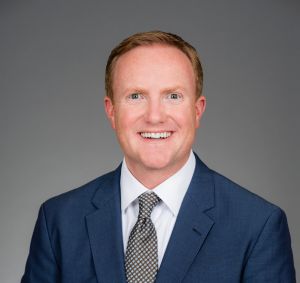
Gaining the Freddie Mac affordable license has already made a difference to J.P. Morgan’s business, Hoffman said. “It’s been fantastic. Our value proposition is being a one-stop shop for our clients, and it was an important tool to have in our toolbox.”
Part of the NSM’s goal is readying J.P. Morgan’s sales teams to go out and serve clients better — and to win transactions. In 2026, the competition is especially red hot.
“The main message is just be in front of your client,” Hofmann said. “It’s needed more than ever because there is so much competing debt capital. We’re not siloed into one execution, so it’s really a question of how do we deliver J.P. Morgan to our clients and how do we increase the supply of affordable housing and preserve affordable housing. Ultimately, that also impacts renters, and we want them to have a positive experience as well. So we’re constantly thinking about the total ecosystem, and, for our team, we’re making sure that we remind them what we’re doing and why we’re doing it — but the goal is also to continue to grow.”
Term team
It was Kurt Stuart’s first year attending the NSM as co-head of commercial term lending (CTL) at J.P. Morgan. He stepped into the role, co-led by Ed Ely, in February 2025 after almost a decade at the bank. Stuart described the transition as “very smooth.” After all, Ely hired Stuart for the Southern California CTL group, so the two are far from strangers.

“When we look at succession planning, Kurt’s at the top of the list,” Ely said. “CTL has a lot of people that have been around a long time, Kurt knows everybody in the business, and everybody in the business is so happy that he’s in this position.”
Stuart’s likability is something Ely recalls from that initial meeting: “Jamie [Dimon, J.P. Morgan’s chairman and CEO] talks about emotional intelligence all the time. Kurt has great emotional intelligence and he’s a natural coach, which is a really important characteristic to have in order to lead an organization. We saw that in Kurt on day one.”
For Stuart, who previously was with General Electric, that initial meeting came at a personally important time in his life.

“I spent almost a half a day down in Irvine with Ed and we hardly talked about the business at all, but we spent three or four hours together,” he said. “I just remember going home and telling Sarah, my wife, ‘I don’t really know what these guys do, but I want to work with them.’ At the time, she was getting ready to have our triplets, and she said, ‘Well, you’re about to have three kids, so whatever they offer, you triple it.’ ”
As Ely and Stuart lean into the 2026 pipeline, they were feeling optimistic.
“We couldn’t be happier about what the future holds for our business,” Ely said. “We’re probably in the strongest competitive position that we’ve been in and supported all the way up and down the organization.”
“We do so many loans, and our average deal size is $1 million to $10 million, so you really have to have a process in order to be super efficient and to be able to scale and do it in large volume,” Stuart said. “All our competitors are back, but none of them has built out systems and invested in all the technology and all the things that we have, so they don’t have the ability to scale quite the way that we do. So we feel that that’s going to be one of our huge competitive advantages.”
As such, the tidal wave of debt capital isn’t fazing the duo.
“There’s an abundance of capital. But what I’m hearing from owners I’m speaking with is they much prefer to transact with lenders that they know and trust. That’s the main takeaway I’m getting,” Stuart said.
“We’re also constantly changing and fixing and learning,” Ely said. “We get so many data points because we do so many loans. That really helps us pre underwrite deals we’re working on, and AI can help us out in certain areas to make our underwriters and our appraisers more efficient.”
Cathy Cunningham can be reached at ccunningham@commercialobserver.com.


