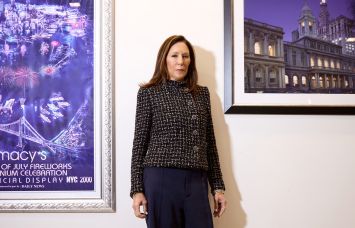
Glen Kunofsky of Surmount: 5 Questions
By Andrew Coen February 24, 2026 2:33 pm
reprints
Surmount CEO Glen Kunofsky took many Amtrak trains between New York and Washington, D.C., last year in a big push for the commercial real estate industry.
The 25-year CRE veteran lobbied hard for inclusion of a provision in President Donald Trump’s wide-ranging tax bill to permanently restore a full 100 percent bonus depreciation for real estate assets acquired and placed in service after Jan. 19, 2025. Kunofsky’s successful lobbying of Congress and the White House took place right as his net-lease-focused commercial real estate firm was formed through an early 2025 merger between NNN Pro, STNL Advisors and United Global Development.
Kunofsky spoke with Commercial Observer about why he decided to press federal officials on behalf of the 100 percent bonus depreciation, why the issue is important to the CRE industry, and his future lobbying plans in the nation’s capital.
This interview has been edited for length and clarity.
Commercial Observer: It’s been nearly a year since the formation of Surmount by merging three net-lease advisory firms. How has the venture gone?
Glen Kunofsky: We’re doing great. It was a long time coming to having different services and different platforms under different names, so the Surmount brand has really taken off, and clients of each individual service are now really excited to understand the platform and all the things we can provide, from brokerage to development to capital markets. Having everything under one roof has really been helpful.
Around the time Surmount was forged, you successfully lobbied for inclusion in Trump’s tax bill of a full 100 percent bonus depreciation for real estate assets acquired and placed in service after Jan. 19, 2025. Explain the importance of this issue to the commercial real estate industry.
It’s super important to encourage development and growth. Bonus depreciation is something that we worked on back in 2018 through 2022, encouraging real estate owners to make these developments and being able to get the tax benefit. A lot of people think it’s just commercial real estate benefiting from it, but it’s the whole economy in big markets and in small markets. This was important for the small developments in the net-lease world — from quick-service restaurants to gas stations to child care centers — given where cap rates have been.
Less than a year since the bill’s passage, there are probably 300 to 400 projects that have come through our desk at the firm from people motivated to take advantage of it. It was really important to our firm and, I think, the country, which is why I got involved. I never really did any lobbying before, but we saw what the environment was before 2018 through 2022 with 100 percent bonus depreciation. We saw what it was like when it teetered off, and now the acceleration again of projects for tenants and the real estate owners being able to also get that and invest with the benefit is huge.
What was your spark for deciding to lobby aggressively for the inclusion?
The big issue was getting it permanent and making sure it wasn’t going to fade out again — because, when you have a fade-out, it’s very hard in real estate development as some of these projects take three, four or five years. People not knowing that the benefit was going to be there was a problem in the last fade-out. I felt compelled to do it both for the company, for the clients, and also just truly being a believer in what it could do for the economy and job growth in our sector.
It was an interesting experience, and I don’t know if I’d want to do it again. But, if there was something else that was as compelling, I would get involved again.
What was the message you tried to get across to lawmakers about the importance of this issue to the commercial real estate industry and what role it can play in the overall economy?
It was a big education process explaining to them how it works and why people take a development risk and why people invest in real estate. I even explained the process of car washes to them as we have close to $8 billion of car wash transactions, and how they are built and how many jobs that creates.
I explained how when there’s a corner in a town and a new piece of real estate is developed there — whether it’s a restaurant or convenience store or automotive service — it creates permanent jobs aside from just the real estate development side.
I tried to convey the message that not only is this a commercial real estate issue, but these are permanent jobs, and real estate as a whole houses these other businesses. We had probably 50 or 75 meetings. Sometimes they would call us back as they were writing the legislation as it was being circulated and ask again why it was so important. So I felt like we had a big impact, and I was really proud to be one of the leaders in it.
What are the issues of great importance now to commercial real estate that you would like to see get the attention of Washington?
There are issues that come up every day where I say to different clients and different verticals that we’re dealing with, “Do you have a lobbyist and do you have someone that’s talking about these things that might affect your business or your project?” The big thing in the news right now is private equity buying single-family homes and how that’s affecting home prices.
For me, there’s nothing right now, but I do feel like political issues can drive commercial real estate. Our firm, being important and having a lot of reach into different industries and real estate investments, for the right issues, we would get involved again — or at least steer clients to the right people. Having the reach and the understanding of how Washington lobbying works and getting the meetings with the right people — making the case for your issue — is so important.
Politicians use these things to get votes and raise money, but a lot of them need to be coached on why they should take a position on a certain issue. So I will get involved again mostly for the firm’s sake and the clients’ and the industry’s stake. I would do it again on the right issues.
Andrew Coen can be reached at acoen@commercialobserver.com.