Sean Caldwell of GID Residential Partners: 5 Questions
By Amanda Schiavo December 19, 2025 9:00 am
reprints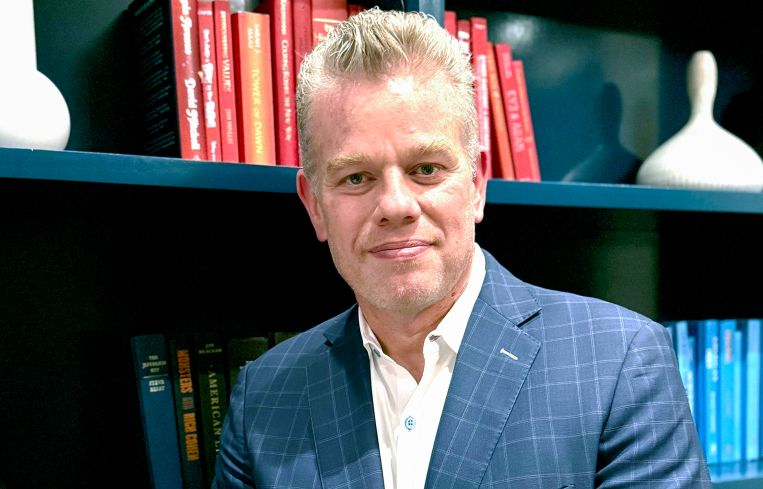
GID, a real estate investor, operator, developer and fiduciary that has been around for the last six decades, launched a new platform at the end of October called GID Residential Partners, which will focus on multifamily development across the U.S.
Sean Caldwell, a 32-year industry veteran and a founding partner of multifamily company Mill Creek Residential, will lead the platform as president.
Caldwell recently connected with Commercial Observer to discuss his career, his new position and the mission of GID’s new business line.
This conversation has been edited for length and clarity.
Commercial Observer: Can you start by giving us a bit of background on you and your career?
Sean Caldwell: For the past 26 years I have been with Trammell Crow Residential/Mill Creek. I joined Trammell Crow in 1999 working for Chip Bay and Bill MacDonald. That was an incredible 13 years of entrepreneurial spirit.
Then, post-Great Recession, for both offensive and defensive reasons, we had to reinvent ourselves, and like a lot of folks did we reinvented ourselves as Mill Creek. So I was one of the founding partners at Mill Creek, and we launched a real estate development company that was really based on institutional discipline, learning from the entrepreneurial culture of Trammell Crow, and we built that up over the past 13 years. My roles there were from project developer to partner, to city leader to regional lead, and I sat on investment committees.
Why leave for GID?
At this point in the cycle where I personally landed, it was a great time in the market, and in my career, to start from zero. As much as it’s a natural expansion of GID, it’s a great opportunity to start a platform from the beginning. I think a lot of the development firms that are out there today, after three years of challenges, are really struggling or challenged with the legacy issues.
And we just see it as a great opportunity to launch a national platform. It’s a natural expansion of GID’s current platform, and it’s really pulling those lessons learned and cultures that I grew up in at Trammell Crow and Mill Creek. So the confluence of those two concepts just made GID really a natural place to launch a platform.
What spurred the launch of this platform, and what is the mission?
From GID’s point of view, they’re known as a limited partner investor, they’re known as an operator, but their legacy is that of a general partner and of a developer. Their history goes back to doing exactly what we’re doing today.
The vision of myself, John Gagnier, president of GID Development, and Greg Bates, president and CEO of GID, is that we can launch in 10 cities, 10 very solid markets where we can be striving to start approximately one deal per year. And that is the scope that will make this a national presence, but with really local focus.
We have the ability with the GID name to really be a formidable national multifamily developer that’s going to be nimble, but that’s not going to be, frankly, a behemoth from an overhead point of view. It’ll be a nice, nimble national developer, and we believe in those 10 markets — Boston, Atlanta, South Florida, Texas, New Jersey, Northern Virginia/Washington D.C., the Carolinas, Denver, Southern California and Seattle — long term.
What makes those 10 markets attractive?
It fits into two buckets. There are the high-growth markets, and then there’s the high barrier market. You can put Southern California, Seattle and Boston into the high barrier entry markets. And then you’ve got the growth markets like Texas, Atlanta and South Florida sort of in between, but more growth markets. If you think about the growth markets, we just have strong conviction that the long-term supply and demand is going to be really attractive. Obviously, they’re struggling today because there’s supply challenges in those markets.
So, if we just think about the growth markets, we think our timing is really exceptional right now. They’ve been burning through the supply side. We all know the supply cliff is nearing in each of those markets — each market, each submarket, will be unique. But we believe in the long term in a place like Dallas. That’s going to be a great place for the next 10 years. Is it going to have its supply bubbles? Sure, Texas always does. But long term, the job growth story, the overall shortage in housing, is going to be really positive in those markets. We’re in the right inning of the supply wave to really look at turning the pipeline back on.
Then with the other grouping of cities, we have someplace like Boston that is really interesting. It’s not oversupplied, it’s woefully undersupplied. But, if you’re going to be in Boston, there’s an incredibly long entitlement cycle. So, if you’re going to be in Boston, it’s better to get in now, because it could take three, four, sometimes seven years to get development moving in Boston. If we’re going to be there, we should go there on the earlier side, so it’s a nice balance.
So if you look at those 10 markets, all 10 of them have solid fundamentals from a job growth perspective. We believe that will outstrip the supply challenges in the growth markets. And over a 10-year horizon, we just think there’ll be good demand, the right product we want to build, and the right returns we want to chase.
What will the platform’s sweet spot be in terms of the kinds of projects developed?
Multifamily. We’re not on the very low end of density. We’re not going to be pursuing single-family rental and build-to-rent. On the very high end, we’re also not going to be chasing out of the gate a lot of high-rise product, Class A construction or, frankly, we’re not going to be chasing a lot of high-density, mixed-use.
It’s really going to be a garden product, wrap product, podium product. So, broadly speaking, it’s the stick frame construction, wood frame construction, from garden through podium product. I think the majority of it will probably be the garden and wrap, and then there’ll be podiums in the right markets. So it’s really that broad-based definition of multifamily, probably avoiding high-rise and avoiding build-to-rent and single-family rental.
Amanda Schiavo can be reached at aschiavo@commercialobserver.com.