The Way People Use Manhattan’s Financial District Has Changed Dramatically
By Teresa Stephenson November 19, 2026 7:00 am
reprints
When I joined Platinum as an agent in 2012, Manhattan’s Financial District was already changing, but it was still widely viewed as a place people came to work rather than a place where they imagined building a life.
From our office at 100 Wall Street, I saw that distinction every day. The sidewalks and subway platforms filled with office workers in the morning, and by evening much of that activity had dissipated. People lived downtown, of course, but the neighborhood did not yet have the same around-the-clock energy as more established residential areas of Manhattan.
I heard it in conversations with prospective residents, too. They liked the apartments, many of which offered larger layouts, easy access to transportation, proximity to the waterfront and amenities that could cost considerably more elsewhere in Manhattan.
But people wanted to know what living there would actually be like. Where would they buy groceries? Were there places to meet friends for dinner? What would they do on the weekends? They were trying to decide whether they could see themselves living downtown, not just sleeping there.
By the time I arrived, I had already heard stories about Platinum’s early years in FiDi. When Dezireh Eyn and Khashy Eyn founded what was then Platinum Properties in 2005, downtown was a much less obvious residential choice. Agents sometimes had to persuade prospective residents just to come below Canal Street for a showing. Once they got there, the apartments often made the case for themselves. The harder sell was the neighborhood.
What FiDi did have were many of the fundamentals of a great residential neighborhood. Its historic architecture and cobblestone streets gave it a distinct character. A transportation network built largely to accommodate office workers meant residents had access to nearly every subway line. There were waterfront parks and open space, while former commercial buildings offered the potential for larger residences.
What was still developing was everything around those fundamentals that makes daily life in a neighborhood convenient and enjoyable.
In the years after 9/11, public investment, tax incentives and adaptive reuse helped bring new housing downtown. Older office buildings became apartments, and a larger permanent residential population began to take shape. Lower Manhattan’s population has more than doubled since 2000, and the area has added nearly 25,000 residential units since 9/11, more than the total number that existed at the beginning of 2002.
For those of us who have worked downtown throughout much of that period, the change is just as apparent on the street. People run along the waterfront before work, walk their dogs through Battery Park, meet friends on Stone Street, take fitness classes, pick up groceries, and spend weekends at the Seaport. None of those things are remarkable on their own, but together they are what make a neighborhood feel like a neighborhood.
As more people moved downtown, there was greater demand for restaurants, retail and everyday services. As those businesses opened, the neighborhood became more appealing to people considering a move, while businesses gained a customer base that extended beyond the weekday office crowd.
What is especially telling is how many of these destinations now bring people to FiDi from other parts of the city. French department store Printemps chose 1 Wall Street for its first U.S. location. Casa Cipriani has become a destination in its own right, while the Seaport and Pier 17 regularly draw visitors downtown for concerts, dining and waterfront events. Old Mates, an Australian pub in the Seaport, routinely draws lines around the block and has hosted celebrity guest appearances, while longtime establishments like the Dead Rabbit remain busy with locals and visitors throughout the week.
The pandemic accelerated another part of this evolution. It did not create FiDi’s residential growth, which had been underway for years, but it changed what people expected from their homes. Renters and buyers wanted room to work, privacy for calls, flexible layouts and amenities they could use throughout the day.
That has brought renewed attention to office-to-residential conversions, something the Financial District knows well. Many older commercial buildings have extensive window lines and layouts that can be adapted for apartments. Projects such as 25 Water Street, 55 Broad Street and 160 Water Street show how buildings designed for an earlier era of office life can take on an entirely different purpose.
Expectations for those buildings have changed as well. A basic business center does not carry the weight it once did. Residents want private places to take calls, comfortable areas to work, well-equipped fitness spaces and places to entertain. Rooftops, wellness amenities, coworking spaces, screening rooms and private dining areas have become increasingly important.
When I think about how much FiDi has changed since I started at Platinum, I don’t think first about any particular building or opening. I think about how differently people use the neighborhood.
In 2012, prospective residents regularly wanted to know whether there was enough here to make downtown feel like home. I don’t hear that question in the same way anymore. People are raising families here, walking their dogs, working from home, going out to dinner, exercising along the waterfront, and spending their weekends in the neighborhood.
The Financial District will always be one of the world’s major business centers. The difference is that the workday no longer defines it.
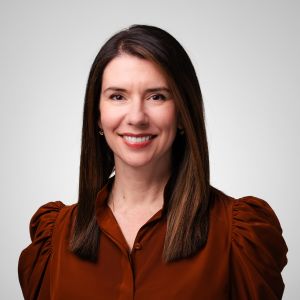
Teresa Stephenson is president at Platinum Forbes Global Properties.