Equine Real Estate Demand in Florida and New York Spurs Expertise
Certain brokers know the certain things that horses want in a home — and what humans might want, too
By Amanda Schiavo November 16, 2026 10:47 am
reprints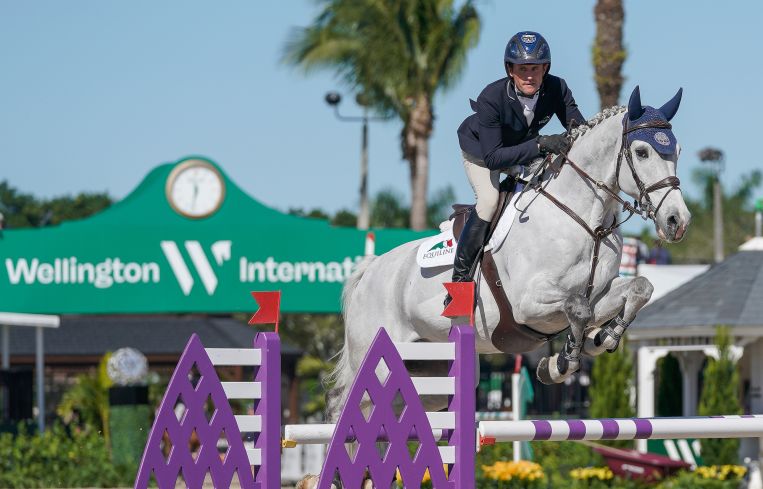
Growing up in a small town outside of Macon, Ga., luxury residential broker Brian Loebker developed a love for horses as well as an interest in real estate thanks to a grown-up repeating the old adage about no more land being made. Ultimately, Loebker chose to serve his country in the United States Marines, having graduated high school just a year after 9/11.
Loebker expected the Marines to be his career full stop, in fact. But a 2004 car accident unrelated to his military service left him temporarily paralyzed, derailing those plans.
Now the retired Marine resides near Sarasota, Fla., on a luxurious, almost resort-like horse farm — he’s currently in the market for some horses, by the way — where he has built a career as a broker in the area’s ultra-high-net-worth market, helping clients buy and sell some luxurious waterfront homes, boutique condo developments, and, yes, even equestrian properties.
Loebker is not alone. The New York area and Florida have emerged as prime markets for equine real estate on the East Coast, and there are professionals like him ready to service the markets’ oftentimes precise needs.
Hearing that Florida is one of the nation’s most active equestrian communities might shock those who know the state only for its beaches, retirees and Disney World.
Indeed, the state is home to over 385,000 horses, making it the third-largest equine state in the country, according to the Florida Department of Agriculture and Consumer Services. The equine industry has a yearly $6.8 billion economic impact on Florida. (The two biggest states for the horsey set are Texas and California.)
“My wife and I live in a boutique equestrian neighborhood outside Sarasota: just 48 homesites, each a minimum of 5 acres, priced $1 million to $5 million,” Loebker said. “Part of what makes Sarasota’s equestrian lifestyle so interesting to me is that you can have your choice horses at your personal residence, and choose to keep the athletes at the Sarasota Polo Grounds just up the road, all while still being just 20 minutes from Siesta Key Beach.”
That connection between equestrian life and coastal luxury isn’t theoretical for Loebker professionally, either. He specializes in deals for those who want waterfront property and for those who need a place for their horses.
“When people think of Sarasota, they think of Siesta Key Beach or Longboat Key Beach — these are AAA-rated beaches — so they don’t think of the equestrian lifestyle,” Loebker said. “But, once you become a local in Sarasota, you discover there is this unorthodox connection between living on the water and horses.”
Loebker had been working with a client — who also happened to be his friend and financial adviser — on the acquisition of his 10-acre home and horse property. In turn, that just so happened to make him Loebker’s neighbor. Buying and selling equine property with a residence requires a broker who can think in both residential and commercial terms.
“This was a tough sell,” he said. “It’s a fabulous 10 acres with big, beautiful pastures, fully fenced in, with water and electric everywhere. You have these entitlements to the property, which is really more of a commercial term, but these are almost like commercial properties.”
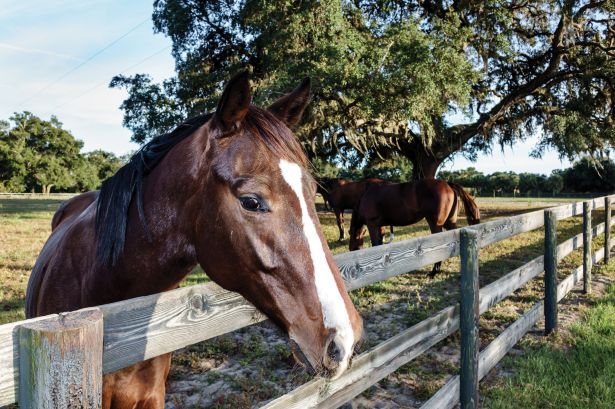
The issue was the seller hadn’t done much work on the property since it was built in the 1980s and didn’t have any animals. To the seller, then, it wasn’t an issue that in the rainy seasons the pastures would flood. For Loebker’s client, who wanted to keep horses, flooding was a big issue.
“The sellers were not horse people and didn’t care that the property was not high and dry,” Loebker said. “My client fell in love with the place and had to decide what was important to him: having a property that was high and dry, or or having the home that he wanted. In the end, he decided to purchase the home and forgo the renovation to truck in dirt to elevate the property so that he could have his horses. He did the renovation a couple years after the fact, and now he’s sitting on one of the most expensive properties in the neighborhood.”
What makes selling a home with equine property more complicated than selling just a luxury house, Loebker said, is that you are assigning a value to the intrinsic items that make a property friendly toward horses.
“The horses are treated like royalty,” he said, “so it’s an inverse sensation, as an industry professional, prioritizing your pricing structure for the horse as much as for the humans.”
All across Florida, the equestrian community calls the state home on both a permanent and semi-permanent basis. Between December and March, around 25,000 people with connections to the horse industry descend on Wellington for 13-week dressage (horse ballet — you’ve seen it in the Olympics) and hunter jumper competitions, according to The New York Times. Several prominent equestrian athletes, including Jessica Springsteen (daughter of Bruce Springsteen) and Georgina Bloomberg (daughter of former New York Mayor Michael Bloomberg) have homes in Wellington.
Martha Jolicoeur is a Wellington-based broker with Douglas Elliman who specializes in the horse world from both a rider and a real estate agent perspective. A former competitor in grand prix show jumping and dressage — the highest level for both — Jolicoeur has sold hundreds of millions of dollars in horse real estate in Wellington.
One of her listings is 15527 Imperial Point Lane, a 23-acre estate built in 2023 and currently listed for $52.2 million. The property, located just one mile from the Wellington International equestrian facility, features a 20-stall center-aisle barn, 14 paddocks, a 3.3-acre grand prix field, an 11,000-square-foot residence with four bedrooms, office space, a great room, a zero-edge saltwater pool and an oversize Jacuzzi — among other luxuries for both humans and horses.
One factor that made Wellington a place where equestrians wanted to settle was the 2024 sale of Wellington International, Jolicoeur said. That cleared the way for upgrades to the facility.
“When the horse show was sold, people felt more comfortable about buying a place to live here, and they realized that being a Florida resident tax-wise is a good thing,” she continued. “And, more so, they spend the most nights anywhere in Florida because it’s the longest circuit. So it made sense for them to plant roots here.”
There’s a regular trade in equine properties in the New York tri-state too.
Sally Slater, another broker with Douglas Elliman, is a lifelong rider who specializes in equestrian real estate in New York and Connecticut. Her network of trainers, dealers, farms and horse-world contacts helps her connect buyers and sellers, including with properties that are not publicly listed. Bedford and North Salem in New York are major local horse areas, and Slater said North Salem has become a destination for Olympic riders.
Horse property hunters are generally going to have some very specific criteria. The footing for the horses has to be just right. There are fencing needs to consider, as well as the stability of the paddocks and the stalls, the condition of the flooring, and the property’s water system.
The property’s turnout area shouldn’t be too sloped because the horses could fall, Slater said. You also need adequate storage for hay and the wood shavings used for bedding. A horse property that has staff quarters is a huge plus.
“Very often horses live better than their owners,” Slater said. “There’s so little inventory for horse farms that people are willing to overlook things in the house and just grab them. There’s so much competition that people will pay a premium for a move-in condition. These properties go really quickly.”
Amanda Schiavo can be reached at aschiavo@commercialobserver.com.