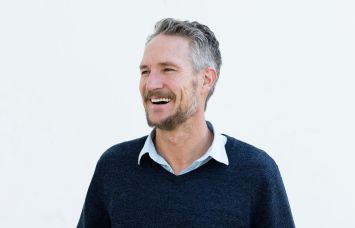
Invesco Real Estate’s Chase Bolding Talks Market Opportunity
The chief investment officer and head of North American real estate at the $90 billion-strong Invesco Real Estate leans into opportunities in private wealth and certain asset classes
By Brian Pascus August 3, 2026 6:30 am
reprints
Chase Bolding is the chief investment officer and head of North American real estate at Invesco Real Estate, a $90 billion global subsidiary of Invesco, a $2 trillion asset management firm. Bolding works out of New York City managing several portfolios covering roughly $40 billion of commercial real estate assets.
Since joining Invesco 16 years ago, Bolding has honed his skills across all asset classes and markets. Today he uses his expertise to guide the firm’s institutional investment business — which touches almost every sector — and its growing private wealth business, which launched in 2019 and prioritizes core-plus and income-oriented strategies.
On the private wealth side, Bolding helps guide investment strategy for Invesco Real Estate Income Trust (INREIT), a $1.3 billion non-traded REIT vehicle that invests in stabilized properties across sectors; Invesco Commercial Real Estate Finance Trust (INCREF), a perpetual life REIT made up of loans and preferred equity interests secured by commercial real estate assets; and several smaller portfolios for high-net-worth clients and family offices looking for efficient, tax-deferred strategies.
Bolding sat down with Commercial Observer toward the end of July to discuss his career and investment strategy.
This interview has been edited for length and clarity.
Commercial Observer: What were the origins of your commercial real estate career?
Chase Bolding: I started my career in 2007 with Greenfield Partners up in Connecticut. I had done an unpaid internship with them, and then I joined them after graduating college as the only analyst at the shop, working on a $1 billion closed-end opportunity fund business.
It was 2007 so, obviously, that was a very educational time period. I had about an hour and 45 minute reverse commute from the city on the Metro-North, so I had a ton of time to read. This dates me, but I had a BlackBerry and a physical newspaper. And the headlines, as you will recall from that period, were hard to believe. So I was getting a crash course on the financial system with everything happening going into the Global Financial Crisis (GFC).
And, then, from a career standpoint, in some ways, it was very fortunate because I got to experience a very dynamic investment environment, from 2008 until 2010, when I left Greenfield Partners to join Invesco Real Estate.
Before we get into the Invesco era, what did you specialize in at Greenfield Partners?
I have specialized in stressed and distressed assets at both places, and working on those situations is a skill set that has carried and added value throughout my career, because you have to think about investing in a very three-dimensional way when you’re dealing throughout the capital structure. You’re not thinking exclusively about the fundamentals, but asking, “What do the documents say? What am I allowed to do here?” You’re working with lenders, and you’re working with partners.
It’s real estate, economics, and it’s behavioral, because you’re dealing with people. And so it forces negotiation, it forces compromise, and that’s a skill set — whether you’re in a strong market, or one with stress and distress in it — that I think is very valuable.
What was the biggest lesson that the GFC taught you?
Having started my career effectively during the GFC, there’s a risk-based mindset that people who started after the GFC had to experience many years of their career before they saw the same true capital loss, or true principal risk, anywhere close to the scale that we saw in the GFC.
Having started my career in the throes of asset writedowns, workouts, needing to be very creative and solution-oriented to make money, that is something that takes a cycle to teach.
Why did you join Invesco?
At the time, the government, mainly the Treasury Department, was partnering with the private sector, as they had a public-private partnership under the Troubled Asset Relief Program, where they picked eight or nine managers, and they brought debt and equity together. And the gist of it was we’re going to provide capital to banks, create liquidity in the system, primarily on the securitized side — commercial mortgage-backed securities, residential mortgage-backed securities, those types of things. They called it the Public-Private Investment Program (PPIP).
What Invesco Real Estate did, uniquely amongst that group of PPIP managers, is they said, “We’re also going to target private real estate.’” And that effort is the team that I joined. And the logic for me was: “This is a big, resource-rich real estate platform, they’re putting their weight behind this opportunistic business.”
The strategy was fascinating for me at that stage of my career. So it felt like a move full of opportunity.
What assets did you target during this post-GFC era?
All commercial real estate sectors.
Initially coming through there were tons of loan sales. That was the primary mode of transaction — whether it was life companies, conduit debt, banks, people were just selling loan books. And we were buying them, sometimes getting to the real estate, sometimes not. But the optionality you have when you’re buying credit is you can modify the loan and, if need be, pursue remedies that are available to you on the loan documents. That’s what the opportunity set looked like.
So it was hotel, retail, office, apartments. We were fairly agnostic, so long as we felt like we could understand the risk.
Did that prove to be lucrative, considering the market rebounded relatively quickly?
It didn’t feel like it at the time, but it did happen fast.
But then Europe was a little bit slower to come out. We had capital that was cross-border, so we were able to spend a significant amount of time in Europe — we have a large footprint as a business in Europe — to take advantage of the distress and the situational type investing that we did in the U.S., but now in Europe. It was very different.
After the U.S. recovered, there was still quite a bit of recovery to be had in Europe, so we focused there for the next couple years.
You were made an investment officer in 2015. What did you specialize in that time?
It was still opportunistic at that time, but it was a little more pro-cyclical, because the distress had largely worked through the system.
At that point, we’re seven years solidly beyond the onset of the GFC. So there was more development, more value-add business plans, fewer access points through the debt, more pro-cyclical activity. And we had some very strong investments through that period, but they were about taking real estate, repurposing it, putting it in front of big waves of demand, leasing it, selling it. That became the strategy.
It was different, but, at the end of the day, whether you’re buying credit or buying assets, you’re still underwriting real estate and then backing into the execution.
You were portfolio manager from 2019 to 2023. Did that change your business at all?
It was different.
In 2019, the firm decided to enter the private wealth business. For essentially 40 years, the firm has been institutional in its capital base. Then, in late 2018, early 2019, we decided, after much debate, that we should take our capabilities and offer them to individual investors. We sit within a multitrillion-dollar publicly traded parent company, Invesco, where most of their business is managing capital for individual investors.
So what are the core ingredients of success? Obviously, investment skill, and for core-plus or income-oriented strategies, we felt like we had the track record and the capabilities to do that for individuals. And, then, when it came to the distribution component — to go approach wealth management businesses, financial advisers, down to the individual investor — we felt that we had the infrastructure and the plumbing to do it as an organization. So that was the logic.
I spearheaded that with some other partners and became the portfolio manager of an income-oriented strategy for individual investors. And to answer the question directly, one of the biggest changes when you make that transition is you go from thinking about discrete investment opportunities to thinking about the whole portfolio. That’s your job. You’ve got everything that comes with running a portfolio: talking to investors, explaining why you did what you did, explaining the results, et cetera.
So I think we’re always a fiduciary, whether we’re doing deals institutionally or for individual investors, but thinking about the portfolio picture and, frankly, how each investment is part of a bigger equation on performance and risk. That was something I really sharpened as a portfolio manager during that time.
Did that require new skills?
Sure. There’s differences, but I think there’s probably more similarities than differences, whether you’re sitting in front of a state pension board of trustees, making a pitch for the next fund, or you’re sitting in front of a wealth management platform, these are all smart individuals. You have to be clear about what you’re doing and why you’re doing it.
An individual is different from an institution. But, at the end of the day, your job is to articulate a cogent strategy on why you’re going to provide them total returns, income-oriented returns, whatever the strategy may be.
So I didn’t find it to be all that different.
How is your current business set up?
We have built out our private wealth offering as follows. We have an equity strategy and we have a credit offering, and then we have a tax-oriented strategy, which is the Delaware Statutory Trust structure [IREX II Self-Storage Portfolio Delaware Statutory Trust]. That’s for individual investors who have appreciated gains looking to defer the taxes on those gains. Those are equity, credit and tax — our three private wealth products.
And we find that there’s value when we sit down with wealth management platforms and can say, “These are the three things we can offer,” because, depending on their client base, maybe they want one of the three, or all three, but those are perpetual, in-demand strategies that we’re positioned to execute on. That’s our private wealth business.
What else is on your desk?
On the institutional side, we have core strategies, core-plus and closed-end. That last one is more higher-return oriented — so total return in nature, not typically an income-oriented strategy.
And then we have a separate account business, which is how the firm started in the 1980s, as a separate account manager. In a separate account, you are creating a real estate portfolio, but you’re not doing it in a commingled fashion with other investors. Today we have more than 10 separate managed accounts at this point. They’re strategically important to the firm. We find that they invest across our fund ecosystem as well, in addition to their separate account, and they’re a significant and important part of our business.
You’re heavily invested in industrial more so than any other asset class. Why?
There’s some big, long-term demand underpinning that sector. It started with e-commerce with more goods coming through warehouses before they end up at your front door.
Then, more recently, it’s been further building out and reshoring the supply chain domestically. That’s been another growth catalyst with manufacturing, and we’re investing in that trend.
And, then, increasingly there’s advanced manufacturing, which is more of a play on the hardware side of technology. That trend is durable as a sector. You tend to get long-term leases, annual increases in the rent, and you have fairly low capex required to go back into the assets.
The sector matches that financial objective of being an income-oriented investor quite well: There’s long-term demand, underwritable steady cash flow, and big plates of demand from e-commerce, reshoring and the supply chain underpinning it. That’s a very investable trend.
In terms of the health care side of things, what type of assets are in your portfolios?
Two, primarily.
We think about the aging demographics, the wealth sitting within the aging demographics, and the way that health care and housing is being provided to that cohort. That’s investable for us.
So the two ways we’re expressing that view would be with outpatient medical facilities, with care increasingly occurring outside of a hospital system for cost efficiency. And we’re focused almost exclusively on the private pay side of the equation.
And then we invest in senior housing, which has a very strong setup. There’s wealth and there’s a need for care there.
What about multifamily?
On the housing side, the math and the lack of affordability for homeownership is pronounced at the moment. The way we invest in housing is through apartments, but also other parts of the rental housing spectrum. We buy, and we build.
Right now, we’re investing in senior housing and traditional apartments — buy and build — which might be a little counterintuitive, but we think there are pockets where it’s very difficult to bring new supply — there are high barriers, high costs, it takes a lot of time — so it’s there that we will look to deploy capital.
Where in particular?
Some markets in the Northeast that are very difficult and expensive from the homeownership standpoint, we see an attractive opportunity. We’ve been investing capital there, mainly in the New York metro area. Outside of the city, think about the I-95 corridor, and Long Island to an extent. We do think that’s a compelling setup there.
And then we have manufactured housing. We have an operating company that we built that buys manufactured housing.
How has your office thesis changed since 2019?
Office used to comprise a material component of everyone’s portfolio, particularly in the NFI-ODCE Index [a benchmark for private institutional open-ended real estate funds]. That is down measurably from the peak levels of probably 40 percent at one point.
Yes, we have reduced our office exposure considerably across our open-ended fund complex. With office, we see that these are capital-intensive assets. The capital intensity of maintaining occupancy — whether it’s in Invesco or Brookfield or Jane Street — is capital intensive to bring new tenants into the building and replace them when they leave. That capital eats the cash flow.
If our job is to provide returns to investors, and income is a big part of that equation, if we’re giving too much of it back to the building to maintain it, then it’s eroding performance. The office that we think is selectively investable is gonna be low on the capital intensity, it’s going to be differentiated in its location and its physical specs, and have a very strong value proposition for tenants.
We think that cohort can do well, but, even with all those attributes, you really need to be mindful of the capital intensity of the sector relative to some of the things we’re talking about, such as industrial.
What was the best investment advice given to you in your career?
From early in my career, I’ve had the benefit of presenting investment ideas to the most senior people. And that sharpens the ax, that sharpens the mind considerably. So I feel very lucky from an early age to have been able to be in the room talking about the hardest things in the most serious format we have. That’s No. 1.
And thinking back to our opening discussion, getting the experience through cycles and investing in more stressed environments, into different parts of the capital structure — that’s a unique skill set that has carried forward throughout my career.
Brian Pascus can be reached at bpascus@commercialopbserver.com.