Hogan Lovells Cadwalader, the Blockbuster New Firm in Corporate Law
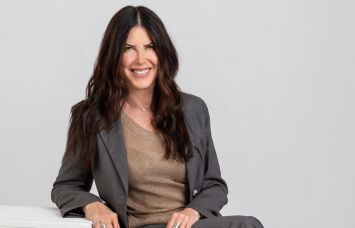
Trevor Adler and Sulie Arias are real estate-focused legal partners in the corporate finance practice of the firm
By Amanda Schiavo August 11, 2026 10:00 am
reprints
You know that nightmare, where you are late for class and your teacher calls out from behind you, and all you feel is dread? That happened to real estate lawyer Sulie Arias, a partner with the corporate finance practice at Hogan Lovells Cadwalader — a newly formed firm thanks to a $3.9 billion merger — except her reality wasn’t a nightmare.
The professor was running to catch up with Arias to tell the trembling student just how impressed she was with the grade Arias received on a test that very few people had even passed. The professor encouraged Arias to pursue law as a career, and now she is part of one of the biggest law firms in the country, working alongside people like Trevor Adler, another partner in the corporate finance practice.
Hogan Lovells Cadwalader is the result of the almost $4 billion merger between Hogan Lovells, and Cadwalader Wickersham & Taft that took effect on July 1, creating a singular firm.
Commercial Observer caught up with Arias and Adler in August to discuss the merger, their careers and practices, insights on office leasing and the other real estate markets in New York City, as well as the benefits of the merger.
This conversation has been edited for length and clarity.
Commercial Observer: Please introduce yourselves and tell us about your practice.
Trevor Adler: I am from the legacy Hogan Lovell side. I am a lifer with my particular group of people. I started as a summer associate in 2006, and have been with the same real estate team ever since.
There are a lot of lifers in our combined team too. I do all things real estate, but my specialty is condominiums and commercial leasing — office, retail, medical, data centers — on both the landlord and tenant side, about half my work is in the New York City area, and about half is across the country.
Also, I just love history and I have written a LinkedIn post every week since January about New York City real estate history.
Sulie Arias: I’ve been with Cadwalader for six years, and before that I was at Reed Smith and then Ballard Spahr with the state partner group there, doing real estate finance. I represent lenders in real estate finance transactions, and that’s covering everything from commercial mortgage-
backed securities, to balance sheets, to construction loans, mezzanine loans — it really runs the gamut.
I focus on all asset classes: hotels, residential, industrial, retail, and this is on a national basis. We represent all the major lenders that you can think of. I’ve been doing this from the beginning on the lender side because I fell in love with it early on.
Other than that I’m really active in diversity and inclusion initiatives whenever I can be. I am currently on the board of trustees of El Museo del Barrio in New York City.
What did the Hogan Lovells Cadwalader merger represent for you both?
Arias: Cadwalader has been known historically to be the powerhouse of finance, in all aspects: fund finance, capital markets, securitization work, obviously real estate finance, and that’s always been our main thing. I feel like the combination for us specifically in real estate with Hogan is having that other expertise beyond real estate finance.
I found myself at Cadwalader in situations where maybe I had a specific leasing, tax or affordable issue in Florida, and we didn’t have those specific experts, so we were always hiring outside counsel to help us.
We don’t need to do that anymore. I can go down the hall, talk to Trevor, and say, “Hey, you know, there’s this issue. Can you help us?” I think that that’s helpful for us as a team, but it also helps our clients because they don’t have to hire two firms. It’s cost effective, but at the same time, because we now have this broader practice, we’re all thinking about the deal from different perspectives.
Having different perspectives is helpful because deals are increasingly becoming more complex due to the market and the competition that is driving the real estate market right now. Deals are competitive and they’re more complex, and so it’s invaluable to have a team with so many experts.
Adler: Deals have been getting more complex, as Sulie said. Being able to have a coordinated team to handle that complexity for a client as a one-stop shop is valuable, not only for the amount of fees that they pay, but because you’re naturally going to be more efficient when you’re one team.
It is also just a more coordinated group when you’re able to handle all the aspects of the deal in-house. When you have increasing regulatory concerns, and you’ve got foreign investors, and you’ve got all these different elements coming into play, having the different disciplines within the one team is what our clients are looking for. What we can offer now with the merger is an incredibly robust point to point on every aspect of a real estate deal, and that’s great from our client perspective.
It’s also great from a recruiting perspective because we want to be the destination for lawyers out of law school who want to do real estate. Whether you want to do finance or transactions, this is your shop because we do everything, soup to nuts, from development through the life cycle of the asset.
What advice would you give to those law school students you hope to recruit to the firm?
Adler: One of the toughest things as a law student is to figure out what area you want to go into, because law school teaches you about litigation and it doesn’t teach you a lot about the other transactional aspects of law.
So learn about those other areas, figure out if something like real estate is interesting for you and is an industry you want to go into. For example, I worked in real estate before going to law school, and, while I didn’t know what real estate law was about, I knew what the real estate industry was about, and I knew that it was an industry I wanted to work in, and that helped me connect the dots in law school.
The hardest thing for a law student to do is to figure out what interests you, where your passions are, and how to translate that into what area of law is the best fit.
Arias: I’d echo what Trevor has said, and just add to keep an open mind. As law students, we are mostly Type A personalities, and we can get stuck on one goal. So, keep an open mind. I didn’t start out wanting to do real estate finance. I wanted to do intellectual property. And then I took a property class, and started getting interested in exploring real estate. So, just keep an open mind, and definitely don’t be afraid to change tactics if you start loving a certain aspect of the law.
Is there an example of a deal you worked on that was a much smoother process thanks to the merger?
Adler: Without saying too much, we were working on a New York luxury development. The client needed a referral for one of the owners who bought an apartment in the building. He needed to do mortgage financing for their high-end apartment, and it was one of the legacy Cadwalader team that stepped up and said, “Of course, I’ll handle that for you.”
And it’s that depth of expertise in finance combined with the development deal that we brought to the table that enabled us to say yes to that request.
Who are your clients?
Arias: On my side it is mostly institutional lenders and private equity funds.
Adler: We have a nice diversity of clients. We do a lot of work for large corporations that have many, many offices, and are looking for one real estate team to deal with their facilities work, and so it’s buying, selling, financing and leasing their offices. Some corporate occupiers have lots of leases, and some have a mixture of owned buildings and leases.
For example, we do sale-leasebacks, where a company that has owned a bunch of assets wants to change their accounting balance sheet and get those assets off the books and transform them into leases. We did a bunch of sale-leasebacks last year.
Our client demographic is everything from real estate investors, developers, funds and equity — whether it’s private equity from domestic or foreign sources — to corporations, institutional-type clients, and then you have your special needs ones in my practice, where you have the nonprofits, the hospitals, the educational institutions.
Trevor, how have you seen office leasing deals evolve since the chaos of the pandemic?
Adler: It feels like it’s been an entire lifetime of real estate cycles since 2020. At this point, we’re reaching more of a stasis or an equilibrium of the office market. What I mean by that is that for a long time, from the pandemic to I’d say the last year or two, there’s been a real popularity and demand for the highest-end trophy assets in the best locations for office.
Amenities, views, new construction — those are all the things that the large leases after the pandemic were looking for. All those were the attributes they were looking for.
So you ended up having a dichotomy — we called it the tale of two cities — where you have those assets that were performing amazingly well in new construction areas like Hudson Yards, One Vanderbilt, the Park Avenue corridor, 9 West 57th Street, and they are getting incredible rents. And then you have the rest of the market.
New York City is made up of many non-trophy buildings that are still great buildings, but they don’t have the amenities and the infrastructure to compete at that level, and now that the sort of rush toward those assets is complete in the sense that they’re leased up, they’ve gotten their occupancy filled.
The rest of the market that comprises the older buildings — A-minus, B-plus, B, C assets — are finally getting their turn because a rising tide lifts all boats. We see the other buildings in the city that had been getting a little bit of neglect since the pandemic getting a resurgence, and many of them have been investing in their amenities and competing as best they can.
Sulie, how have you seen the way deals are structured from the financial perspective change over that time?
Arias: Everybody is getting more creative. In addition to the capital now being available, we still are dealing with a maturity wave. We have what feels like almost $1 billion of loans that are coming due right now.
So, we are having these sponsors and lenders having to work together to refinance and recapitalize the asset, and then we get into creative mezzanine lending, loan on loans, which I do a lot of and which has been picking up a lot this year, and of course you have these private lenders being really competitive with the institutional lenders.
That’s the trend that I am seeing, and I’m going to continue to see. That’s the biggest change that I’ve seen in the market, and this reflects in the asset classes, like Trevor was saying. We’re still very strong in multifamily, followed by industrial, and then of course data centers, which is the fastest growing. As Trevor was saying, office has been improving and picking up, and I’ve also seen some pickup in construction lending with some targeted assets.
From a legal perspective, this just translates into a very active market with a lot of complexity, which again ties back to why this merger is so important and great for us. It’s because deals are getting more complex due to competition and how active the market is.
Sulie, how often do you find yourself being the only woman in the room?
Arias: Less and less. When I started 10 or 15 years ago, I was the only woman in the room, and I was the only young woman in the room with a bunch of older people of a different gender. So it was hard and it was very intimidating.
But I held on to the few women that I did see in senior positions or in partnerships. Even if they were not in my group, I would try to seek that person out. I joined whatever committee I could that had those women on them. And, candidly, I have moved firms to get more exposure to women, and to get exposure to more partner women, because I knew that was important for me to see it. I needed to see it, and not just know that it existed. I needed to see it, and that was a big reason that I moved to Cadwalader.
Amanda Schiavo can be reached at aschiavo@commercialobserver.com.