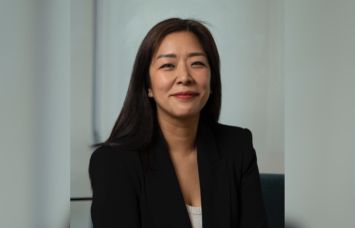
RREAF Holdings CEO Kip Sowden Drives Southeast Real Estate
The Sun Belt developer and investor has focused on building a vertically integrated company
By Brian Pascus July 6, 2026 6:30 am
reprints
Kip Sowden is the CEO of RREAF Holdings, a vertically integrated acquisition, development and property management firm that plays across several multifamily and hospitality asset classes in the South and Southeastern United States.
Founded in 2010 by Sowden, RREAF Holdings encompasses 90 assets and 23,000 units, totaling $4.8 billion in assets under management, with the ability to buy, build or refurbish anything from multifamily apartments, master-planned cities and build-to-rent communities to beachfront hotels, extended-stay hospitality and RV communities.
The do-it-all executive sat down with Commercial Observer to discuss his career and how he created a real estate firm that seemingly has its hand in every property type that impacts how people live and relax.
This interview has been edited for length and clarity.
Commercial Observer: How did you get involved in commercial real estate?
Kip Sowden: Our roots go back 40 years in the commercial real estate business. I graduated from the University of Texas in Austin in 1985 and went to work in real estate investment banking. In 1987, I moved back to Dallas from San Antonio and started my own real estate company, which was initially on the brokerage side of the business. We were doing full-service mortgage banking focused on debt originations, construction loans, permanent debt, commercial mortgage-backed securities (CMBS) debt, preferred equity, subordinate equity, all tranches of the capital stack.
From there we got into investment sales, where we exclusively list income properties on behalf of the institutions — which was very fortunate, as we had a couple of big institutions that would list their properties with me and it did very well.
How did you get to your current seat as CEO at RREAF Holdings?
What I really wanted to do was get into the principal side of commercial real estate. Fast forward to 2010, when we launched RREAF thinking that we would see Resolution Trust Corporation 2.0, [following the 2008 GFC]. We had a little tagline under RREAF that said, “Real estate note acquisitions.”
We met with around 100 community regional banks throughout the South and Southeast, and went through their real estate portfolios, looking at their REO properties, subperforming notes, and there was still a big gap between where we saw the market, and where the FDIC was making the banks write down loans at the time. So very few deals transacted, but then the phone started ringing.
How is the firm set up today?
We’re set up with five main divisions: multifamily; beachfront hospitality and resorts; we’ve got a big master-planned-community (MPC) development group; we build extended-stay hospitality, all over the country; and then we’ve got our RREAF outdoor communities.
In the multifamily division, we’re buying existing multifamily assets throughout the South and Southeastern part of the United States. Today we own some 55 communities, about 15,000 units. As a company, we’re completely vertically integrated, everything’s in-house. We have our own property management company that manages our 15,000 units, but they manage another 5,000 units for our competitors. They’re that good. Each division is vertically integrated through acquisitions, underwriting, due diligence, construction and property management.
What is your focus on the hospitality side?
With our beachfront and hospitality divisions, we’re buying existing hotels in iconic locations, obviously on beaches. That particular program has a very, very heavy capital improvement component to it. In some cases, we’ll take the facilities or the buildings back to their concrete frames and completely rebuild them. There’s heavy emphasis on the guest experience, putting in lazy rivers, new resort pools, family entertainment centers, and in some cases restaurants and bars.
Within that vertical, we own two hotels on Panama City Beach. We’re on Pensacola Beach and built a high-rise that we opened in July of 2023, and then in 2024, that same hotel was voted by USA Today readers as one of the top new resorts to visit in the U.S. We’re also on Cocoa Beach and Hutchinson Island [in Florida] and Surfside Beach [in South Carolina]. We’re redeveloping two hotels on Amelia Island [in Florida], and we own the Sea Palms Resort on St. Simons Island [in Georgia] and we’re about to close on another hotel in Destin, in the Florida Panhandle.
And you also build homes, correct?
The third vertical is the RREAF Communities. RREAF Communities literally builds cities, and I say literally. We’ll go in and take down large tracts of land in close proximity to major, high-growth metro areas. For example, we bought 3,200 acres just south of where I’m sitting in Dallas. We go through it and we put the MUDs in place — meaning municipal utility districts — and create our own taxing authority. We’ll build out the wastewater treatment facility. Here we’ve designed 8,500 single-family homes for sale that will sell to firms like Lennar, the Pulte Group, D.R. Horton, Meritage Homes, Highland Homes. We ourselves, through multiple LLCs, will develop the rentals through these various multifamily communities, build-to-rent communities, and town centers. We’ve got two schools teed up as well, so we are literally building cities.
Within RREAF Communities, we’ve got another 3,300 acres, halfway between Austin and San Antonio, in Caldwell County, Texas, for a highly amenitized, highly programmed, master-planned community. The only real difference between them is we’ve designed it for more commercial, industrial tech. That area is where most of where those from California have been moving in Caldwell County. It’s a great location. But within RREAF Communities, we’ll do some smaller BTR projects. We’re building a 149-home BTR community in Royce City, and we’ve got another 300 homes teed up, just south of that location. But everything is done in-house.
Could you tell us about your second hospitality vertical?
We’re building ground-up, extended-stay hospitality all over the country. We’re focused on Hyatt Studios, Hilton, and to a lesser degree Marriott Residences. We cut very attractive deals with all three of those brands, and we’re set up to develop between 10 to 15 extended-stay assets each year. We’ll scale to $1 billion [of development]. Again, we’re big believers of owner-operator management companies, so we did a joint venture with McNeil Hospitality out of Memphis, and created MXR — M for McNiel, X for extended stay, and R for RREAF. That is our development and property management arm for the extended-stay space. They manage not only our extended-stay portfolio, but also third-party management.
And then there’s the newest vertical that we launched in 2023 with the acquisition of five RV parks. Initially, the idea was to take our hospitality expertise and kind of overlay it in these RV parks to create more horizontal resorts. We’re not moving forward in that direction now, but we are expanding RREAF outdoor communities by making more mobile home communities longer-term stay, if you will.
What has allowed you to play in so many different asset classes while remaining vertically integrated?
Being in the real estate business for 40 years, there’s not any asset class that I haven’t been involved in over that period of time. As a company, when we launched RREAF Holdings in 2010, I wanted to focus on asset classes that were recession-resilient, if you will. It all boils down to catering to middle America, the largest population base in the country, and being focused in high-growth, business-friendly markets. The majority of our portfolio is in maybe eight to 10 states in the South and Southeast. It’s the same thing with hospitality.
It’s catering to middle America through beautiful vacation spots, but ones that are affordable. And it’s the same thesis with our residential verticals, whether it’s multifamily or single-family, build-to-rent — it’s great locations; good, strong school districts; and high-growth areas that all cater to middle America.
What investors have you worked with to develop the business?
It’s different for each vertical. The majority of what we do in the multifamily space uses agency debt, either Fannie Mae or Freddie Mac. We’re risk averse, and we’ll lock in long-term interest rates, which certainly served us very well from 2023 to 2025, where we saw rates go up very quickly. Our debt was locked in. We had probably $800 million with Fannie Mae, and probably $1.5 billion with Freddie Mac, all fixed-rate loans. Prior to 2025, our multifamily acquisitions were more portfolio driven, insomuch as we would aggregate from multiple sellers that had multiple properties, and aggregate them into one closing.
For example, we had an initiative called TC21 – that stands for 21 properties, seven states, one closing, — and it was three or four sellers, but with 21 different Freddie Mac loans. We had a great partner with 3650 REIT [now 3650 Captial], who were the institutional capital that came in with preferred equity. Then we have a lot of retail equity that follows RREAF and invests in our deals. Since 2025, because of our reputation in the market, we’ve got a number of bridge lenders that have started taking back properties, and they’ve been contacting our property management company, RR Living, to take over property management, and 75 percent of the time, if they’re in markets that we’re active in, we end up buying those assets. Those have been our last six acquisitions, in the $50 million to $100 million range.
Within the beachfront hospitality vertical, since it’s a heavy capital improvement program where you’re buying some of these older properties, here we typically structure our capital stack with community and regional banks. A lot of times, they’re gonna be offering full-recourse loans, and then we’ll raise the equity through our retail base. We do not typically have to exit to create yield and multiples.
For example, the first deal we bought on Panama City Beach, we created so much value that we returned our common equity three or four times over, and we continued to own the asset. So it just really depends on the vertical.
What is your best commercial real estate advice to anyone who breaks into the industry?
Don’t be afraid to make some mistakes, which will happen if you’re challenging the status quo. But don’t make the same mistake twice.
Brian Pascus can be reached at bpascus@commercialobserver.com.