Brixmor Property CEO Brian Finnegan On Turning Around the Retail Giant
The one-time broker has been in the top spot since January, and is leading the shopping center owner on leasing and acquisitions tear
By Brian Pascus May 26, 2026 8:00 am
reprints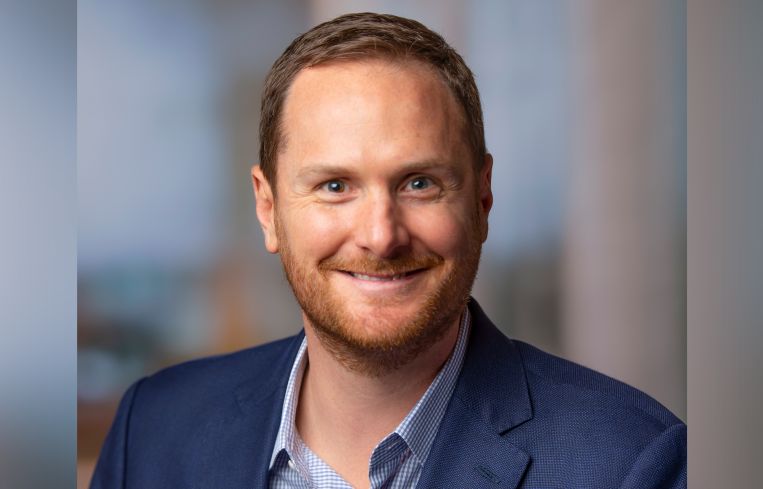
In January, Brian Finnegan became the new CEO of Brixmor Property Group, a publicly traded real estate investment trust and one of the largest owners of shopping centers in the U.S.
With an equity capitalization of $9 billion, Brixmor carries a portfolio of 348 shopping centers spanning more than 63 million square feet, and a tenant base that includes Kroger, Publix, TJ Maxx, Burlington, Ross, Amazon and Whole Foods. Finnegan has been with the company for two decades, but started as a leasing broker.
He shared his journey from tenant showings to the top of the C-suite, and explained how he’s positioning Brixmor to thrive in a post-COVID retail landscape impacted by A.I.
This conversation has been edited for length and clarity.
Commercial Observer: How did you get into commercial real estate?
Brian Finnegan: I got into commercial real estate through the brokerage side of the business in Philadelphia. Shortly after I graduated college in 2003, I was introduced to the industry by a friend who had recently gotten into it, and it was at a time when there was a lot of real estate development happening, particularly in shopping centers.
I had no idea how shopping centers were built, financed, or how ownership came about, how retailers picked them, but what attracted me to retail was that these brands interact with the consumer every day. People get excited about a new restaurant or a new grocery store opening up in a given market.
So, I got on the brokerage side, and was able to represent a few restaurants, where I put those into shopping centers owned by a predecessor company of Brixmor. So I joined Brixmor in 2004. At the time, we had 90 properties and about 12 million square feet, and within two and a half years, we grew to 750 properties and 110 million square feet.
How did the firm grow so quickly in such a short amount of time?
We were purchased by an Australian firm, Central Properties Group, in 2004, shortly after I joined the company. They were a mall operator in Australia and went on a buying spree, purchasing three large portfolios over the course of two years. They took on a lot of short-term debt to do that, and, ultimately, in early 2008, they ran into some issues refinancing that debt.
We went through a restructuring and were purchased by Blackstone in 2011, and they ultimately took us public in 2013.
As we sit here today, we’ve got 348 assets, about 63 million square feet, and so I came up through the leasing side of the business. I’ve been stationed in six cities for the company. I was leasing on the East Coast, the West Coast and then started doing redevelopment in the Southeast, before ultimately coming back to run the West region from an asset management standpoint before I came back to be head of leasing here in New York.
Not every leasing broker becomes a CEO of a publicly traded company. What allowed you to kind of make that rare transition?
This is an asset class where it really matters who your neighbor is. If you understand how and where the tenants want to be — putting together the optimal merchandise mix, where you can put the right anchors in, and you can understand what the customers’ needs are in a given community in that given shopping center — then you can create tremendous value.
Creating value is really embedded within the culture here of the company. We’re a company of operators. If you look at a lot of our senior executives, they can come up through the leasing side of the business. I came up through various other functions, giving me visibility into the financial aspect of the business, but many come up through the leasing side of the business. So I think it’s that aspect, particularly in retail, the tenants help you really drive value, and learning how to do that was very helpful to me.
How does Brixmor differentiate itself from other retail REITs?
We have a very, very simple strategy and that’s to have well-located centers in some of the largest markets in the U.S. And our goal is to accretively reinvest in those centers because we’ve got a below-market-rent basis, and we’ve got an embedded redevelopment pipeline. Really unlike anything else in our space.
It’s pretty simple, right? We don’t have any joint ventures, we don’t have any property-level debt. And so we have invested about $1.4 billion in the portfolio to date and that’s anywhere from expanding anchors, out-parcel redevelopments, to larger projects, which equate to more density, all within retail. We don’t do any other asset classes.
And, as we look forward, just in terms of what we own and control today, we have about $1 billion of future redevelopment potential. So that’s really the engine that drives the company.
And, because the portfolio had been underinvested in for so long, we’ve got these below-market rents where we are able to bring better tenants in, and, then, ultimately, drive those rents a lot higher and make accretive returns on our capital, which we continue to do.
You can see that coming through every metric in the company. We take in rents from $12.50 per square foot to $19. We’re signing those new leases in the mid-$20s per square foot today. So a lot of visibility in terms of driving value going forward.
The retail sector was largely left for dead a few years ago, but it’s back, and it’s surging. How did your firm take advantage of that?
I think the durability of the asset class really started to show through in the pandemic. Because, in the lead up to that, it was the retail apocalypse, and, then, ultimately overnight we had half our tenants closed.
And, so, I think what you’ve seen is a consumer that wants to be able to make purchases wherever they want to make them, whether it’s at a store, on their phone, or if it’s delivery. And what has happened within our space, particularly open-air retail, it’s the convenience nature of it — the types of tenants that have excelled over the past few years, like grocery, in terms of being able to meet the customer wherever they want to meet them.
Then there’s off-price apparel, value apparel, which has grown significantly as department stores have closed and can offer name brands at a discount.
And then you look at something like health and wellness, which has become much more essential. We’re seeing that consumers are much less apt to give up their gym membership. So what you’ve really seen is a lot of these retailers and operators that have continued to drive traffic, continued to be successful, be productive in their stores, and then nothing’s getting built. Supply remains at historic lows for our asset class, and so the retailers in our space are succeeding and there really isn’t much competition.
The last thing that I would say is there’s some level of hybrid work that has stuck. Office utilization rates in New York are still 31 percent less than they were pre-COVID, and that’s almost the best in the country. That’s a day and a half extra that people are working from home. What does that mean in terms of what has to happen to your refrigerator? What does that mean in terms of your workout habits? What does that mean in terms of going to get a cup of coffee? And that’s why traffic at our centers is still up dramatically from where we were in 2019.
What impact will A.I. have on the retail sector?
Just to start with, our retailers and operators today have more data on their customers than they’ve ever had. And what that allows them to do relates to how they stock inventory on their shelves, understanding what’s getting delivered, what’s popular in that market — so, as they’re making real estate decisions, understanding how that store is going to complement other stores in a given trade area, how that complements their online sales. Now we have more data than we’ve ever had relative to how our centers shop.
From that perspective, those stores are going to be even more productive. But we have been a company that’s leaned into technology historically. We built a research department 10 years ago. We were one of the early adopters to the traffic data that you now get from operators like Placer.ai.
As we think about deploying that within our space, there’s really one word: speed. Because, ultimately, for us, we generally don’t receive rents until the tenants open. So how do we get tenants to open faster? How do we get leases signed faster?
So, one of the places we’ve been deploying A.I. is within our legal teams to be able to turn over lease drafts a lot faster. We’ve reduced that by 15 percent over the past two years in terms of our leasing. Then, if you look at it in terms of how, ultimately, in that merchandising mix side, we’re seeing specific co-tenants across the country be successful. So we can understand certain uses that have gone next to each other and we can cross-reference what the traffic is to make better, more informed decisions.
What is your vision for the firm in 2026 and beyond?
Historically, this had been a portfolio that was under-invested, it had an overhang of troubled tenancy.
And my vision for the firm is that everything that was great and compelling about our business plan is still in place today, but from a much stronger foundation going forward — meaning we have the best underlying tenant-credit profile we’ve ever had. Our capex, as a percentage of net operating income, is at a decade low. And we’ve got $1 billion in our future reinvestment pipeline with projects in great markets like New York, Atlanta and Plano, Texas. And we’ve been growing the footprint — 40 percent of the acquisitions that we’ve done as a public company, from a value perspective, have been done in the last five quarters.
So, as we put the company in a position to continue to excel, we’re looking at other opportunities to grow our footprint and put the platform to work. It’s additive to what we do.
What is the best commercial real estate advice you’ve ever received in your career?
The best advice I ever received in my career relates to relationships, and to be mindful of your interactions with everybody. The real estate rep for Subway could be the head of real estate at Walmart, and how you treated that person when you were working with them on a smaller transaction will be remembered when you’re working with them on a larger one, and I’ve seen this play out kind of time and time again.
Brian Pascus can be reached at bpascus@commercialobserver.com.