Opposition to Data Centers Has Scrambled the Calculations Behind the Asset
But how rooted in reality is the grassroots movement?
By Brian Pascus February 9, 2026 6:00 am
reprints
In the small town of Port Washington, Wis. — founded on the western shores of Lake Michigan in 1835 and now home to a population of about 12,000 residents — locals launched a petition in December 2025 to recall Mayor Ted Neitzke from office, but not for any personal malfeasance or evidence of corrupt practices.
Neitzke’s cardinal sin, it turns out, was to support a $15 billion data center developed by OpenAI and Oracle and backstopped by the $500 billion Stargate initiative announced by President Donald Trump in the opening days of his second term.
This spontaneous opposition campaign in Wisconsin against a data center development is one of just hundreds of examples of the grassroots political pushback now facing an asset class responsible for powering the 21st century world of transformative artificial intelligence cloud computing, smartphones and global social media addiction.
“Certainly, there’s an increased political sensitivity and public opposition to data centers that’s kicked up in the last 12 to 18 months, relative to the first year or so after ChatGPT was introduced [in late 2022],” said Daniel Farris, partner at law firm Foley & Lardner and a former software engineer.
“It traditionally hasn’t been an industry that’s seen this type of opposition,” he added.
Many of the concerns citizens now have around data centers spring from the sheer proliferation of the physical assets themselves. The New York Times reported last month there were around 5,400 facilities in the U.S. — an average of approximately 108 per state — but those numbers are expected to multiply by 50 percent by 2030.
“Here in Indiana, you didn’t hear about data centers 18 months ago, but now all the opposition seems robust, and it’s grassroots driven,” said Michael Hicks, a professor of economics at Ball State University, who added that the growth of data center development reminds him of the surge of Walmarts that spread across America — and devastated small businesses — in the late 20th century.
“No one minded the first Walmart, but then they just swept through and the opposition to them picked up,” Hicks said.
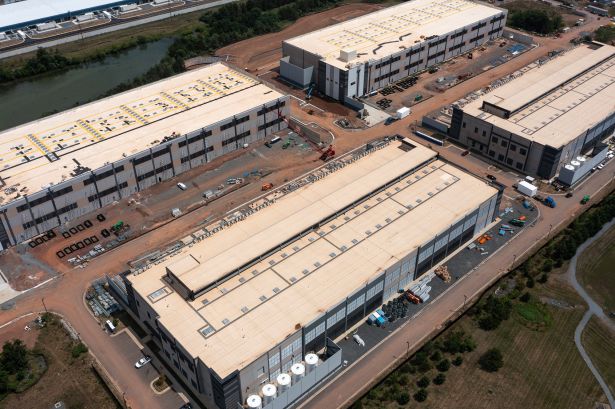
As apt as the comparison might be, a Walmart has no comparison physically, economically or environmentally to the data centers now being developed. Take, for instance, the $14.5 billion AI data center being developed by Logistic Land Investment and TPA Group in Bessemer, Ala., a city of 25,100 residents. This asset will span 4.5 million square feet, and will be comparable to the size of 18 Walmarts. It will require 1,200 megawatts of power and 2 million gallons of water daily to operate.
“It’s hard to describe the scale of a data center if you haven’t seen one in person,” said Christopher Russo, vice president of the energy practice at Charles River Associates, an economic consulting firm. “It’s this giant box where electricity comes in and AI comes out. It’s just wild to see.”
The opposition to data center development, which once started out small, with local folks in rural towns gathering with handmade posters in empty fields to protest, is now multiplying to such an extent that in the second quarter of 2025, $98 billion of potential data center investment across 20 projects was scuttled, according to a report from Data Center Watch, a research firm.
The report concluded more than 188 local opposition groups were protesting data center projects in as many as 40 states, according to Miquel Villa, an analyst at 10a labs, an AI safety firm that finances Data Center Watch.
“What we learned, first of all, is that data center opposition is nonpartisan — you can find it in both blue and red states, and in red and blue counties,” Villa told Commercial Observer.
Nicole Fenton, a partner at law firm HSF Kramer, relayed her own firsthand experience representing clients who have seen their data center projects complicated by elected officials responding to an uptick in community involvement and awareness, often instigated by social media dialogue.
“The municipalities, and the local governments, are not anti-data centers, but you get that one big story that people see on Instagram or TikTok that resulted in people having no water pressure, or one horror story, and that takes off and creates a narrative that results in community opposition,” Fenton said.
Indeed more American politicians, particularly national ones, are recognizing the benefit of positioning themselves on the side of the everyday citizen when it comes to data center development — with the calculation cutting across party lines.
In New Jersey, Democratic Gov. Mikie Sherrill placed data center development at the center of her victorious 2025 campaign, blaming soaring electricity costs on the rapid development of these assets, and vowing to declare a state of emergency upon taking office to address prices.
In Florida, the heart of Trump country, Republican Gov. Ron DeSantis has proposed an “AI bill of rights” that will create a stricter framework on what is and is not allowed in the Sunshine State when it comes to data center development, and include ideas on how lawmakers can protect residents from paying higher electricity and water bills.
Even Vermont Sen. Bernie Sanders, a political independent but leading voice of progressive politics in the Democratic Party, called in December 2025 for a moratorium on all national data center development, arguing the technologies supported by data centers are creating greater economic inequality across the country and threatening the jobs market for millions of Americans.
“It hasn’t been great,” said Andy Cvengros, executive managing director at JLL, who added a combination of environmental concerns, AI fears and NIMBYism among voters has hurt the prospect of current, and potentially future, data center development.
“Intertwined within all of that are well-organized special interest groups, paid lobbyists, who spread misinformation,” Cvengros continued. “And, when you combine that with a highly technical engineering asset that not a lot of people understand, it provides an easy road for creating a narrative that these things are all bad.”
Byzantine buildings
For one thing, despite all the opposition to data center development, much of the pushback stems from how poorly understood the asset class is right now — as it lies somewhere within an expansive Venn diagram of real estate, infrastructure, high finance, utility contracting and big tech.
“These are machines. The physical building is only 10 percent of overall expense. The rest of it is a giant computer,” said David Greek, managing partner at Greek Real Estate Partners. “Data center occupiers don’t even think of it as real estate. They think of it as a computer.”
The primary issue with data centers is that it’s an asset class that combines the complexity of land-use politics with the byzantine world of utility and power generation, and includes the most complex computing technology ever created under the guidance of the highest capitalized corporations in the country. Not for nothing, all of this concerns the development of a pseudo-industrial facility that dwarfs the physical size of anything else in commercial real estate and has profound environmental impacts on water use, electricity and carbon emissions.
“Up until recently, most cities treated data centers either like office use or industrial use. They didn’t have a specific definition in their zoning code of ‘This is what a data center is subject to under this particular regulation,’” explained Margo Bradish, partner and land use attorney at Cox, Castle & Nicholson. “We are increasingly seeing cities looking to zone specifically for data centers, defining it as district use class in their code and putting practical requirements on it.”
A typical data center development includes so many sides, and numerous high-stakes players, that it’s almost impossible for the average local voter to wrap their head around it when attempting to grasp the scale of the asset as it undergoes construction near their homes.
For example, a hypothetical $2 billion data center in Kansas might be financed by a private equity giant like KKR or Blue Owl and be developed by a specialist like CyrusOne or QTS. But its technology and infrastructure will be delivered by a global tech firm like Cummins or Nvidia, and it might be operated by Equinix, although its tenant base will be a hyperscale giant a la Meta, Microsoft or Amazon Web Services.
“We’re seeing everyone wants to get into the data center world, and they’re doing it from different avenues: Some are developers, some are operators, some want to monetize the revenue. It depends on your investment perspective,” said Fenton. “But the end user is the critical part because you don’t get financing without that contract in place.”
Foggy bottom
With this background in mind, it is increasingly clear why the average American possesses so many variegated fears around the asset.
First, there’s the economic argument. Not only do data center investors and developers often receive generous tax abatements and even permanent tax breaks from local governments to build these things, but their long-term job-generating prospects are essentially nil.
“They don’t create as many jobs as a distribution center does, and often those two are in competition for this same kind of land,” said Greek. “And, for the main users and tenants in this space, the groups building them are the largest top five tech companies — Meta, Google, Microsoft, etc. Those aren’t companies people have a lot of sympathy for.”
The Wall Street Journal reported that 1,500 workers are currently building a Stargate artificial intelligence venture led by OpenAI in Abilene, Texas, but the facility will require only around 100 full-time employees once it’s completed in a year or so.
“Taxpayers are saying, ‘You’re incentivizing something that takes a big chunk of land, adds physical pollution, noise, huge water use, and, on top of that, you’re not providing any benefits,’ ” said Ball State’s Hicks. “There’s negative externalities and very few benefits in terms of tax revenue, and certainly little or no employment benefits.”
Residents, like those in Saline Township, Mich., and Chesapeake, Md., routinely complain about noise and buzzing emitted by the data center generators. There’s also the preservation component. Data Center Watch’s Villa noted that preservation groups in Virginia have filed lawsuits to stop the construction of a 37-building data center developed by QTS Data Centers that would infringe on the historical land of the Manassas Civil War battlefield.
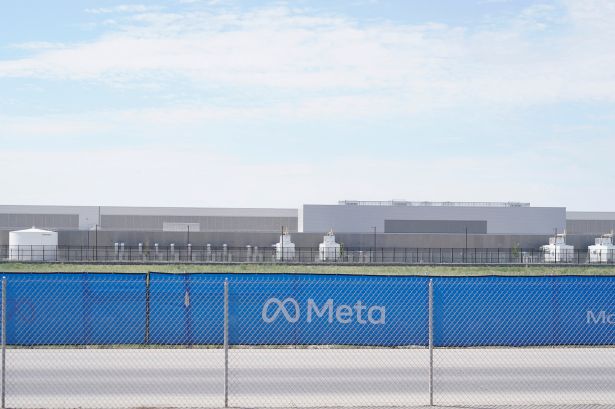
And then we have the water conundrum. Data centers require a tremendous amount of water to operate, as the machines require cooling mechanisms on an almost hourly basis to function properly.
The New York Times reported in January that the annual water needs of the 100 data centers Microsoft runs worldwide are set to explode, from an annual requirement of 7.9 billion liters in 2020, and 10.4 billion liters in 2024, to an estimated 28 billion liters by 2030.
“Obviously, if you’re generating that much power, you need to have cooling systems in place, but what will be important is coming up with novel solutions and viable alternative sources of energy that works for the world we’re living in,” said HSF Kramer’s Fenton. “Water is important, but municipalities need to educate themselves and developers need to educate the public on what the actual demand will be on the water supply, but it’s a real consideration.”
Even so, various market experts who work in the data center development space argue that some of these fears residents carry, primarily around water use and noise, are unfounded.
“Underlying these data centers, obviously, is we all use phones and computers and AI, so we need the data centers for that, but no one wants them located near them,” said Brent Gilfedder, partner of corporate finance and investments at King & Spalding. “Mainly, because the notion is they’ll make everyone’s power costs go up, and there’s a real big focus on water resources.”
Gilfedder, as well as others, emphasized that the concerns around water use are “not entirely grounded in reality,” as many of the largest data center developers have realized they can create closed-loop systems that recycle water to cool the computers, rather than draw down freshwater reserves. Some developments, like a Microsoft one in Georgia, he noted, will place more water back into the community, but this is a message that has “yet to be understood by the broader public,” he conceded.
“It’s not quite the perceived sponge of available water in these locales that some people think it is,” said Foley & Lardner’s Farris. “But, again, if you live in Texas or Arizona, areas prone to drought and water shortages, it’s perfectly fair to say ‘I don’t want that much water dedicated to facilities that use a lot of it for AI workloads.’ ”
As for the noise, the ongoing buzzing and beeping some locals complain about, that might have a shelf life. David Rubenstein, an attorney who leads Polsinelli’s data center practice, said that newer data centers are being constructed with sound isolation systems that seal off whatever is inside the building from being heard outside.
“The buildings are designed to have maximum power redundancy, so the generator should be running very, very infrequently,” he said. “So I think the noise concern is maybe born of something that was true a long time ago [in the early era of data centers] but is no longer the case.”
Power problems
What is undeniable, however, and stands at the heart of the data center debate, is the tremendous amount of electricity these assets require — both now and in the future.
A December 2025 study by The Washington Post found that the average data center operating in America requires 45 megawatts of electricity, enough to power 50,000 homes. But the average data center planned today will require nearly 10 times that amount of juice, enough to power all 500,000 homes in Harrisburg, Pa. Then there are the largest AI data centers under construction (and ones increasingly financed by Trump’s Stargate initiative), which dwarf that intended power capacity. The 3,200-acre Homer City Data Campus outside Philadelphia will require 4.4 gigawatts of electricity, enough to power all 5.7 million homes in the Philadelphia urban area.
This increased power demand is expected to push the U.S. electric grid to its very limits of capacity and raise electricity prices nationally, according to most estimates.
“Data centers are kind of the straw that might break the camel’s back with electricity, but they’re not the cause, fundamentally, of rising electricity rates or the fact that our grid is running at capacity,” said Greek, who pointed to automation, electric vehicles and the fact that every American home and corporation is using substantially more electricity than even 10 years ago.
“We all took Econ 101 — we all know what happens when there’s low supply and high demand: prices increase,” he added. “Even if you outlaw all data centers in regions like New Jersey, you’d still see electricity prices increase, but adding data center development to that just exacerbates the trend and makes it a lot worse.”
A 2023 study commissioned by the joint legislature in Virginia, home to the highest concentration of data centers nationally, found that residents will pay $37 more per month on their energy by 2040.
The PJM utility market — home to the electric grid of 13 states and 67 million Americans — is now facing the threat of rolling blackouts and rising prices due to increased demand, in part from new data centers like the Homer City Campus. Pennsylvania Gov. Josh Shapiro filed a complaint last year aimed at capping electricity prices across the grid, but he needs cooperation from other governors to resolve the matter.
“At the moment [data centers] are having a massive impact on PJM markets — from our reports its $23 billion in extra costs for PJM customers and counting,” said Joseph Bowring, president of Monitoring Analytics, a market monitoring firm, who said this particular grid was short 7,000 megawatts during its most recent electricity auction.
“They don’t have enough capacity to meet the load reliably, yet they continue to add more data center load without any explanation of where this extra capacity will come from,” Bowring said. “It basically means keeping your fingers crossed, your eyes closed, and your hands firmly over your ears.”
Charles River Associates’ Russo said that it’s not so much a question of whether the grid can handle the new load, but what it will cost in terms of innovation and rehabilitation to ensure the network can handle the demand — with some hyperscalers becoming increasingly committed to bearing a share of the costs themselves.
“There will be some regulatory actions to ensure cost of data center development falls squarely on developers, but the mechanics are complicated,” he said. “With the large amount of capacity entering the system, consumers will still see some effect from this.”
Incentives in place
Amid all the economic and environmental concerns, data center developers and hyperscalers are responding to the outcry through various avenues of incentives and public outlays.
Large data center campuses are passing revenues back into communities via property taxes, insurance costs and utility taxes, according to JLL’s Cvengros. As an example, he cites a data center in Elk Grove, Ill., which channeled a surplus of tax dollars generated by the asset into gift cards for the local community to spend on small businesses, which have seen revenues of $500,000 to $1 million thanks to the initiative.
HSF Kramer’s Fenton pointed to a data center development she represented in a small town in the Midwest, where the tax revenues from the project helped the local school budget increase from $800,000 per year to $8 million.
Beyond taxes, another significant benefit is the direct investment in local communities, including funding for road and utility infrastructure, as well as new parks and land preservation projects that often accompany data center development, said Andrew Kaskel, head of data centers advisory at Walker & Dunlop
King & Spalding’s Gilfedder said that some developers won’t even seek incentives like tax breaks or sales tax abatements anymore in order to ripen the deal for community approvals.
“If you get a data center that has a $500 million assessed value, think about the property taxes that it brings in,” he said. “You’ve got the politicians that want to walk a fine line between appeasing their citizens but not turning their back on what can be a tremendous source of revenue for the local jurisdiction.”
Developers are also pre-emptively seeking to avoid messy zoning fights by finding land that is already powered by a local utility, and is zoned for industrial use, or looking for land that is zoned for an outdated use, holding a derelict asset, and won’t require a difficult permitting war, said Farris.
While this is happening, Ball State’s Hicks said that many of these payment in lieu of taxes programs aimed at feeding revenue into schools are in place for only one or two years and have not been widely adopted across municipalities.
“It’s often an offset, but I don’t think it’s become widespread legislative intervention,” he said, noting Virginia, ground zero for U.S. data centers, doesn’t collect sales or use taxes from those developers. “We’re still in a world where, when they come to most states, they’re expecting everything.”
And, so, the fight rages on, as one side tries to sweeten the pot and tamper down both criticism and fear, while the other digs in its heels against a futuristic real estate asset that many believe will usher in an economic and environmental dystopia.
“It’s a dynamic situation and developers are reacting, and the main consequence is that there will be more regulation, initially a patchwork regulatory landscape, with some areas favorable and some less favorable to data centers,” said Villa.
“I think it will be a hot topic at the height of the midterms,” he added, referring to the November 2026 elections.
Farris agreed that data center development will likely become a relevant political issue, and that it may very well shift political dynamics, and even state and local elections, but he doubts any of that will initiate significant changes to current and planned data center operations or development.
“There are very few folks, either consumers or corporations, who are not using data centers, despite concerns about them and fears we are bringing about Skynet,” he said, referencing the superintelligent — and deadly — AI robot in the “Terminator” series. “I don’t really see a world where there’s less use, and so as long as there is demand for the technology, I think you’ll continue to see these assets.”
But others, like David Greek, pointed to a Heatmap News’ analysis which found that while only two data center projects were canceled in 2023, that number jumped to 25 cancellations in 2025, largely due to public pressure.
“I won’t say we’re at peak anti-data center sentiment, but if we’re not at peak we’re heading toward it,” Greek said. “This is the main topic of conversation with the ‘not in my backyard’ crowd, and I don’t think a whole lot of people outside of the data center industry, and the real estate investment side, are cheering on their new development.”
Correction: An earlier version of this article stated there were an average of approximately 54 data centers per state — but that number is 108 per state.
Brian Pascus can be reached at bpascus@commercialobserver.com.