Cain’s Lauren Eckhart Smith On Managing the $10B One Beverly Hills Project
The historic development involves two high-rises and a botanical garden on 17 acres where Wilshire and Santa Monica boulevards meet
By Greg Cornfield February 6, 2026 3:05 pm
reprints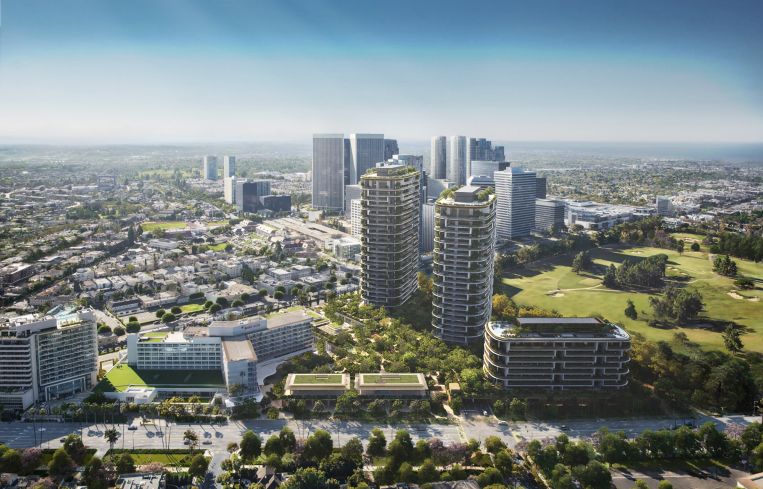
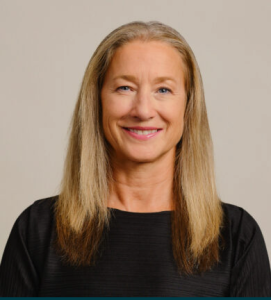
Lauren Eckhart Smith built a career on complex and high-profile projects in global hubs, and is now working at Cain helping to deliver a landmark project that will redefine one of the most storied enclaves of Greater Los Angeles.
Eckhart Smith previously worked with Lincoln Property Company, Georgetown Company and IAC, and she was the global head of workplace operations at Bloomberg. She succeeded in tightly regulated markets where scale, public scrutiny and overall urban impact are as important as execution.
Eckhart Smith was part of the teams behind Frank Gehry’s IAC headquarters in New York City, and Foster + Partners’ European headquarters for Bloomberg in London, overcoming hurdles in the form of zoning changes, differing approval processes, community resistance and global capital constraints. But all of that teed her up for her role at Cain: helping oversee the $10 billion One Beverly Hills project.
The 28- and 31-story buildings and the surrounding 17 acres will be bigger and taller than anything the ritzy enclave has ever seen, positioned right where Wilshire and Santa Monica boulevards converge, facing the acute western point of Beverly Hills’ “Golden Triangle.” An Aman-branded hotel and residences will be the heart of the complex, buttressed by high-end retail and an 8-acre botanical garden.
In other words, Eckhart Smith is helping steer a project that will carve out the first markings of the Beverly Hills “skyline,” and advance the neighborhood’s identity as a global mixed-use destination.
The following has been edited for length and clarity.
Commercial Observer: What makes this project different for you compared to all the others you’ve worked on?
Lauren Eckhart Smith: I’ve never lived so close to a project I’m constructing, and that changes everything. Anything that happens on this site affects me personally.
No matter the market, projects like this don’t happen without strong local government and community support. I’ve seen that from New York to London. When I worked on the IAC building in New York, the city was in the middle of rezoning around the High Line, which created an economic boom in West Chelsea. In London, with the Bloomberg building, we focused on being good neighbors and fitting into the community. It’s always a two‑way street.
Here in Beverly Hills, the team spent years building consensus and presenting a plan that offered real value to the community. The city recognized that, and that’s why this project is happening.
What attracted you to this project, or to the team behind it?
I’ve been fortunate to work on truly iconic projects. Every time I finish one, I think, “That’s it — it can’t get better than this.” I felt that way about the IAC building and later the Bloomberg project in London.
When Beny Alagem introduced me to One Beverly Hills during COVID, it immediately stood out. I could see the site from my apartment, and I had already worked with Foster + Partners, so there was a natural connection.
But what really sealed it was meeting Jonathan Goldstein at Cain. Jonathan has the discipline, capital relationships and execution ability to make something this ambitious happen.
Beverly Hills is famously difficult when it comes to entitlements. Do you see this as a one‑off, or the start of something bigger?
I’d like to think it’s the start of more. Beverly Hills has a long history of smart urban planning. Mixed‑use projects that create places for people to come together tend to spur further development.
The city is actively thinking about how to better connect Rodeo Drive and the Wilshire Corridor to One Beverly Hills. There are other significant projects in early planning nearby. Having city planners deeply engaged leads to better decisions.
What challenges are top of mind as construction moves forward?
Delivering a luxury project at this scale is significant anywhere, especially in an urban environment. The level of detail required is extraordinary.
Rather than relying on a single contractor, we assembled best‑in‑class teams for each component: Turner is handling the podium and site management, PCL is building the hotel, and Suffolk and Layton is constructing the residential towers. Big projects succeed or fail based on who’s on the ground.
How has the industry responded to the way you’re executing the project?
We spent a lot of time planning how to phase and break the project into manageable components, even though it’s one continuous build. We’ve been strategic about sitewide purchases — elevators, stone, long‑lead items — to get ahead of supply constraints.
From what I can tell, people view our approach as thoughtful and disciplined.
How are you managing cost risk, including tariffs and supply disruptions?
We’ve locked in guaranteed maximum prices and pre‑negotiated major vendor contracts wherever possible. We don’t have a crystal ball, but we’ve done everything we can to get ahead of long‑lead items and pricing volatility.
Large projects are constant problem‑solving. Today it’s tariffs; tomorrow it will be something else.
Looking five to 10 years out, what defines success for One Beverly Hills?
One of our biggest challenges is explaining how extraordinary this will be. These residences aren’t typical condos — they’re essentially mansions in the sky.
Beyond the buildings, we’re creating 10 acres of botanical garden and open space and building upon the walkability across Beverly Hills. Ten years from now, I believe this will change how people think about luxury residential and hospitality in the city.
This will be the first Aman on the West Coast, designed by Kerry Hill Architects, Aman’s longstanding architectural collaborator with over two decades of partnership. Aman challenges us to push every element to the highest level. It adds something to the market that doesn’t exist here today.
Gregory Cornfield can be reached at gcornfield@commercialobserver.com.