Diego Ojeda of Rilea Group: 5 Questions
The firm's president spoke with Commercial Observer about Wynwood’s rapid expansion and accepting Bitcoin
By Jeff Ostrowski February 26, 2026 3:05 pm
reprints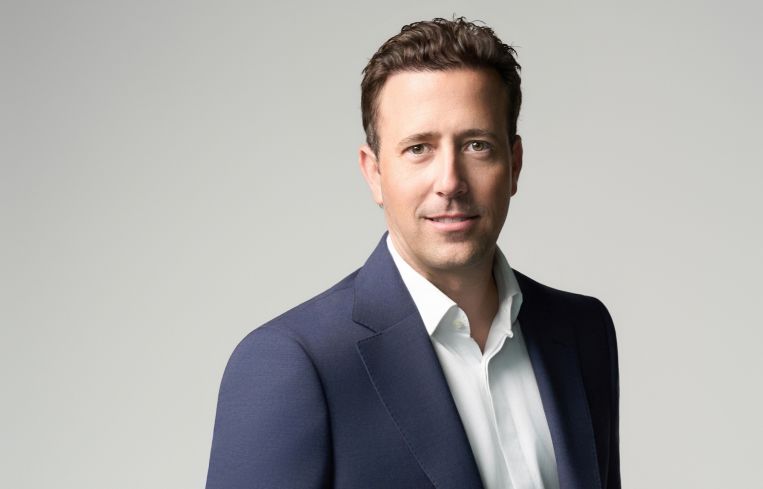
Rilea Group President Diego Ojeda is in the midst of adding two projects to Miami’s hot Wynwood neighborhood.
The development firm is building Mohawk at Wynwood, a 300-unit multifamily project that recently landed $150 million in construction financing. Next door, on Northwest 29th Street, is the Rider Residences, a 146-unit condo project backed by a $90 million construction loan from Banco Inbursa of Mexico.
Rilea calls Rider “the first Miami residential development accepting wallet-to-wallet cryptocurrency transactions.” Ojeda spoke with Commercial Observer recently about Wynwood’s rapid expansion and accepting Bitcoin as payment.
The following conversation has been edited for length and clarity.
Commercial Observer: For a long time, Wynwood was cool because it was undiscovered and a little grimy. Are you worried the neighborhood is getting too successful?
Diego Ojeda: We’re very busy in Wynwood right now. The grimy part is very important to me. I’m staying very true to that. I explain this a lot to foreigners, because we’re constantly selling the project or raising capital abroad.
Wynwood is our Brooklyn, and it’s our Melrose. The U.S. has this cool, gritty side that in multiple places has flourished, and Wynwood is our version of that. I think we need to stay true to it. The Wynwood Design Review Committee requires you to keep a certain percentage of murals and all of that. But I think it’s the responsibility of the developer to grow above and beyond that, and not just try and check a box.
First the concept: Mohawk — the name comes from the Mohawk haircut, and it was inspired by punk rock. I’m going to have a lot of photography by Lynn Goldsmith and Timothy White, and a bunch of other photographers, of the Ramones, Sex Pistols, Blondie, Iggy Pop, the Rolling Stones, a lot of hip-hop. Huge photographs of museum grade throughout the project. So it kind of creates this vibe, right? We’re doing crazy murals throughout the project.
Mohawk is going to have the widest sidewalks in all of the neighborhood because I wanted to have that feeling that you could have a restaurant, have tables, have people hanging out, and then still have a sidewalk for people to walk. So I brought back the building a bit to be able to do that. We’ve done a lot of research to keep it authentic and keep it real. It’s on us to keep it real.
You’re selling the ground-floor space at Mohawk as retail condos. Why?
In Mohawk, originally we were going to keep all of it, the multifamily and the retail. But then we ran out of retail at Rider. We kept getting buyers that wanted to buy at really high prices — record-breaking. I spoke to a few of the big brokers who sell these projects — JLL, Cushman, etc.
I asked them, “When someone’s selling you a project like this, do you rather get the whole mixed use, the apartments and the retail, or just the apartments, and have that separate?” It was always, “Just the apartments.” So I saw the opportunity to sell the retail space. Why not?
We put good restrictions in the contracts. You can’t put a sex shop, a smoke shop, a liquor store, a 7-Eleven — nothing that’ll cheapen the building.
You’ve begun accepting Bitcoin and other cryptocurrencies as payment for properties.
We did the biggest crypto commercial real estate sale ever in Miami. It was for about $15 million to an international buyer and done through USDT (the stablecoin based on the value of the U.S. dollar). It was great because these transactions sometimes happen after banking hours or on the weekends, and it’s super seamless. We get the wire right away, we do know-your-customer [KYC], all the same, we’re working with a great company called Proppy, which is just really on the forefront.
We were the first ones. No one had ever done a true wallet-to-wallet sale, which is completely off the exchange, just really between buyer and seller. And when that happened, Mayor Francis Suarez tweeted it on both his Instagram and his X account. We got a bunch of press, which was awesome.
And we have a cool little sign at the entrance to the sales center that says, “Bitcoin accepted here.” That’s been fun because for us, it’s just one more outlet. It’s just one more currency, as if people were wiring me euros. That’s how I see it. As long as we can do the KYC and all that, then we’re great.
The biggest challenge has been many people just being unaware or unfamiliar with the process. People that are not in crypto still see crypto like a foggy, faraway thing. We’re just really breaking down those barriers. We did a big event here, pretty much Bitcoin for Dummies with [prominent condo broker] Alicia Cervera.
When you say wallet-to-wallet transaction, is it from the buyer’s Coinbase account to your Coinbase account ,or is it from a cold-storage wallet to a cold-storage wallet?
It’s a cold-storage wallet. I have a cold-storage wallet, and at events, I’ll give it to people to show them what a cold-storage wallet is, and at first they’re like, “You know, people usually have these things in a safe, hidden away, etc.” I’m giving it to people, passing it around the room.
Where do you see crypto going in the real estate industry? Is it going to become a common way to transact?
Yeah, 100 percent. We did a small event, about six months ago in El Salvador — where it’s national tender — and it was more symbolic than anything. I think it is one more currency.
When I bring it down to Earth and I explain to people that aren’t familiar, I just say, “Listen, it’s as if you’re sending me euros and I’m changing it.” It’s just one more outlet. It’s no more than that. I tell people all the time, “Listen, you can pay me camels. I mean, it’s legal, and I can transfer the camels to dollars.”
Jeff Ostrowski can be reached at jostrowski@commercialobserver.com.