Scott Spector of Architecture Firm Spectorgroup: 5 Questions
By Isabelle Durso January 2, 2026 7:00 am
reprints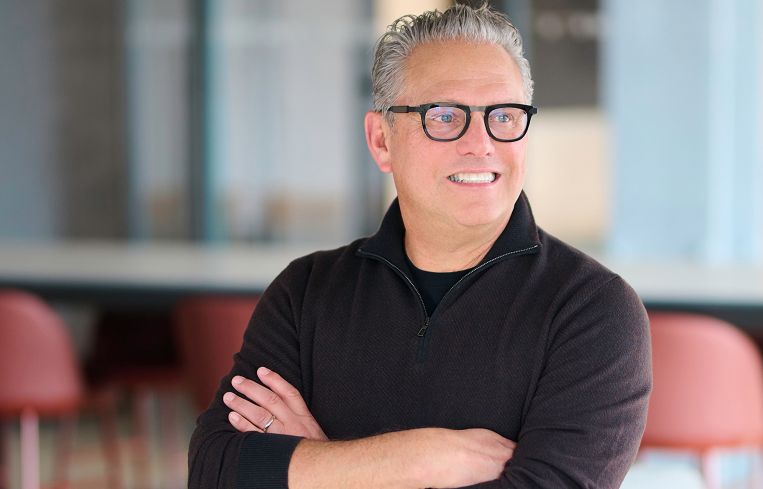
Architecture firm Spectorgroup has come a long way since it started in a garage about 60 years ago.
Founded by Michael Spector — father of current Spectorgroup principal Scott Spector — the firm has grown from a small suburban architecture company based in Long Island to a leading design firm with clients in New York City and beyond.
The firm’s more recent projects in Gotham include an amenity space at TF Cornerstone’s Carnegie Hall Tower, a coworking space at Tishman Speyer’s 1 Rockefeller Plaza, a prebuilt office space at BXP’s 360 Park Avenue South, and a restored lobby at Sovereign Partners’ 100-104 Fifth Avenue. Spectorgroup also got the chance in 2023 to design its own offices at 200 Madison Avenue after moving from its previous spot at 183 Madison Avenue.
Since taking on the role of principal in 1988, Scott Spector has provided design, planning and management services to high-profile clients in New York City, including Brookfield, Uber and Indeed.
The firm’s design direction? A modern but customized approach, according to Spector, meaning “it’s specialized for our clients and their needs.” That was seen in Spectorgroup’s work for entertainment firm Fulwell Entertainment — previously The SpringHill Company — at 17 State Street and for a basketball academy in Greenpoint, Brooklyn.
Spector spoke with Commercial Observer earlier this month to discuss Spectorgroup’s 60th anniversary, its recent projects, New York City’s current architectural landscape, and whether artificial intelligence will have an immediate impact on design.
This interview has been edited for length and clarity.
Commercial Observer: This year marked the 60th anniversary of Spectorgroup. What does this milestone mean for the company?
Sixty years is a daunting number. My dad, Michael Spector, basically started it in his garage. It’s one of those amazing stories — he built an architectural firm based on Long Island that ultimately, during his career and lifetime, garnered 80 architects and hundreds of buildings on Long Island, ground-up. It was just pretty darn cool growing up in that kind of atmosphere. So, when I was 10 years old, I was visiting the dirt. When I was 15 years old, I was building construction sites.
So I lived it, ate it, and just loved every second of it. And, then, ultimately, I went to architecture school at the University of Michigan.
In 1998, I started the New York City arm of our office. Since then, I developed a different practice in Manhattan versus building ground-up on Long Island. And, over the last 28 years, we’ve done primarily large-scale interiors and major building renovations for both tenant and owner. And I have really developed that business with a separate office of about 60 people here. Then, ultimately, about three years ago, I opened up a new office in Miami, which is flourishing. Miami is pretty wild right now, too.
What projects has Spectorgroup been working on lately?
Well, we can start with Carnegie Hall Tower, which is a TF Cornerstone property. We’ve been working with that landlord for about six years. We’ve designed amenity centers, prebuilt spaces, combined prebuilt spaces, designed-to-suits — so we’re considered the landlord’s interior architect for the building. Carnegie Hall Tower — the full amenity center and coworking space we built — has been a spectacularly successful space for the building as a pure amenity for other tenants. And we’re doing this for 20 or 30 other landlords in the city.
So that’s a chunk of our business, that architectural work that constantly helps feed the tenant-direct design work that we also do. Sometimes there’s a market where our landlord work may be quiet, but our tenant work is booming, and vice versa. At the moment, I don’t care what anybody in New York says, they are both accelerating and both scaling beautifully. We’ve been hiring now for about a year, but we’re still looking for good people in our city office to accommodate some of the work that’s coming in for 2026.
We just finished a project for Fulwell Entertainment, which is an ownership entity with Maverick Carter and LeBron James, down at 17 State Street. Top floor, gorgeous space, very media-oriented, exposed ceilings, graphics, very specialized millwork. This was just a great dynamic space — not only for Fulwell Entertainment, but for our people. So that design team was able to do things on a budget and within a real schedule at 17 State, which is owned by RFR Realty, who we’re also a building architect with.
We just finished a high school for-profit basketball academy, almost like a nurturing space in Greenpoint, that’s ridiculously successful, and they’re expanding already. We have certain things on the boards that are hedge fund-related, AI-related, a lot of financial services, and legal.
So it’s across the board, which is kind of fun. It’s not just one user now that’s seeking out all the space.
What does it take for commercial buildings in New York City to stay competitive these days, especially with rising vacancy rates and cost-conscious tenants?
The easy answer is: Anything that is new, that is online, is leasing. The fresh new space is leasing. Obviously, they’re the most technologically up to date. Doesn’t matter what it is, it could be technology, it could be restrooms, it could be lobbies, it could be amenities, all the things that every tenant really wants in their space that an older building doesn’t necessarily have.
We are doing a tremendous amount of work in existing buildings that have been around 30, 40, 50 years, and upgrading them. Whether it’s windows, rooftop amenities, below-grade amenities, pickleball courts, entertainment, you name the use. It’s wild what’s going on out there, with the amenity-rich attraction to these buildings, because there’s still the whole hybrid piece of the puzzle. Some folks are working three days, some folks are working four days a week in office. A bunch are back at five days, and they want those spaces utilized.
The more people in the city, the more action for everybody else ancillary to these uses. It’s exciting as heck for us.
How has New York City’s architectural landscape changed over the past years? What do you see being prioritized today when it comes to design?
I think it’s a combination. We have some wonderful new towers going up, and those take a few years. J.P. Morgan Chase’s building is the perfect example. We’ve been walking past that construction site for four or five years now, post-demolition, and it’s absolutely magnificent. It’s a recharge for that part of the city.
And then 350 Park is going to be coming down soon, and BXP’s building on Madison Avenue.
So the new stuff is going to come online, which is great. You also have the existing new buildings. Hudson Yards is a perfect example. We’re doing a space in almost every building in Hudson Yards right now, whether it’s recirculating space at 10 Hudson Yards that we did 10 years ago or a new space in 60 Hudson Yards. So that’s the new game in town, which, by the way, is leased up like there’s no tomorrow. Whatever the magic sauce is with what they’re doing there, they’ve really nailed that, as far as amenity-rich spaces, both internal and external. Plus, the entire shopping area in that zone is wonderful to walk through.
The regeneration of the older building is a major focus of ours, because many of our landlord clients own more vintage structures. We’re building brand-new lobbies, we’re gutting lobbies, and these are landmark buildings that we’re also cleaning up on the exterior. It’s a lot of landmark interaction, which we’re quite respectful of.
We’re not working on any conversions. That’s not our thing for residential. It’s a bit in vogue with a few buildings, which is exciting because you’ve got older office buildings that just cannot find their way to commercial tenancy. So to make it residential, why not? It’s a spectacular idea to regenerate an existing building.
How has technology and AI impacted architectural design?
A lot of these AI companies are now our clients, which is a lot of fun. Their needs are huge, from power and backup consumption, just even in their office spaces and the technology they want to do internally. Architecturally, AI, at the moment, is quite complementary to our existing workflows, especially in doing our 3D animation work. It’s really complementary. There’s nothing that can replace it.
But I think AI is going to change a lot of our clients’ workforce. I’m hoping we work in such a way that is complementary to what we’re doing for each other, but it is changing the landscape rapidly.
Isabelle Durso can be reached at idurso@commercialobserver.com.