

Fed Opens 2026 With Rate Hold as CRE Gears Up for Active Year
By Andrew Coen January 28, 2026 2:36 pm
reprints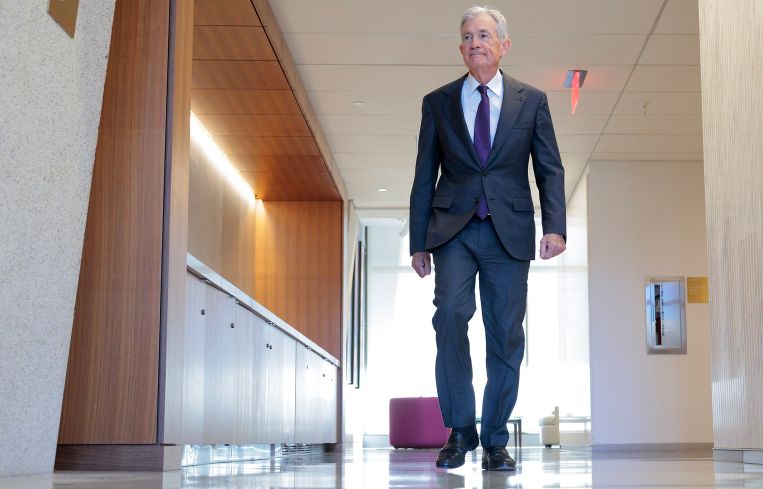
The Federal Reserve ended its three-meeting streak of rate cuts Wednesday as the commercial real estate industry prepares for a stabilization of long-term borrowing costs in 2026.
In a 10-2 vote, the Fed maintained its benchmark interest rate at between 3.5 percent and 3.75 percent Wednesday while indicating a steadying of rates early this year. The move came on the heels of enacting three cuts in a row to close out 2025. The Federal Open Market Committee (FOMC) alluded to improved economic conditions in its decision with inflation remaining “somewhat elevated.”
“Having lowered our policy rate by 75 basis points over the course of our previous three meetings we see the current stance of monetary policy as appropriate to promote progress toward both our maximum employment and 2 percent inflation goals,” Fed Chair Jerome Powell said in a post-meeting press conference. “We remain committed to supporting maximum employment, bringing inflation sustainably to our 2 percent goal and keeping longer term inflation expectations well anchored.”
The lone dissenting votes were Fed governors Stephen I. Miran and Christopher J. Waller, who sought a fourth straight quarter-point cut.
The first FOMC meeting of 2026 came a week after the U.S. Supreme Court signaled that Fed governor Lisa Cook’s job was likely safe during arguments heard about President Donald Trump’s efforts to fire her over alleged mortgage fraud. The attempted firing of Cook along with the U.S. Justice Department’s subpoena of Chairman Powell this month is part of Trump’s ongoing efforts to shape a more dovish Fed that will lower interest rates.
Powell, whose second term as Fed chair ends in May, did not comment on questions asked about the DOJ inquiry or his future with the central bank. He is slated to remain on as a Fed governor for a term that expires in January 2028.
Jay Neveloff, partner and real estate chair at the law firm HSF Kramer, said that while interest rates may not change much this year, transaction volume powered by debt and equity investments will press ahead regardless of borrowing levels.
“If people are going to do a debt deal at X basis points, and if it is so thin that 25 basis points is driving the deal, you’re not doing the deal,” Neveloff said. “I’d love interest rates to be lower, but I don’t think it’s having a tremendous impact on the velocity of deals.”
Neveloff noted that increased clarity on the range of long-term interest rates coupled with more repricing in the market will create conditions for active 2026 deal flow. He added that an uptick in recapitalizations with more lenders in the market also sets the stage for a big CRE financing year.
Paul Rahimian, CEO and founder of Parkview Financial, said that while the market is pricing in only one to two rate cuts this year, he anticipates further reductions once a new chair replaces Powell in May.
“We think that once the noise about the Fed’s independence is removed from the process and we have a new Fed chair in place, if the data from the market continues to show weakness there could be three or four cuts in the second half of the year,” Rahimian said. “If they truly want to be data dependent, they’re going to be forced to cut.”
Rahimian noted that long-term interest rates dictated by the yield of the 10-Year Treasury will likely remain in the 4 to 4.5 percent range regardless of the Fed’s monetary policy, due to high inflation and government debt levels. However, he stressed that the 10-Year will move based on market volatility from geopolitical issues and could come down below 4 percent if there are signs of serious labor market headwinds.
Matt Pestronk, co-founder and president of developer Post Brothers, said he noticed a shift in market sentiment in the latter half of 2025, and his firm was able to execute around $1 billion of construction projects for the year. He said the market for permanent debt also began to bounce back last year at more favorable pricing levels.
“The market for cash-flowing financing had been coming back but was still pretty expensive until the middle of last year, and I would say now it is fair,” Pestronk said. “We are pretty happy if we can borrow at a 5 percent or 5.5 percent interest rate, as I have been doing this for 20 years and that works. We never needed 4 percent rates for anything, and don’t think that is coming back.”
Andrew Coen can be reached at acoen@commercialobserver.com.


