Nathan Berman
Founder and managing principal at Metro Loft
Last year's rank: 35
He’s the king of conversions, taking lifeless office properties around Manhattan’s Financial District and turning them into Class A residential buildings. And, in 2025, Nathan Berman’s Metro Loft expanded that conversion kingdom into Midtown, recording one of the busiest years in the company’s 29-year history.
“We are doing a very large number of conversions and producing thousands of rental units,” Berman said. “We’ve never been this busy in the past.”
2025 saw the completion of two conversion projects: SoMA at 25 Water Street, the former home of the New York Daily News, a building that was once designed to look like an IBM punch card, and 55 Broad Street, once home to Goldman Sachs, a building Metro Loft recently recapitalized for $500 million.
Metro Loft has five conversion projects in the pipeline spanning 4,000 residences across 3 million square feet. “That’s a lot of conversions at any given time,” Berman said.
Those conversions include 675 Third Avenue, which will deliver 464 residences in early 2027; 111 Wall Street, which is expected to bring 1,580 apartments in 2027; 767 Third Avenue, which will deliver 337 new units early next year; 101 Greenwich Street, which will have 614 new residences; and 219–235 East 42nd Street — the former Pfizer headquarters — which will deliver 1,600 luxury apartments in early 2027.
The bulk of Metro Loft’s residences have been delivered in Lower Manhattan, an area where the price per square foot was much less expensive than other areas of the borough. But the changes in appetite happening in the office market has allowed Metro Loft to scoop up some opportunities in Midtown as well.
“We always wanted to do Midtown, but we could never afford it,” Berman said. “With the recent distress in the office market, that changed and allowed us to take a pretty good bite out of Midtown.”
But Metro Loft isn’t ditching FiDi. The firm, along with Quantum Pacific Group, is in contract to acquire 1 Whitehall Street — which just happens to be the home of your favorite real estate publication, Commercial Observer — with an eye toward conversion.
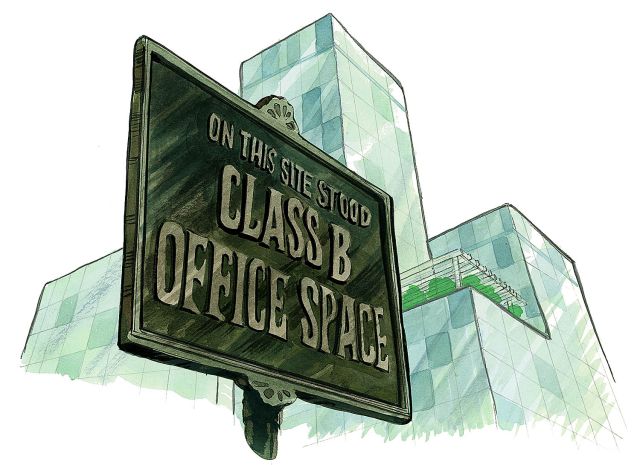
“These aging office buildings are already struggling against the Class A office,” Berman said, “and it is just a matter of time before they reach the limit of their usefulness and not be able to compete against newer offices.”
The Stories Behind the List