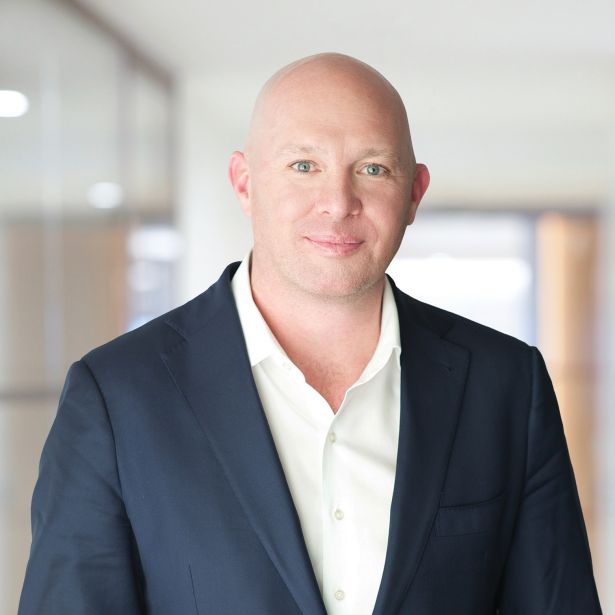
Bryan Donohoe
Partner and head of U.S. debt at Ares Management
Ares Management boasts one South Florida’s strongest post-pandemic success stories in a region chock full of them.
Driven by competitor acquisitions and aggressive logistics investments, the global alternate investment manager has grown its real estate business by a factor of nearly eight since 2020 — from $15 billion assets under management (AUM) at the end of that year to $114 billion by the end of 2025.
Ares’ $3.7 billion acquisition of GCP International in March 2025 nearly doubled Ares Real Estate’s AUM — some $45 billion — and extended its grip in Brazil, Japan and Vietnam, while expanding its presence in the U.S. and Europe.
The firm is based in Los Angeles, but the Sun Belt — South Florida in particular — has been an epicenter of Ares’ AUM growth, especially over the past 12 months. In April, Ares paid Blackstone $121 million for a three-building industrial portfolio in Miramar and Dania Beach. About five months later, it paid $56 million for Cabot Properties’ roughly 231,000-square-foot warehouse in Weston. The firm opened a new office in Miami Beach last year as well.
Ares is now the world’s third-largest owner and operator of logistics properties as a result of such deals, Bryan Donohoe said.
Meanwhile, Ares’ credit business in South Florida last year was among the strongest ever seen in the state. Its $772 million construction loan in December alongside Monarch Alternative Capital for Related Ross’ twin 10 City Place and 15 City Place in West Palm Beach was reportedly the largest construction loan ever recorded in Florida. It provided $413 million to PMG for One Twenty Brickell Residences, and a $250 million refi for Related Ross’ luxury Laurel development in West Palm Beach. Ares also secured $450 million, via J.P. Morgan Chase, toward the construction of Jorge Mas’s Miami Freedom Park soccer stadium.
“When we think about Florida, we see the continuation of trends from a population perspective that began in advance of COVID,” Donohoe said. “What followed was corporate relocations to support this population growth in certain submarkets. Second, the sponsors that we transact with have created a very substantial footing in these markets. … When you combine those two things — great sponsors, choosing a great market with macro tailwinds alongside some of the best, newly built assets in the state, let alone the country — certainly we’re going to find that environment attractive.”
The Stories Behind the List