Butlr’s New Thermal Sensor Products Aim at Occupancy and Restrooms
The startup spun out of MIT aims to lower building operators’ costs without cameras and other devices that might compromise anonymity
By Philip Russo September 1, 2026 10:00 am
reprints
Physical artificial intelligence technology company Butlr has launched two products — Ask Butlr and its Smart Cleaning module — for building operators.
A Massachusetts Institute of Technology spinout, Butlr combines thermal body heat sensing technology and machine learning to infer human behavior without the use of cameras or other methods that compromise anonymity.
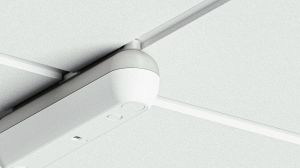
Ask Butlr, an analyst AI tool that allows building operators to ask about occupancy and usage and get data-backed insights, is the Burlingham, Calif.-based company’s latest product.
The Ask Butlr dashboard uses anonymized thermal sensor data that integrates with AI to provide insights on building occupancy, dwell time, foot traffic and energy consumption in the built environment. It also supports strategic space planning, operations and capital real estate investments with granular data gathered anonymously based on human behavior. That allows its physical AI and spatial intelligence platform to address current and future building needs.
“We built Ask Butlr in response to the growing need among our customers for accurate first-party data and insights on buildings without compromising the privacy and anonymity of occupants,” Honghao Deng, CEO and co-founder of Butlr, said in an email. “This new offering quickly analyzes and presents information in an easy-to-understand format that empowers facilities managers, workplace decision-makers, and CRE professionals to optimize spaces while realizing stronger return on investment on their buildings.”
The Smart Cleaning module, part of Butlr’s spatial intelligence platform, uses granular, anonymized usage data to reduce restroom cleaning costs.
Butlr’s wall- or ceiling-mounted thermal sensors are placed outside a restroom to capture foot traffic and occupancy data. The Smart Cleaning module provides a deeper level of insight based on bathroom door swings. Inside the restroom, an optional touch module enables facilities staff to confirm cleanings are complete. The data feeds directly into the Butlr dashboard, providing a closed-loop system that directs buildings teams where to focus their efforts.
A recent Wakefield Research survey commissioned by Butlr revealed that 24 percent of unoccupied office space continues to be heated and cooled, while 66 percent of building managers clean all areas with the same frequency due to a reliance on fixed maintenance schedules. Butlr claims that its module for restroom maintenance and cleanliness can save $1,400 per restroom annually.
“Restroom maintenance has always been challenging due to privacy concerns,” said Deng. “As a result, facilities staff clean spaces that don’t need it and inadvertently overlook those that do. Our Smart Cleaning technology solves this challenge, as Butlr enables decision-makers to know exactly how space is used so that they can replace assumption-based decision-making with verified data for immediate and measurable cost savings.”
Philip Russo can be reached at prusso@commercialobserver.com.