Atrium Launches AI Platform Tracking $1.3T of U.S. Data Center Development Credit
Commercial Observer got an exclusive look at the new research analytics tool, which breaks down data center financings across commercial loans, CMBS, syndications and corporate debt
By Brian Pascus August 18, 2026 6:30 am
reprints
The data center marketplace keeps growing, and one analytics firm has tracked where all $1.3 trillion of identifiable debt powering this development boom of nearly 4,300 domestic data centers has come from — and where it is going.
Commercial Observer can first report that Atrium, a San Diego-based AI analytics startup founded in 2024, has launched its new interactive data and research platform, “Who Finances America’s Data Centers,” to track the debt dollars behind every data center deal in the U.S.
The platform is a first-of-its-kind resource that uses data collated from local property records, Securities and Exchange Commission credit agreements, commercial mortgage-backed securities (CMBS) securitizations, as well as commercial bank and private credit loan syndications and corporate debt issuances to follow the money behind 3,038 operational data center deals — and another 1,258 that are in different stages of their lifecycles.
Ryan Alfred, founder at Atrium Data, told CO that “data centers are the biggest driver in the economy right now,” but because they’re financed differently than traditional real estate classes — and often require layers of county-level loans, syndicated debt, CMBS, asset-backed securities, special purpose vehicle structures, and, most unusually, credit issued by regional utility companies — it has been difficult for market players to get a clear picture on the debt behind the boom.
“As a result, no one had this 360-degree view of who is financing them and what their credit structures are,” he said. “We went out and used all our data, and all our resources, to build the 360-degree vehicle of data center financings.”
The firm’s website notes that the tool and report are “the first in an ongoing series that will track every identifiable data center investment dollar in the United States” and that it will be updated periodically as deals close, including securitizations and county-level recordings.
Alfred emphasized that Atrium came at this with “fresh eyes,” in that they weren’t constrained by how data had been previously collated and presented in the CRE analytics space.
“What really informed our development was our clients telling us that the data they needed was scattered across different silos — securitized loans in one place, county filings in another — and that bringing it all together in one platform would create a lot of value for them,” he said.
Moreover, Atrium is developing an inclusive CRE analytics tool that tracks industry-wide credit and debt deals, ranging from commercial banks to real estate investment trusts (REITs) to insurers to private credit firms, and includes data from country records, private syndications and loan sales. It will be asset-class agnostic.
“We’ve been working on this broader real estate credit platform that goes beyond data centers,” he said. “We believe we’ve built a general-purpose real estate credit tool that does something no one else does.”
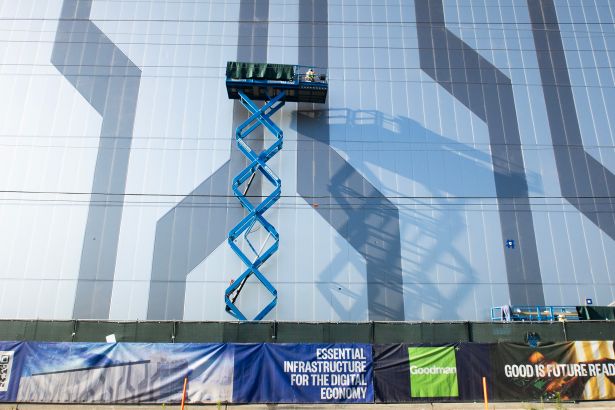
Follow the money
The Atrium data center tool analyzed the source of $1.3 trillion of CRE debt behind data center deals, taking into account and isolating $93.1 billion of financial overlap. The result found that property mortgages, syndicated facilities, private credit, hyperscale corporate debt, and debt from regional utility firms have contributed the vast majority — $1.1 trillion — of U.S. data center development debt.
Property mortgages contributed $148 billion to U.S. data center development, with Wells Fargo and J.P. Morgan Chase topping the list with $8.2 billion and $6.9 billion in finances, respectively.
But those mortgages only tell part of the story. Atrium argues that the largest lenders in CRE operate simultaneously across property mortgages, syndicated loan participations and private credit warehouse lines, meaning it’s incumbent to analyze their combined debt holdings as one metric.
Atrium uses TD Bank to bring this point home, noting that the Canadian-based bank has issued $14.8 billion in direct loans against data center developments, but that number increases to $27 billion when the bank’s 79 syndications are taken into account, making TD Bank the biggest data center lender in the world. Wells Fargo and J.P. Morgan Chase are third and fourth, at $18.7 billion and $17.9 billion, respectively.
These syndicated facilities — where data center operators secure debt from numerous private equity sponsors and commercial banks — account for $224 billion in industry credit.
The biggest individual deals in the syndicated debt space include Coreweave’s $23 billion debt facility from 38 lenders; DigitalBridge and IFM’s $20 billion debt facility from 24 lenders; QTS Realty and Blackstone’s $18.5 billion debt facility from 24 lenders; and Equinix’s $16.2 billion debt facility from 31 lenders, the largest deal sponsored by a public REIT.
Then there’s the private credit part of the equation.
Atrium pointed out that asset manager PIMCO stands in a class by itself, with $23 billion of pure data center originations, of which $18 billion came from its Meta and Blue Owl Beignet bond issuance of October 2025. In the private credit space, Blue Owl Capital and Blackstone Credit follow PIMCO with $11 billion and $8 billion of data center originations, respectively.
All told, SPV and private credit account for $158 billion in U.S. data center development debt.
“Private credit’s arrival is real,” the firm wrote. “Three of the top 15 are non-bank lenders (PIMCO, Blue Owl, Blackstone Credit). Two years ago, none would have appeared on this list.”
Corporate debt from the big five hyperscalers — Amazon, Microsoft, Google, Meta and Oracle — accounts for $223 billion in long-term debt and credit facilities across the data center space, according to Atrium.
Amazon (and Amazon Web Services) tops the list with $67.2 billion, including $32 billion in data centers capital expenditures in 2025. Jeff Bezos’s team was followed by Microsoft’s $53.8 billion in debt, including $44 billion in capital expenditures in 2025.
But the largest amount of credit in the data center space comes from regional utility operators like Dominion Energy, Consolidated Edison and PG&E raising and issuing hundreds of billions of dollars in debt — $428 billion in syndicated credit facilities from 27 utility firms — with the top 10 utility firms accounting for 68 percent of that total.
No utility player has issued more debt than Bay Area-based firm PG&E, whose $64.6 billion dwarfs the next largest utility players, Atlanta-area Southern Company, which has issued $27.7 billion of debt, and Dominion Energy of Northern Virginia, which has issued $26 billion in debt.
Alfred explained that lenders typically aren’t comfortable financing data center deals that rely on site-based power, which drives the need for utility relationships. To this end, a utility provider like Dominion Energy has a pipeline of committed deals but lacks the power generation capacity to meet energy demands three-to-five years out — so they must acquire capital.
“So what happens is they have existing debt, just like hyperscalers, and they take on massive new amounts of debt to finance the production of the power to meet the needs of data centers,” said Alfred. “This is a level or two above strict data center debt, but it’s all related.”
In the end, though, no matter where it comes from, this debt does need to either be paid down or refinanced, which brings the next element to Atrium’s research: Where the gold rush can go wrong.
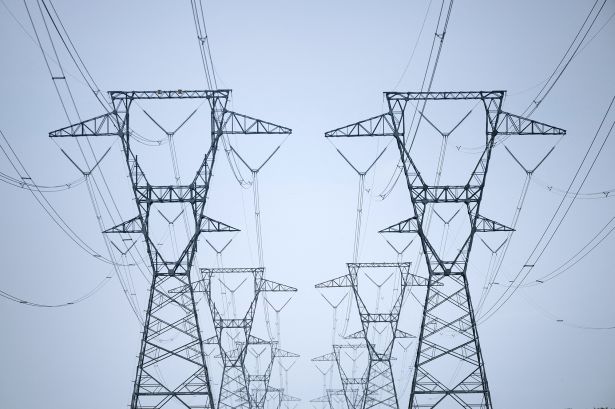
Doomsday worries
Atrium found that $128 billion in data center debt matures between 2025 and 2028 — which exceeds the entire U.S. office CMBS maturity wall in that same timeline — while the already imposing number jumps to $213 billion when the three-year total incorporates 2028 and 2029.
Atrium emphasized that “each dollar must either refinance at today’s rates, find a buyer or face restructuring,” and that — when considering that many of these earlier loans will refinance into a structurally higher interest rate environment — “the rate gap is punishing.”
The platform showed that a vast majority of existing data center development debt originated during the low interest rate years of 2020 through 2023, when the secured overnight financing rate [SOFR] sat between 0.05 percent and 4.5 percent. Today, those same refinancing rates are higher than 6 percent, with borrowers holding leverage refinancing into 8 percent deals.
“If AI demand disappoints or power constraints delay delivery, refinancing risk could cascade across the capital stack,” wrote Atrium. “For facilities with any vacancy, repositioning costs or capital expenditure needs, the margin for error vanishes.”
The research firm also highlighted how the sector faces risks from both hyperscale financing and development pullbacks, as well as present and future power grid constraints.
Atrium noted that the big five hyperscalers have accounted for $600 billion in capital expenditures in 2026 — up 36 percent from the previous year — and that if just one hyperscaler cut their expenditures by 20 percent, “the ripple effects propagate through the entire supply chain.”
“Construction firms, equipment manufacturers and, most critically, data center developers who have committed to build-to-suit projects on the expectation of hyperscaler lease-up, all face a demand shortfall,” Atrium wrote. “The risk is compounded by the herd behavior of hyperscaler spending. These companies are investing, in part, because their competitors are investing.”
And then there is the power conundrum. Atrium found that while development capital, open land and building materials are all readily available to power the data center development boom, electricity remains in short supply in both the present and future.
For instance, PJM Interconnection, which generates power across 13 U.S. states and Washington, D.C., forecasts 30 gigawatts of incremental data center demand by 2030, equivalent to 30 nuclear reactors, according to Atrium.
“By June 2027, the grid could fall below established reliability standards, meaning that during extreme weather events or generation outages, controlled blackouts become a real possibility,” wrote Atirum, which noted that these grid investments to avoid that reality will raise consumer electricity prices in those states by $100 billion within seven years.
“This is not a hypothetical — it is a cost being socialized across the 65 million people served by PJM’s grid,” wrote Atrium. “The political sustainability of this cost transfer is, at best, uncertain.”
This political backlash is now becoming apparent in Northern Virginia, home to more data centers than anywhere else in America. While Virginia itself is home to 668 data centers — 56 percent more than second-place Texas — Northern Virginia’s Loudoun County — home to 70 percent of the planet’s internet traffic — hosts 306 facilities, which is more than 45 individual states.
Despite the data center building and financing boom, it appears the political consequences stemming from negative public opinion are finally catching up with America’s “Data Center Alley,” down in Loudoun County.
Atrium wrote that Virginia lawmakers have now proposed legislation that will halt data center construction in the state, while companies like QTS and Blackstone have abandoned developments, like the $4.6 billion Virginia Digital Gateway campus the firm planned, due to years of community opposition.
Atrium data showed that 48 national developments, representing $158 billion in development capital, were canceled in 2025, a number that has since grown in the first seven months of 2026 to 75 projects, representing $130 billion, that have been blocked or delayed so far this year.
“The number of organized opposition groups exploded from 396 at the end of 2025 to 833 across 49 states by the end of first quarter 2026,” wrote Atrium, “The data center industry faces an opposition movement that has crossed from nuisance to existential.”
Brian Pascus can be reached at bpascus@commericalobserver.com.
Correction: This article has been updated to reflect the correct dates for data center debt maturities.