Presented By: HALL Structured Finance
The Growing Divide Between Credit Funds and Specialty Finance Lenders
By HALL Structured Finance June 3, 2026 12:00 am
reprints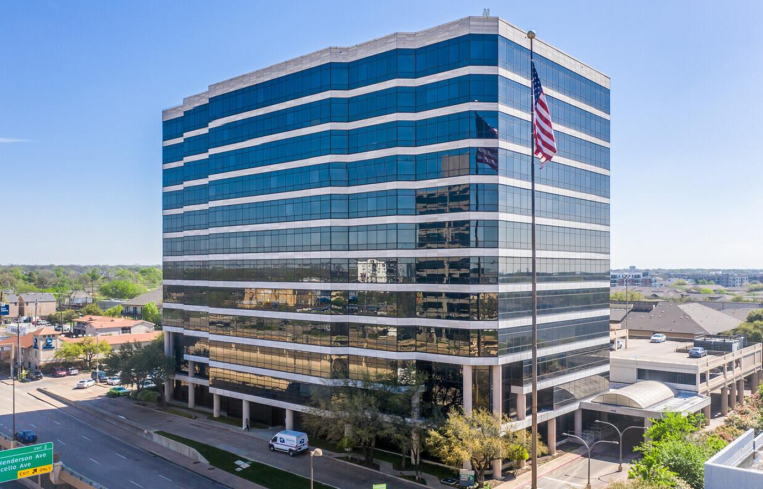
After more than a decade of abundant liquidity, commercial real estate is entering a new phase, one defined less by the availability of capital and more by how that capital is structured.
Rising interest rates, a pullback from traditional banks, and a wave of maturing loans, nearly $875 billion coming due in 2026 according to Mortgage Bankers Association, are forcing borrowers to rethink how deals get financed.
Increasingly, the question is not simply who can provide capital, but who can provide it with the flexibility and certainty required to navigate a more complex environment.
That shift is also bringing greater clarity to a distinction that has often been overlooked: the difference between private credit funds and specialty finance companies. While both operate outside the traditional banking system, their structures ultimately shape how they behave when markets become less predictable.
Private credit funds, backed by institutional capital, often operate under pressure to deploy funds within fixed timelines. That dynamic can influence decision-making, particularly in volatile markets.
“Credit funds raise capital from a lot of different investors, and there’s often pressure to put that capital to work with rigid structures and minimal flexibility after closing,” said Mark Klipsch, president of Hall Structured Finance. “We don’t have that same pressure. We can pick the projects that actually make sense for us and can make our own decisions if situations arise that require action.”
By contrast, balance sheet lenders deploy their own capital, allowing for a more flexible, deal-specific approach. That difference becomes even more pronounced when liquidity tightens.
“Liquidity can dry up quickly, and investors can hit the brakes,” said Josh Clary, executive vice president of Hall Structured Finance. “Because we’re using balance sheet capital, we have more freedom to stay focused on the deal and make thoughtful decisions, rather than reacting to external pressures.”
That balance sheet approach is central to Hall Structured Finance’s model. A Dallas-based private, specialty finance lender and affiliate of real estate development and management company Hall Group, the firm provides structured debt solutions across commercial real estate, with a focus on construction, bridge and transitional financing.
Backed by its own capital and informed by decades of real estate development experience, Hall Structured Finance operates nationally across multifamily, hospitality, office and other select assets.
That flexibility extends beyond initial underwriting and into how transactions are structured and managed over time. Without rigid fund constraints, Hall Structured Finance can approach each deal with a level of creativity that traditional credit platforms often cannot match.
A developer’s lens on credit
Hall Structured Finance occupies a distinct position even within the specialty finance landscape. As part of a firm with deep roots in real estate development, it brings a perspective shaped not just by lending, but by ownership and execution.
“We’re developers and borrowers ourselves,” Klipsch said. “We’ve been in our clients’ shoes, and that changes how we structure deals and how we manage them over time.”
That experience influences everything from underwriting to asset management. Rather than relying solely on static credit metrics, the firm takes a forward-looking view; evaluating business plans, market dynamics and execution risk in a more holistic way.
“Traditional lenders often look at risk through a narrow lens,” Klipsch said. “We can be more open-minded and future-focused because we’ve lived through development cycles ourselves, including the mistakes.”
That approach allows the firm to move beyond scorecard underwriting and instead focus on outcomes, structuring loans in a way that gives borrowers the highest probability of success.
“We’re very focused on sizing deals appropriately,” he added. “Over-leveraging doesn’t help anyone. The goal is to put borrowers in a position where they can actually execute.”
Even operational processes reflect that philosophy. The firm’s construction draw systems, for example, are built from a developer’s perspective and designed to streamline execution while maintaining institutional discipline.
Dislocation, not dysfunction
Today’s market is increasingly defined by dislocation rather than fundamental breakdown.
MSCI’s U.S. distressed tracker shows distressed commercial real estate assets in the U.S. reached approximately $107 billion in 2025, a decade high, with office accounting for nearly half of that total, according to CRE Daily.
At the same time, delinquency rates across CRE loans have climbed, with some segments experiencing year-over-year increases of more than 50 percent, reflecting the strain of higher interest rates and refinancing challenges.
Yet many of these situations are not the result of flawed real estate. Instead, they reflect a mismatch between yesterday’s capital structures and today’s conditions.
“What we’re seeing isn’t broken real estate, it’s broken capital stacks,” Klipsch said.
The refinancing pressure is also unfolding alongside a broader affordability shift across the U.S. economy. Median home prices now sit at roughly five times median household income, up from about three times in the mid-1970s, according to recent analysis cited by The Wall Street Journal.
As real estate costs have outpaced income growth, both consumers and property owners are operating in a more constrained environment, one where assumptions from the low-rate era no longer hold and capital has become significantly more selective.
In multifamily, assets financed in 2021 and 2022 are now facing refinancing at significantly higher rates, while rent growth has moderated and operating expenses, particularly insurance and taxes, have increased. In office, underinvestment in leasing, tenant improvements and amenities has accelerated performance challenges.
“There are a lot of assets that got caught in a very different environment,” Klipsch said. “They’re not bad projects; they just need new capital and a basis reset.”
That dynamic is creating opportunity, particularly for lenders with both flexibility and operating expertise.
Hall Structured Finance has increasingly positioned itself to support distressed and transitional situations, especially where strong sponsors are stepping in with fresh equity and a credible business plan.
“Smart money is coming back into the office space,” Clary said. “The key is backing the right sponsors, groups that know how to operate and execute.”
A recent example is the firm’s involvement in the Uptown Tower transaction in Dallas, where new capital is being deployed to reposition an office asset through leasing investment and amenity upgrades.
Office, in particular, has become an area of differentiated opportunity. While many credit funds are restricted from lending on office due to fund mandates or legacy exposure, balance sheet lenders have more flexibility to evaluate opportunities on their merits.
“Many capital sources remain restricted from pursuing office opportunities right now,” Clary said. “For us, that creates opportunity. We’re not constrained in the same way, and we know the DFW market.”
That local knowledge is critical, especially in complex or distressed situations.
“You really have to understand the market to step into these deals,” he added. “That’s where experience matters.”
Simplicity, alignment and certainty
As borrowers navigate this environment, they are also rethinking how they structure their capital stacks.
Traditional combinations of senior debt, mezzanine financing and preferred equity can introduce multiple layers of negotiation and misaligned incentives. Increasingly, borrowers are turning toward more streamlined solutions.
“In today’s market, simplicity has real value,” Clary said. “When you can work with one lender, you reduce friction and move faster.”
That simplicity also creates alignment. With one capital provider, decisions around extensions, modifications and future funding are made within a single framework.
“When you split the capital stack, you’re splitting control and incentives,” Klipsch added. “A unified structure keeps everyone focused on the same outcome.”
As borrowers continue to navigate refinancing pressure and a more selective lending environment, the focus across commercial real estate is shifting toward execution, alignment and long-term flexibility.
Many of the challenges facing the market today are less about the underlying real estate and more about how those assets were financed during a very different capital environment. That shift is prompting both borrowers and lenders to rethink how deals are structured, particularly as timelines become less predictable and capital more discerning.
In that environment, experience, discipline and the ability to navigate complexity may ultimately matter as much as access to capital itself.