

Foreign Capital Rethinks U.S. Commercial Real Estate
International investors aren't fleeing the domestic market during Trump 2.0 — but they're not exactly sprinting toward it, either
By Brian Pascus February 2, 2026 10:00 am
reprints
One year into Donald J. Trump’s second go-around as president, it’s safe to say that the 45th and 47th commander in chief has shaken up the global order and upended the consensus around democratic governance that supports U.S. capital markets.
Whether it’s threatening NATO ally Denmark with an invasion of Greenland or implying Canada will become the 51st state, Trump’s foreign policy has rattled traditional U.S. allies. Meanwhile, his high-tariff regime, unprecedented attacks on the Federal Reserve’s independence, and the outright chaos generated in states like Minnesota — where federal agents fatally shot two Americans last month — has unnerved anyone who follows domestic commercial real estate investment trends.
“Without naming names, U.S. policy has disturbed a lot of global investors who had always viewed the U.S. as rock-solid and safe,” said David Hodes, founder and co-managing partner of Hodes Weill & Associates, a global real estate advisory firm.
No less than Sam Chandan, director of the Chao-Hon Chen Institute for Global Real Estate Finance at the New York University, speaking after a recent trip to Europe where he rubbed shoulders with the Davos elite, relayed the concerns he heard from foreign investors and policymakers amid skiing and sips of champagne.
“Overall, we see that there’s a far greater degree of caution,” said Chandan. “Cross-border ventures are watching very closely developments in the U.S., potentially as it relates to changes in tax policy, the treatment of foreign investment in the U.S., and changes around currency fluctuations, as well as economic growth outlook.”
After Trump on Jan. 20 threatened to invade Greenland, the Dow Jones Industrial Average and S&P 500 each dropped roughly 2 percent. About a week later, on the heels of the $39 trillion national debt and the rising tariffs the Trump administration has overseen, the dollar hit a four-year low. A weakening greenback could potentially exacerbate an already shaky recovery from the inflation of the Biden era.
But it’s Trump’s threat to criminally indict Federal Reserve Chairman Jerome Powell (either for not lowering interest rates fast enough, according to Powell, or because he spent too much on renovations to the Federal Reserve HQ, according to the Justice Department) and his machinations at the Bureau of Labor Statistics (whose head he fired last August and replaced with a former economist for the Heritage Foundation) where the president has created the highest amount of doubt around monetary policy and jobs data.
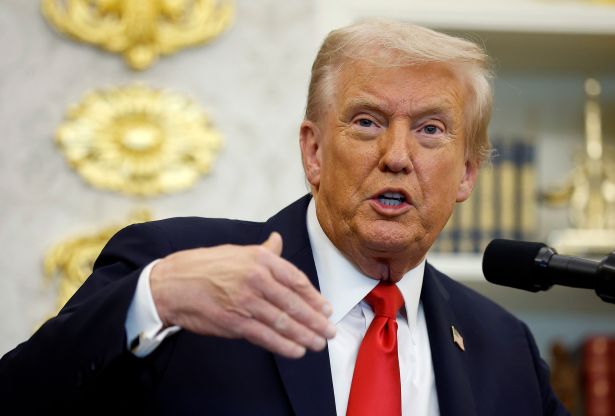
“All of that has implications on the purity and the objectivity of the U.S. economy, which has been the most attractive aspect of investing in the U.S. — it’s our transparency, the independence of our institutions, and the rule of law, which is being challenged and stretched to the limit,” said Riaz Cassum, executive managing director and head of international capital, Americas, in the Boston office of JLL Capital Markets.
But the more important question, at least when it comes to CRE capital markets, is whether foreign investors will move to the sidelines as they wait and see whether the U.S. will remain the world’s most predictable, stable and law-abiding place to do business.
In fact, some already have. PFA, Denmark’s largest pension fund, sold out its Treasury holdings last year, while Anders Schelde, chief investment officer of a Danish pension fund valued at $25.5 billion, said in a Jan. 21 interview that, “The U.S. is basically not a good credit, and long-term U.S. government finances are not sustainable.”
Last year, foreign capital accounted for only 6 percent of U.S. investment deal volume, down from an average of 9 percent over the last five years and an average of 11 percent over the last decade, per Real Capital Analytics data cited by Morgan Stanley Commercial Real Estate.
“You could point to some cooling. It has cooled a little bit, but it’s not massive,” said Brian Klinksiek, LaSalle Investment Management’s global head of research and strategy, who added that monetary policy differences among global central banks are more to blame than U.S. domestic political chaos.
“Correlation isn’t causation, and it’s too much of a leap to say an apparent, but not dramatic, downclick in the share of foreign investor activity is due to politics,” he added.
Alex Foshay, head of Newmark’s international capital markets, argued there’s “always the short-term, knee-jerk reactions” to headlines, but that the number of significant overseas investors actively retreating from the U.S. is limited, as the majority refuse to walk away from what he called “the strongest, most liquid capital markets system among investment-grade countries.”
The U.S. is expected to attract 50 percent of new capital allocations globally in the coming year, with 38 percent of foreign institutional investors expecting their CRE allocations to increase in 2026 and 2027, according to a recent survey from the European Association for Investors in Non-Listed Real Estate, cited by Clarion Partners.
“At the moment, we are not seeing a significant pullback in overseas capital focusing on the U.S. market,” said Foshay. “Will [the controversies] cause a few to pull back and reassess, as they did at the initial stage of when tariffs were put in place? Yes, but I’d expect those groups to return to the table in the relative short term.”
The main reasons tariffs or the accompanying presidential bluster haven’t scared off foreign investors is because of the fiduciary mindset most funds and active managers take, which is conditioned to look beyond the headlines, explained Tal Peri of Union Investment Real Estate GmbH, a German investment firm.
“There’s a totally different level of thought, which is the long-term view, and we all expect it to be the last term of Trump, so as long-term investors, your models are set up for 10 years,” he explained. “We look past headlines and instead at trend lines — and the economic data is strong there,” particularly with artificial intelligence, data centers and the U.S. office market, he said.
Trump slump?
There’s little doubt that the president’s combative stands and mercurial attitudes toward traditional global allies have contributed to a sense of unease, but has that had real world consequences in terms of dollars-and-cents deals?
“Europeans dislike the Trump style, they’re watching what’s happening, and there’s a higher level of unpredictability, and it’s all related to the economy,” said Peri. “But some of those policies, while aggressive, are improving the U.S. economic situation.”
Much of the praise Trump has gained on the economic front comes from increased tariff revenues — which hit $287 billion in 2025, a 192 percent increase from 2024 — and a revived onshoring of U.S. industrial production: Owner and developer Hines now estimates that U.S. manufacturing construction activity will increase by $1 trillion into 2030.
Moreover, the U.S. GDP increased by 3.8 percent in the second quarter of 2025 and at an annual rate of 4.4 percent in the third quarter of 2025, (but slowed to a 2.3 percent annual growth rate in the fourth quarter of the year).
“I’ve gotten tired of saying it, as at any given time of the year there’s a lot happening, but what we’re seeing is there’s a continued interest in U.S. commercial real estate from foreign capital,” said Chinmay Bhatt, managing director of institutional capital markets at Northmarq, a capital markets firm. “When you’re managing $50 billion, it’s hard to ignore U.S. real estate and not have any exposure.”
Perhaps the main reason foreign investors haven’t been scared off by the chaotic first year of Trump’s second administration stems from the fact that many players in the market have grown accustomed to Trump’s famously fickle temperament as he enters his 11th year on the world stage.
Dan Berman, a managing partner of U.S. real estate at HSF Kramer, cited the Greenland controversy, when fears of an actual U.S. military invasion dominated headlines for a couple of days, only to immediately disappear once Trump gave a conciliatory speech at Davos vowing no guns … for now.
“It’s not like we haven’t been watching a show for a while now,” said Berman. “Things aren’t always the way they initially seem to be. People think they’re dramatic, and all of a sudden they’re not so dramatic.”
All the same, certain countries and funds have pulled back amid all of Trump’s domestic and global turmoil, which includes his Jan. 16 interview with Reuters where he mused on canceling the 2026 midterm elections (the White House said Trump was “joking”), as well as his unilateral military abduction of Venezuelan President Nicholas Maduro (who is now awaiting trial in New York for alleged drug trafficking).
“Has the U.S. become less investable? Arguably, yes,” said Hodes. “A number of large investors are saying, ‘We fear there’s a reduced focus on the rule of law in the U.S, and we fear economic growth will diminish by decreasing population growth given the policies which are shutting the borders and aggressively going after new immigrants, who are here legally but are getting swept up in the deportation polices.’ ”
Historically, the largest single investor into the U.S. has been Canada, where a pool of pension plan and wealth capital from our northern neighbor flows from the “Maple Eight,” a group that includes the Canada Pension Plan Investment Board, British Columbia Investment Management Corporation and Ontario Teachers’ Pension Plan.
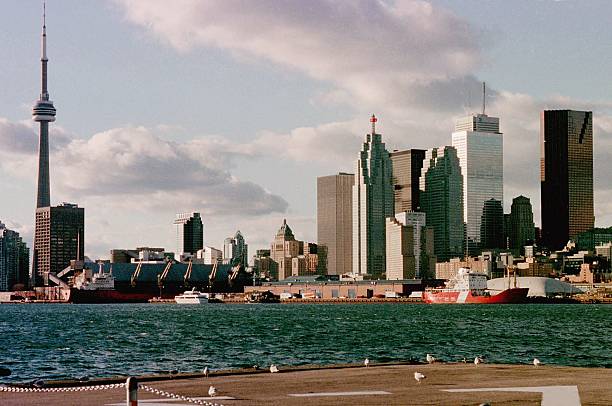
But, as Trump has threatened to annex the entire nation into the U.S. and continues to castigate Prime Minister Mark Carney on the world stage, the money pots in Toronto, Montreal and Vancouver have moved out of U.S. capital markets amid the constant bullying.
“We’re not seeing too much from Canada these days,” said Stephen Muller, founder of the Vanadium Group, a CRE advisory firm and equity brokerage. “If you look at the largest foreign investors in the U.S., they should be No. 1, but we’re not getting warm and fuzzies from Canadian groups. They’re paused at the moment.”
This sentiment was confirmed by JLL’s Cassum, who emphasized that different parts of the world will react differently to Trump’s threats and bluster, depending on where things presently stand among their own relationship to U.S. economic and foreign policy.
“Historically, the Canadians are the biggest non-U.S. investors [into the U.S.], so, of course, they had a very negative reaction to tariffs and talk about annexation, and they took a pause,” Cassum said. “Most recently, obviously, the Nordics will have a different reaction to the Greenland noise than investors in Israel, for example.”
Faithful friends
Even amid this pullback and general skepticism from a few known allies, many foreign countries remain committed to U.S. investment in 2026 and beyond.
Vanadium’s Muller said the most active foreign groups today include Japan, Korea, Indonesia, the U.K. and Germany, as well as the familiar mix of Persian Gulf players from the Middle East.
Newmark’s Foshay cited the recent decline in interest rates, falling hedging costs and a weakening dollar against global currencies as the three ingredients driving increased offshore investment into U.S. capital markets, particularly from Middle Eastern sovereign wealth funds, Singaporean real estate investment trusts, open-ended German funds, Australia’s superannuation system, Korean investment institutions, and, yes, even some Canadian pension funds.
“We’re seeing a broadening of players that are currently focusing on the U.S., and at this time most active foreign capital would be from family-controlled groups,” he said, citing Akira Mori’s Mori Trust as one example. “Those types of groups will continue to invest aggressively in 2026, wanting to take advantage of what are still very attractive returns.”
If foreign capital has remained faithful to the stars and stripes, it might be because, despite all the uncertainty caused by Trump’s personality and policies, the U.S. remains the best game in the world.
“There might be some bruised feelings from certain countries, but, I don’t know, that’s a matter of safety, which is a relative decision,” said Berman. “Do you want to cozy up with China? Is that your alternative? Does that feel safer to you?”
Hugh Macdonnell, managing director and head of client capital management at real estate investment house Clarion Partners, argued it’s no surprise capital continues to come through when the largest, most sophisticated investors, who represent the majority of overseas capital, must be invested in the U.S. out of sheer economic necessity.
“They can’t afford not to be,” Macdonnell said. “The U.S. is and remains a big, sophisticated, transparent, healthy market for real estate investing — they have to be invested in it.”
But it’s one thing to remain in the game when it comes to U.S. CRE, and it’s quite another to do well, which is the second side of this story. The value destruction and lack of liquidity that has characterized U.S. CRE capital markets for the better part of the last four years has, in some ways, been a bigger impediment to overseas capital than anything the president has said or done.
“I actually don’t think that these issues around Trump in the U.S. are having a direct result on potential foreign investment as much as the issues around the underperformance of U.S. commercial real estate,” said Shlomo Chopp, managing partner of Case Equity Partners.
“I challenge you to find a foreign investor who is killing it in the U.S. who didn’t have their own infrastructure or hasn’t been here a long time,” he added.
Altered expectations
Here’s the ugly truth of the matter: Since COVID-19 struck in March 2020, commercial real estate hasn’t performed well as an investment.
The main reason for this is interest rates, both short- and long-term, rose quite a bit — and this came after an extended decade of interest rate declines and virtually free money — taking everyone by surprise. With CRE being a leveraged investment, whose values and transaction levels are dependent on the cost of debt, almost all asset classes in every market got throttled, especially as the economy slowed during the subsequent inflation following the international supply glut and the overspending that characterized the Biden administration from 2021 to 2024.
“Real estate as an asset class has, on the whole, underperformed other asset classes,” said LaSalle’s Klinksiek, who repeatedly emphasized the CRE value adjustment. “The stock market’s value is what its value is, we look every second at what shares are worth, and real estate has underperformed relative to that. But [stock market performance] has been driven by the concentration of AI firms, which one could debate whether those prices are sustainable.”
The impact of value destruction became most apparent to CRE funds and the pace of foreign fundraising in recent years, according to several experts.
To hear from John Carrafiell, co-founder and co-CEO of real estate investment firm BGO, the retreat of foreign capital in recent years stems from a lack of distributions returned to limited partners by general partners, whose funds haven’t been selling their assets into a falling market, in turn crushing distribution channels.
“There’s a few pension funds and sovereign wealth funds around the world that have a growing capital base, and most are pretty stable,” he said, “but if they’re not getting distribution back, then it’s a simple equation: They can’t put new money back in.”
The lack of capital returned to general and limited partners has curtailed the ability to make new investments into U.S. CRE. This in turn has clogged up the three- to four-year harvesting period for new capital, throwing off assumed metrics and calculations of where exits can be made during the two- to three-year investing period once the funds begin to deploy capital into the market, according to JLL’s Cassum.
“If I committed before COVID, now they haven’t been able to sell, and my investment is still in that fund, but, even if what I’m eventually getting back is 80 cents or 90 cents on the dollar [of that investment], I’m still not getting enough back to invest into another fund,” he explained.
That said, this lack of investable capital trickling down through the system hasn’t yet harmed the biggest players on the block — that is, Blackstone and Brookfield, which each raised real estate debt funds exceeding $8 billion in 2025 — but it has started to hurt the ability of smaller funds, the middle-
market players with shorter track records and tighter timelines, to secure new sources of capital.
“For blind pool vehicles, there are a lot of folks saying to us today, ‘I’ll view that cautiously, but if it’s a mega fund, a Fund IX, we’ll write them a check.’ It’s new managers, emerging managers with a niche strategy, that have to do a lot of hard thinking because one thing overseas capital is looking at is governance, control, asset-level visibility,” explained Northmarq’s Bhatt.
Even so, the foreign capital that is still rushing into CRE funds has prioritized non-core, opportunistic vehicles, following the lessons of real estate history, which has seen investors buy assets at distressed prices after years of value destruction.
“Coming out of real estate recessions, investors tend to make their first set of investments into opportunistic vehicles, because, if they suffered losses, they want to gain back what they lost by investing into distressed real estate post-downturn, and that’s probably true right now,” explained Clarion’s Macdonnell.
At 33 percent, opportunistic funds captured the largest share of private fundraising capital raised in 2025, an increase from its 18 percent metric in 2024, according to investment tracker PERE.
Moreover, acquisitions are rising. A 2026 Knight Frank survey found global investors are set to deploy almost $150 billion in CRE, with 67 percent signaling they’ll be prioritizing acquisitions, suggesting a floor has been reached in terms of values.
“Fundraising has been strong, and deployment has been deliberate, as investors shift from asking ‘Where’s the bottom’ to focusing on what’s actually investable,” said David Steinbach, global chief investment officer at Hines. “We’re seeing capital re-engage in a measured way, with more discipline around basis, cash flow and exits.”
A new vintage
If investors appear to finally be clustering around our shores, it’s to take advantage of what several market players characterized as a generational buying opportunity in U.S. CRE.
To wit: Private real estate fundraising activity rose 29 percent last year, increasing to $222.2 billion from the $172.4 billion secured in 2024, according to PERE. BGO’s Carrafiell described this moment for investors as “an inflection point,” as those who have been sitting on the sidelines amid all the geopolitical noise now face a U.S. economy primed to benefit from tax cuts, lower interest rates, less regulation and higher GDP growth.
“While the geopolitical noise is causing foreign investors, in certain instances, to pause, there’s a really strong argument that 2026 and 2027 will be one of the best U.S. investment vintages in 20 years,” he said.
Carrafiell also brushed off the Trump-inspired drama, whether it be domestic or international controversies, as being a factor in tepid foreign inflows.
“At the end of the day, they’re fiduciaries, not politicians, so my sense is they’ll come back, to a certain extent, into the market,” he said.
Cushman & Wakefield’s Marc Royer, who specializes in global capital advisory, said that 65 percent of global funds are now targeting U.S CRE, a metric 10 percent higher than pre-pandemic levels, and one driven by the value reset.
“Foreign investors lag domestic buyers on the way down, but they lead on the way back up,” Royer said.
Even the whispers around the $39 trillion U.S. national debt, another round of inflation, a return of higher short-term rates and 10-Year Treasury yields potentially reaching 5 percent likely won’t be enough to scare away most foreign groups.
“I think the U.S. Treasury market is too big to fail, and the U.S. is too big to ignore, so foreign investors, many of them see through the noise,” said Klinksiek.
But not all noise is created equal, especially when it is created by Donald J. Trump.
“It’s not exclusive to foreign capital: U.S. institutions are looking at the same facts,” said Hodes. “Many are saying the same thing: They aren’t confident we will get back to a better sense of normalcy, and therefore many are starting to rethink their overconcentration in the U.S.”
Brian Pascus can be reached at bpascus@commercialobserver.com.


