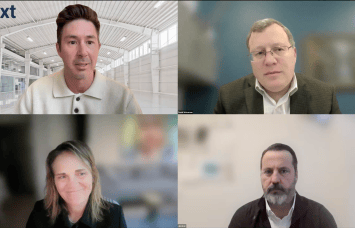
Sara Bronin of Land Use Labs: 5 Questions
After six years gathering zoning data, the company has launched its new software as a service platform
By Philip Russo November 24, 2026 9:00 am
reprints
Earlier in November, Land Use Labs (LUL) launched its LUL Platform, a subscription-based service delivering zoning information directly to users across real estate sectors.
The platform allows users to retrieve, review and store zoning information for more than 100 million parcels from Land Use Labs’ vetted database. Each query returns the site’s zoning rules, including zoning district names, use permissions, setbacks, allowed density and parking requirements. Users can perform queries by selecting a point on the map, searching by address, or passing latitude-longitude coordinates, with previous searches stored in an account’s lookup history.
Having begun zoning data collection in 2020, the Washington, D.C.-based LUL today has 20 full-time staff members who primarily analyze zoning codes, while also developing company products, strategy and its technology system, said Sara Bronin, founder and CEO of LUL.
In mid-November, Commercial Observer spoke with Bronin about the launch of LUL Platform and why the company’s vast data library and humans in the loop make it more than a match for artificial intelligence-driven competitors.
This interview has been edited for length and clarity.
Commercial Observer: What does Land Use Labs’ new platform launch mean for users?
Sara Bronin: We provide the nation’s most comprehensive and accurate zoning data, sourced directly from zoning codes and triple vetted with humans and not AI. We have just launched a platform that enables people to query our database and return a number of regulations that apply to their properties.
Our platform will unlock a huge amount of regulatory information for people who are looking for sites that they want to develop, for people who want to understand how sites they already own are zoned, and for people who need zoning information at scale quickly.
So it’s primarily for property owners and developers?
While property owners and developers will be the primary users of our platform, the others will include people in the financial services industry, real estate agents, environmental consultants and government policymakers.
If you think about it, each and every one of those types of professionals can use information about zoning in different ways, whether it’s to conduct site selection, assess the impacts of policy change, to determine the amount of risk relative to an investment on particular properties, or just simply to understand what’s allowed and what isn’t.
What differentiates LUL from the other land use proptech companies?
Our motivation is knowledge, and that’s because we started collecting this zoning data to build a public resource — the National Zoning Atlas — which requires us to know with great precision how zoning actually works. In effect, any data that we collect from LUL is fed directly into the National Zoning Atlas, which keeps that resource accurate and well maintained into the future.
Also, you can think of LUL as the deeper version of the National Zoning Atlas, which is geared toward advocates and does not enable data download. Our platform does enable the download of key data points about zoning and unlocks our full dataset for third parties, unlike the National Zoning Atlas, which only provides a limited amount of information
In addition, our competitors are focused on profit, and so they use shortcuts to identify zoning information, whether that’s pulling from assessors’ maps instead of source documents, or using AI instead of people. Our methods have been honed over the years to build the National Zoning Atlas, and we’ve finally unlocked the massive repository of zoning data that we’ve used for that tool for the general public. So what differentiates us is both our motivation and our methodology.
As a software as a service (SaaS) company that doesn’t use AI, how does LUL scrape and vet your information while keeping up to speed with competitors and the needs of your customers?
We have already read more than 1.5 million pages of zoning text over 100 million parcels. Our coverage is the best in the business, and we expect to be able to continue using our tried and true methods for updating and cleaning zoning codes into the future. We’re totally committed to continuing to provide our clients with industry-leading information at scale.
Our analyst team uses the same methodology to interpret zoning text and to read zoning maps. Our general approach is that zoning codes are so nuanced and complicated, involving different definitions, structures, cross references, and even in some cases mismatches between the text and map, that we know we must rely on humans to interpret and resolve zoning’s many complications.
We know from our now six years of experience reading and interpreting zoning codes that codes are very complicated, and to resolve the many discrepancies, both within the text individually and the map individually, that human reasoning is required.
So our analysts identify and analyze zoning districts, which are the building blocks for all of our products. What that means is that we digitize each base, overlay the district within a jurisdiction, and then assign every mapped district to a parcel. We collect it for every address, parcel and block that’s zoned in the areas we’ve covered. And we cover about three-quarters of the U.S. population. We analyze up to about 100 different regulatory characteristics for each zoning district.
Also, we identify regulatory attributes for housing and planned housing developments, and also the most common nonresidential uses for each zoning district, which allows us to build datasets that center on uses.
How do you standardize all this data without AI using humans in the loop to deliver the information on demand, as you put it?
Delivery on demand relies on the fact that we’ve collected the information and that it’s instantly available. We’re not querying it and getting back to users later. We have it in our database, and we know it’s reliable because we have the standard methodology for people who really want to get into the weeds.
We have a documentation page on our website that provides data dictionaries, that explains the API and authentication practices on our website, and we also have definitions, all of which are available online.
Philip Russo can be reached at prusso@commercialobserver.com.