Manhattan Housing Seasonality: When the Borough Sees Its Peaks and Valleys
By Amanda Schiavo September 2, 2026 10:00 am
reprints
School calendars, holidays and even the weather can all have an impact on housing market activity across the borough of Manhattan. So can assumptions from buyers when it comes to the strength of the spring and fall markets.
The months of March, April, May, June and October have historically — at least from 2015 through 2025 — been the most active months for sales of condos and co-ops in Manhattan, with the average number of sales typically climbing over 1,000 per month, according to the latest data from Corcoran Sunshine, shared exclusively with Commercial Observer.
General seasonal drivers of the Manhattan housing market include the school year calendar, which determines when moves to new homes will be least disruptive. Another factor is the timing of corporate bonuses, which tend to arrive between January and March. Meanwhile, family vacations, back-to-school transitions, Labor Day weekend and religious holidays can all contribute to a general market lull.
However, sales tend to climb back up after September alongside normalizing schedules, an influx of listings, cooler weather and looming year-end tax implications.
From January to July 2026, a total of 7,239 condo and co-op sales closed in Manhattan, with over 1,000 each in March, April, May and June, according to the Corcoran Sunshine analysis. Historically, the most listings have been in September, with the average number that month hitting 2,264 between 2016 and 2025, while December saw the lowest number of new listings with 730.
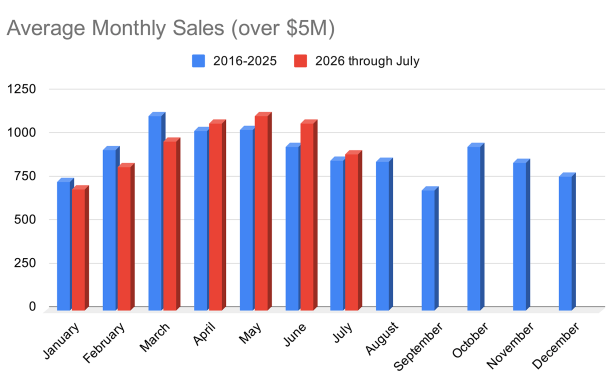
Meanwhile, the numbers for condos and co-ops above $5 million looked a little different this year compared to the average. From January to July 2026, the number of sales of condos and co-ops over $5 million totaled 576, while the average amount of sales during that time from 2016 through 2025 was 495, according to the data. The higher numbers for this year come in the aftermath of Mayor Zohran Mamdani’s pied-a-terre tax, which imposes an annual property tax surcharge on luxury secondary homes in the city (and hasn’t seemed to deter homeowners just yet).
For brokers, marketing times for these properties is the highest in the winter, when contract activity is slower due to the holidays, and even rises during general elections, depending on the year. However, marketing times tend to decline during the spring as the market picks up, reaching their trough in April — a month that historically tends to average higher sales.
“Seasonal peaks and troughs are more pronounced than the overall market in the $5 million market,” the Corcoran Sunshine report reads. “Historically, third-quarter sales in this segment are nearly 40 percent below the spring peak versus just 20 percent slower for the broader market as due to family vacations, summer camp, unavailable co-op boards, compensation-package timing and more.”
Amanda Schiavo can be reached at aschiavo@commercialobserver.com.