GreenBarn’s David Welsh and David Schonbraun Aren’t Afraid of a Little Complexity
The industry vets lead with expertise in financing, investing in and operating real estate when it comes to tackling some of the market's most intricate deals
By Cathy Cunningham September 1, 2026 10:00 am
reprints
A lot happened in the world in 2020: some bad, some ugly but also some good. Amid the tumult and upheaval came some new shoots — “green” ones, so to speak — and, a few years after that, a pairing of two industry veterans.
David Welsh co-founded Normandy Real Estate Partners, an investment firm primarily focused on the Northeast, in 2002. After selling Normandy to Columbia Property Trust in 2019, he co-founded a new company, Senlac Ridge, with two of his Normandy partners in January 2020.
David Schonbraun spent almost two decades at SL Green Realty as the office ownership giant’s chief investment officer, departing in 2021, before becoming Carlyle Group’s U.S. head of real estate credit.
By 2023, Schonbraun opted for a different shade of green. Welsh bought out his two Senlac partners and rebranded the company to GreenBarn Investment Group, bringing in Schonbraun as his partner at the firm and Rithm Capital as a partner in its business.
Three years later, GreenBarn has roughly $3.5 billion in investments under its belt and is carving out a niche for itself in a crowded market, one led by experience and the ability to tackle complex deals across sectors, as well as up and down the capital stack.
If the GreenBarn name sounds familiar, you’ve likely heard about the firm’s myriad deals, from the restructuring of the $1.84 billion in debt on a Columbia Property Trust (CXP) office portfolio; to the recapitalization of 817 Broadway; to the $77 million mezzanine loan for Grubb Properties’ development at Manhattan’s 8 Carlisle Street; to the $112 million retail loan on Kushner Companies’ Monmouth Mall in New Jersey; to being awarded asset management duties at 20 Times Square.
In short, its portfolio is anything but vanilla.
“The hairier the deals, the better for us, because we feel very comfortable with complexity,” Schonbraun said during a July interview. “We’re happy operating where others shy away. We look at these deals from an owners and operators perspective, and our comfort with complexity is what gives us an advantage.”
The ability to handle complexity isn’t asset class- or sector-specific. “I think that’s the great thing about them,” said Michael Magner, the managing director at Natixis who hired GreenBarn for the 20 Times Square assignment. “There’s nothing they haven’t seen, and nothing they can’t tackle.”
That truth is born out of Schonbraun and Welsh’s experience but also somewhat intentional as they continue to craft and grow GreenBarn’s portfolio.
“We’ve always believed that the best real estate companies are those that are multifaceted, and can operate, understand the capital structure, play around that capital structure, and also know how to do workouts,” Schonbraun said. “You want to be fluid in where you play in the capital stack, because the best risk-adjusted return moves over time, but wherever you invest you need an operating expertise to make the very best investment decisions.”
David squared
Welsh and Schonbraun weren’t strangers when the two teamed in 2023. They live roughly 15 minutes apart in New Jersey — in New Vernon and Short Hills, respectively — but had worked together as partners on deals for two decades during their tenures at SL Green and Normandy. Schonbraun oversaw SL Green’s debt book, and Normandy was a borrower. The two also often partnered on loan workouts.
“We’ve always had a shared vision of the industry and how we look at things,” Schonbraun said.
That shared vision became especially crucial when the two joined forces in 2023 because the market was changing — fast — and indecision wasn’t an option. Interest rates were going up, and there was plenty of capital markets distress, but, where others saw dislocation, Welsh and Schonbraun saw opportunity.
“We felt that the combination of David’s capital markets and lending expertise and my operating experience and building a business through Normandy would be a great recipe for the market at the time,” Welsh said.
When Welsh founded Senlac Ridge in 2020 he was under a noncompete agreement, with office investments off limits. So, up until 2023, Senlac focused its efforts on multifamily development instead, developing a number of projects in Florida, Greater Boston and the New York area. In 2023, the opportunity to get equity returns by investing in debt positions materialized, and with Schonbraun’s capital markets background lighting the fuse, GreenBarn was ready to take off.
“We started really leaning in and deploying a lot of capital, originating loans and buying nonperforming loans where there was going to be a need for intensive asset management, or a development deal where we would be using our development expertise to oversee the investment of the loan,” Welsh said.
Complex, opportunistic credit investments don’t fall in one’s lap, however. They need to be pursued.
“They’re good hunters,” Michael Nash, co-founder and (now retired) chairman of Blackstone Real Estate Debt Strategies, said of Schonbraun and Welsh. “You need to be a hunter when you’re starting your own firm. Some people are better waiting for the phone to ring and being supported by a great organization, but these guys don’t need that. They know how to take risks, and they’re likable people.”
In real estate, that last part is critical. “If they don’t like you — ‘they’ being the transactional world — it’s not a good thing,” Nash said. “But GreenBarn has people who want to help them, support them, show them deals, work with them, and capitalize their deals.”
Given Welsh and Schonbraun’s longevity in the industry, the majority of GreenBarn’s deal flow is driven by direct relationships rather than brokers, including relationships with several former competitors of SL Green or Normandy. Instead of competing with these firms today, GreenBarn is partnering with them as co-GPs, or lending to them.
Not all deals are direct, though.
Adam Spies, co-head of U.S. capital markets at Newmark, has known Schonbraun since early childhood and arranged Welsh’s first deal at Normandy — the acquisition of 1370 Avenue of the Americas in June 2002. Over the years, Spies has executed billions of dollars of business with both Welsh and Schonbraun at their various companies, including the recapitalization of Taconic Partners’ 817 Broadway in 2025, where GreenBarn and Sabal Investment provided a $38 million mezzanine loan.
“They give someone like myself the confidence and ability to transact, between their ability to bring capital to the table and expertise,” Spies said. “That’s why we went with them on 817 Broadway. It was a complicated deal, but we knew they’d be able to structure through it and bring capital to the table to get it done.”
When it comes to approaching a transaction, “There’s a lot of mutual respect there,” Spies said of Schonbraun and Welsh. “They’ve both had individual success in their careers. That eliminates any type of insecurity and enables them to rely on each other’s expertise without any ego.”
In addition to deep relationships, GreenBarn’s ability to take on a multitude of scenarios in the market today gives the firm a competitive advantage over some of the newbies who haven’t yet walked the walk.
“Being able to turn your hands to several different things in the market today is not a ‘want to,’ it’s a must,” Nash said. “Everyone’s got key relationships that they rely on to make a difference. These guys are no different. They’ve been in the soup for a really long time doing this, but having capital structure expertise, having sector expertise and having vintage expertise goes a long way. You also need courage, because you have to believe in what you’re chasing in the market more than someone else does. Both these guys have courage.”

Office paper
If GreenBarn were to slap a Ted Lasso-style “BELIEVE” sign on any asset class, it’d likely be office. It’s in both Welsh and Schonbraun’s DNA, and their career histories are filled with its, ahem, stories.
Even during the pandemic, when investing in the sector was considered to be as savvy as installing an ashtray on a motorcycle, the two knew a recovery was coming — and as a result were early movers in investing in that recovery.
One of the earliest deals GreenBarn completed was an investment in the $1.84 billion Columbia Property Trust (CXP) debt package, originated by Goldman Sachs, Deutsche Bank and Citigroup for PIMCO’s take-private acquisition of the real estate investment trust in 2021, comprising a roughly $484 million CMBS loan, $1 billion in pari passu financing, and some B notes. The deal is collateralized by seven office properties in New York, Jersey City, N.J., San Francisco and Boston.
The three banks eventually sold their controlling stakes in the transaction to GreenBarn and Axonic Capital, which decided to lean in and improve the distressed portfolio’s performance and value rather than break it apart or liquidate it. Two modifications took place under GreenBarn and Axonic’s lead, the second pushed the debt’s maturity date out to 2028, put the debt back in good standing and kick-started a repositioning of the portfolio, with a local management firm being put in place at 650 California Street in San Francisco.
“The CXP transaction is probably the most notable one that we have on our plate right now,” Welsh said. “Because it was the Columbia Property Trust portfolio, we knew these assets well and we know the people operating those buildings. We’ve been working on this deal for over a couple years now and we’re reinvesting capital into this portfolio as if we are the owner. We bought the position with the idea to not just liquidate the portfolio, but to reinvest capital into these assets, particularly in San Francisco and the New York assets, where we see an opportunity to reposition these assets, upgrade the assets, and drive leasing.”
Erik Nygaard, a principal and portfolio manager at Axonic, was introduced to Welsh through his brother Aaron Welsh, a partner at Apollo Global Management, through Nygaard’s wife, JLL’s Lauren Kaufman. “It was a case of ‘This is the Nygaards and we’re the Welshes’ — a true family affair,” Nygaard said. “That was the initial connection, but, over the last three years, we’ve closed five deals with GreenBarn, all with complicated capital stacks or deal structures.”
Axonic initially started out as competitors on the CXP deal, bidding alongside Skylight Real Estate Partners. “We had done a ton of work on it, and so when GreenBarn secured it they reached out to us [to come in],” Nygaard said. (Later, GreenBarn, Axonic and Skylight would all team up on 8 Carlisle Street’s mezzanine loan along with Meadow Partners.)
GreenBarn’s relationship with Goldman Sachs was key in facilitating the CXP deal, with Nygaard saying: “[Welsh and Schonbraun] cover a really wide swath of the market between the two of them in terms of relationships that they have.”
Typically, Axonic’s transactions with GreenBarn take a GP-LP format in which GreenBarn is managing the asset’s day to day, Nygaard said: “I think the reason we have a good partnership with them — in addition to the fact that we get along personally — is that we all bring something slightly different to the table on these complicated structured deals.”
When it came to the CXP deal, Axonic brought plenty of CMBS expertise to the table, as an active participant in the market and having done a lot of distressed CMBS investing post-Global Financial Crisis. “We have an extensive track record working out these types of deals and utilizing the nuances of the structure and relationships with the counterparties within that ecosystem,” Nygaard said. “I think they viewed us as a partner who was additive to the workout of the deal and the outcome of the deal, in addition to bringing capital.”

Elsewhere in office, in 2025, GreenBarn, alongside FarmView Ventures and Farallon Capital, acquired the 405,000-square-foot building at 1625 Eye Street in Washington, D.C., via foreclosure auction with a credit bid of $60.5 million. The deal was done with an intention to stabilize the property and reset its basis for a next chapter.
One investor who co-invests alongside GreenBarn but couldn’t speak on the record said distressed office sits right in the firm’s wheelhouse: “Nobody knows office better from an operations perspective,” they said. “In concept, restructurings are easy, but the reality is there are just so many different motivations and intentions, and it’s really hard to keep all the pieces together. Welsh is a master at understanding motivations and finding a solution. And Schonbraun is one of the smartest, straightforward guys you can meet.”
Lastly, and notably, when Rithm Capital acquired Paramount Group for $1.6 billion last year, GreenBarn had discussions around participating in the management of the Paramount business after closing. Ultimately, the two firms mutually decided to keep the two businesses separate. “It was a Rithm opportunity that Rithm wanted to pursue on their own,” Welsh said. “They made a great buy at the right time, and we were very involved with the acquisition. We had many discussions about staying involved with this opportunity while continuing to manage GreenBarn’s business. In the end, we decided to focus on GreenBarn and GreenBarn’s business only, because it was going to be really difficult to do both. It’s a very good collection of assets, but that in and of itself is a full-time job.”
Welsh added that “Rithm has a terrific team running these assets, we have a great relationship with them, and we remain partners together in our investment portfolio.”
GreenBarn is keeping plenty busy with other asset management assignments, including the Bridge at Collegeville, a 14-building, 1.8 million-square-foot office campus near Philadelphia being redeveloped by David Werner Real Estate Investments and GreenBarn, and also with 20 Times Square.
Times to shine
After leading a $2 billion financing package for 20 Times Square, which includes the Times Square Edition Hotel, retail space and a 18,000-square-foot billboard, Natixis — as lender —was forced to foreclose on the property in 2022 and found itself in the owner’s seat instead. Michael Magner, a managing director at the bank, was placed in charge of the property, and his search for an asset management firm — one with property management, leasing and capital markets experience —commenced.
Having known Welsh for some time, Magner mentioned he was about to go out to the market with an RFP, and Welsh said GreenBarn would like to put its hat in the ring.
“They came back with an amazing presentation,” Magner said. “They have an ability to take the prism and just turn it a little bit to show a completely different light. That’s Dave Welsh’s background — he’s built and developed Class A properties but he’s also bought and restructured a lot of distress, and he understands what it takes to take something and make it look different and feel the way it should.”
The message in GreenBarn’s presentation was: This asset is in a great location. It’s got great bones and enormous visibility on 47th and Seventh. We just have to get people to look at it differently. “That’s what we’ve been doing ever since,” Magner said.
Cracking the retail leasing was the biggest hurdle for 20 Times Square to overcome. The NFL Experience store previously occupied the retail space and left it in some disarray. But, under GreenBarn’s management, retail leasing activity has picked up.
When Magner initially walked the NFL space with Schonbraun and Welsh, the first thing they said to him was, “Mike, why hasn’t anybody white-boxed the space?” White-boxing — cleaning everything out, removing every single temporary partial wall and everything that looks like it was the prior tenant’s fixtures — is similar to staging a home for sale, but it hadn’t been done at 20 Times Square.
“Imagine if you walked into a house for sale and there were kids’ toys across the floor and a sink full of dishes. That’s the way it felt when you walked in there,” Magner said. “Now, it’s clean and crisp. We walk in there with very substantial tenants and they love it.”
Working alongside GreenBarn and a Cushman & Wakefield team of Alan Schmerzler and Steve Soutendijk, Natixis now has a number of letters of intent for the space that it’s currently exploring. “We’re adhering to the old carpenter’s rule of measure twice, cut once as we want to get it right,” Magner said. “We’re looking at different pieces of the puzzle — maybe one big tenant, maybe two tenants — but prior to GreenBarn’s involvement, I didn’t even have those conversations.
“This is maybe more of a cliche statement, but I think they’re small enough to care, but big enough to matter,” Magner said of Welsh and Schonbraun’s special sauce. “Both Daves are, for me, a phone call away. It’s a different kind of connectivity. I did not need or want somebody who just would — and I’m going to use my fingers to air quote — ‘asset manage.’ I needed value creators. Both those guys sit in the seat as if it were their own asset. That’s what I really like about them.”
Nygaard also noted the benefit of a direct line to Welsh and Schonbraun when a deal comes calling. “They’re nimble and they’re able to move quickly because they’re the decision-makers,” he said. “That’s definitely been very beneficial for them in terms of pursuing deals that require speed.”
Shoes on, shoes off
Nash described GreenBarn’s platform as “special sits or tactical ops.” That’s not to say they’re not affable while completing complex and sometimes covert missions.
“Newer firms have to prove that they’re trustworthy, good fiduciaries and good people to work with,” Nash said. “Putting all the mercenary bullshit aside, you want to enjoy the experience of working on deals. I’ve done a lot of deals with people where I never wanted to do a second deal with them again. For a new firm, they’re off to a very good start in that regard.”
“Welsh is very strong at deal making and has a little more experience on the equity side, while Schonbraun has more depth when it comes to debt and capital markets,” Spies said. “They have complementary skills, they’ve had successful careers, and they’re at a similar point in them where they can draw on their individual successes and knowledge to start something bigger than both of them.”
As the co-investor put it, “These guys are very well positioned between their expertise at the asset level combined with their know-how on the capital structure, and also just their personalities. When you’re negotiating against them, they also do a really nice job of good cop-bad copping you.”
Welsh and Schonbraun have some well-known side hobbies when they aren’t hunting their next deal. Welsh is an accomplished pianist and plays in a band called the Holiday Ramblers.
His band started practicing, and recording, in the green barn on his property, which his company is now named after. During COVID, Welsh often sat in that barn and pondered leaving real estate and pursuing music full time. “In the end, I realized I had unfinished business to do and wasn’t ready to give up real estate, and that I could be successful building a new company without giving up music,” he said. (Holiday Ramblers’ current favorite jam? “The Way It Is” by Bruce Hornsby.)
“Dave Welsh’s happy place is on a fishing boat in Montauk, and so he’s got more of that flip-flop, Montauk personality in him,” Nygaard said. “GreenBarn does a fishing trip every fall out in Montauk. They host 80 or so people, and Welsh plays with his band at dinner.”
Spies recently saw The Holiday Ramblers perform at The Montauket in Montauk.
“It was standing room only, and a 150-person line to get in but I told them I was with the band,” he said.
Schonbraun, on the other hand, is an accomplished athlete who played tennis at Princeton, and still plays today.
For Welsh and Schonbraun, the GreenBarn days are keeping them busy and continue to just get better and better.
“I haven’t worked like this since the early days of Normandy where I was involved with every aspect of the transactions and, at the same time, building a business,” Welsh said. “Back when I started Normandy, I was disappointed when it was Fridays and looked forward to Mondays. That changed at the end as I started my family and had other priorities, but now with my kids growing up, and this new chapter, it feels the same all over again. I don’t like Fridays, and I can’t wait for Mondays.”
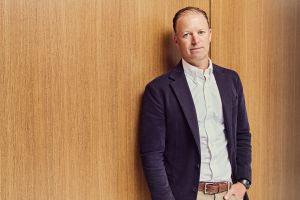
Schonbraun echoed the sentiment — with a twist. “David built Normandy, but I haven’t had that experience until now as there’s always been a larger institution behind me,” he said. “For me, the investing side of it’s easy, but growing the business and all of that has a lot of complexities that I’m learning, and it’s a lot of fun, and it’s gone as well as I think we could have imagined three and a half years in. We work really well together. The market’s set up well for us, and we’re positioned for a strong future.”
Cathy Cunningham can be reached at ccunningham@commercialobserver.com.