The New 21st Century ROAD to Housing Act Has a Lot of Financing Runway
But it lacks teeth where most housing development policy happens in the U.S., say industry experts
By Brian Pascus September 1, 2026 6:30 am
reprints
It’s often said that home is where the heart is. But, in America today, buying a home has become increasingly associated with stress, frustration and widespread economic anxiety as the country finds itself mired in a generational supply crisis.
J.P. Morgan Chase recently estimated that America faces a housing shortage of 2.8 million units, and that it could take around 10 years to resolve. Others, like the U.S. Chamber of Commerce, believe the shortfall is 4.7 million homes.
Meanwhile, a Harvard University study in June 2026 found that national home prices have increased 54 percent since 2020, and that the average single-family home sales price is nearly five times median household income.
Clearly something needed to be done.
On July 11, Congress passed the 21st Century ROAD to Housing Act into law with sweeping bipartisan majorities — 85-5 in the Senate, 358-32 in the House — belatedly addressing a long-simmering housing shortfall through a combination of more than 40 different economic incentives, regulatory reforms and updates to existing federal laws that aim to spur construction of new affordable housing, single-family homes and manufactured housing. (ROAD stands for Renewing Opportunity in the American Dream, if anyone doubted the intent of legislators.)
“Both political parties were hearing from their constituents that the issue of housing affordability was a very serious one, as high housing costs were impacting communities of all kinds throughout the country,” said Dennis Shea, executive vice president for housing at the Bipartisan Policy Center, a Washington, D.C., think tank. “But, when dealing with this issue there’s no silver bullet, no magic bullet — it requires the private sector.”
Rather than muscle through one flashy change or a single major reform, the bill can best be described as a hodgepodge of carrots and sticks to localities and private sector players to hopefully support greater housing production via construction and investment, while also updating several once-onerous federal legal codes to eliminate red tape that has stymied the sector for decades.
“This legislation does a lot of little things that individually don’t seem like a big deal, but collectively can make a real impact of increasing housing supply and reducing costs over time,” said David Garcia, deputy director of policy at the Terner Center for Housing Innovation at the University of California, Berkeley.
Others, however, have pointed out that the new law appropriates no new money for housing development and that its reforms infringe on local housing policies and private sector investment strategies. President Donald Trump famously refused to sign the bill (it became law anyway without his signature) and even characterized it as “a big yawn.”
“The unfortunate reality is, as it was bipartisan, is that it’s so weak and a terrible piece of legislation,” said Toby Cobb, managing partner and co-founder of 3650 Capital. “There are many different things in there, but it actually does very little. It does nothing other than make people spend money on lawyers.”
Even so, then-White House press secretary Karoline Leavitt described the bill in a statement as “one of the most significant pieces of housing affordability legislation in American history.” It certainly is the most notable bipartisan housing law since Congress passed the Low-Income Housing Tax Credit (LIHTC) in 1986 and the Housing and Economic Recovery Act of 2008.
Jeffrey Lubell, senior fellow at the Urban Land Institute’s Terwilliger Center for Housing, said that Americans shouldn’t expect the federal government to solve the housing supply problem in one fell swoop, though this new law does contain “many modest but useful provisions” that will eventually make a material difference in support of an expanded supply of more housing.
“It’s not a home run, it’s not a single, they’re doing what they can,” Lubell said. “But now the devil will be in the details with how to implement this.”
Investor walkback
Even before the legislation became law, critical aspects of American single-family housing got mired in a messy bill-drafting process that could’ve had far-reaching consequences for commercial real estate investors.
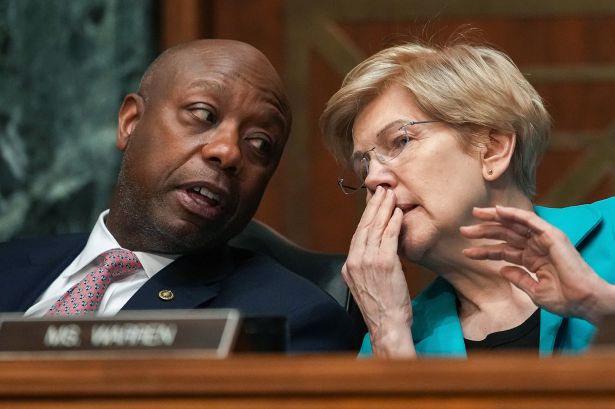
While the new housing law has its origins in a bipartisan housing bill introduced in August 2025 by Sens. Elizabeth Warren, a Massachusetts Democrat, and Tim Scott, a South Carolina Republican, things kicked into high gear in early January only after Trump called on Congress to ban large institutional investors like BlackRock and Blackstone from buying single-family homes and turning them into rentals, adding in his social media post that “people live in homes, not corporations.”
As elected officials in both houses negotiated across the aisle on the fine points, it became clear that the build-to-rent (BTR) industry — a subclass of single-family homes often constructed identically in planned communities, or as townhouses in subdivisions, and brought to the market as rentals — would be adversely affected.
Making up as much as 4 percent of the housing market, BTR is mainly owned and developed by institutional investors, thus making the initial provision passed by the Senate — which required institutional investors to sell BTR single-family homes to individual buyers after seven years — a nonstarter.
Eventually, the House bill removed the stipulation, exempting BTR entirely, and the final bill limits investors who already own 350 single-family homes from increasing single-family housing stock, thus allowing existing firms to hold on to much of their portfolios, but stopping a proliferation of new single-family rental portfolios to grow on Wall Street at Main Street’s expense.
“In general, the market has been frozen since early January because of the uncertainty around the single-family [piece] and the different variations of the bill that affected the BTR space,” said Daniel Sindelar, assistant vice president for investment research at Heitman, an institutional investor in both sectors.
Tomasz Piskorski, professor of real estate studies at Columbia Business School, called institutional investors “a convenient scapegoat” for Congress and emphasized that Wall Street owns only a tiny fraction of homes in the U.S., roughly 3 percent to 5 percent of national housing stock.
“I can’t believe how misunderstood this is,” said Piskorski, who admitted some cities like Jacksonville and Atlanta have a disproportionate share of homes owned by investment firms.
“They own the homes because they acquired them during the Great Recession, when homes were foreclosed on,” he added. “They entered when so much of U.S. housing stock was in foreclosure, but, on the margin, they haven’t been increasing house prices.”
A 2022 study from the Government Accountability Office found that the estimated share of the single-family rental market owned by institutional investors is as high as 14 percent in Phoenix; 18 percent in Charlotte, N.C.; 21 percent in Jacksonville, Fla.; and 25 percent in Atlanta.
Regardless, investors like 3650’s Cobb believe that the new single-family rental restrictions will create more harm than good by preventing the private sector from doing its part to build and invest in the housing supply.
“All it will do is just slow down deployment of capital into the very thing you want to accomplish,” said Cobb. “And how can you tell people you can’t invest in something? It’s probably unconstitutional.”
Sen. Scott’s office defended the legislation in a statement to CO.
“Today, the American Dream is a little more within reach for families across this country,” said Scott. “The 21st Century ROAD to Housing Act will help more Americans plant roots, build stability, and pass opportunity to the next generation.”
Rental restrictions aside, there’s a lot that the bill does do — effectively or not.
New measures
Spread over numerous provisions, the ROAD to American Housing Act can be summed up in four broad themes: modernizing federal housing programs, incentivizing pro-housing policies at state and local levels, expanding affordable housing options, and streamlining regulations.
The new law expands the Rental Assistance Demonstration (RAD) program by raising the cap on conversions to codify improvements for up to 555,000 public housing units, and creates a Department of Housing and Urban Development (HUD) pilot program to finance existing home repairs. However, the biggest on-the-books change involves manufactured housing.
Manufactured housing (which is just another term for mobile homes) are smaller dwellings built entirely inside factories and then moved via a steel frame to a land site, where residents typically own the individual units but companies own the land the homes sit on. The new housing law updates a HUD code requiring manufactured homes to sit on a permanent chassis (under the assumption they would move at some point, even though they rarely do) — a modification that experts believe could reduce the costs of each manufactured home by $5,000 to $10,000 and allow for greater design and innovation during production.
Andra Ghent, professor of urban finance at the University of Utah, called the removal of the permanent chassis “the most promising part” of the housing law,” while Urban Land Institutes Lubell called it “the single most important provision in the law” that will facilitate new housing supply.
Updating the permanent chassis requirement “will enable the construction of multiple-story buildings within manufactured housing,” Lubell said. “And, because manufactured housing is governed by a single national building code, it enables economies of scale that we don’t see with other housing types.”
Charles Young, CEO of Sun Communities, a manufactured home supplier with approximately 300,000 residents under its portfolio, estimated that 22 million Americans live in manufactured housing.
“If we as a country are really serious about housing affordability in America, we need to make it easier to produce more housing at lower costs,” Young said. “[The new law] removes some of the outdated barriers that have limited innovation within manufactured housing.”
The ROAD Act also includes modifications to the HOME Investment Partnerships Program, the largest federal block grant currently on the books and one aimed at financing affordable housing. The new law permanently reauthorizes the program since it expired in 1994, giving state and local governments new access to HOME Funds to support low-income and affordable housing measures.
“The HOME Program is a really important federal funding program that can do a lot of different things,” said Liz Osborn, vice president of policy for Enterprise, a housing advocacy group. “And it’s the flexibility that makes it so important: It can be used for housing development, down payment assistance and rental assistance.”
If the new law updates several federal housing rules, particularly in the low-income space, then it also aims to improve the ability of the private sector to finance more affordable housing loans and developments itself.
The bill expands and raises the cap on what commercial banks can invest from their capital pool into affordable housing projects from 15 percent to 20 percent, in an attempt to increase bank and investor demand for the particular debt found in the Low-Income Housing Tax Credits (LIHTCs).
While larger commercial banks usually don’t reach that cap, smaller regional banks are often worried about overstepping that capital limit, a restriction that often artificially stymies investment into LIHTC and public welfare investments by medium-size credit providers.
“It’s important and will unlock a lot of capital because there were a fair number of banks that were running up against that limit,” said Dudley Benoit, senior managing director and head of LIHTC investor relations at commercial real estate finance firm Walker & Dunlop. “The legislation is letting institutions go to 20 percent, and that will help groups do more. It’s a big win and something the industry was pushing for some time.”
Moreover, the legislation also seeks to expand the availability of small mortgages — as 22 percent of owner-occupied homes in the U.S. are valued below $200,000 — by creating a four-year pilot program through HUD that incentivizes lenders to offer mortgages under $100,000.
And, even without any new federal money attached, the network of incentives offered to state, local and private sector players makes up the largest chunk of the new legislation.
The biggest incentive is the Build NOW Act, which ties $3.3 billion of Community Development Block Grant (CDBG) funding to housing construction in different states and localities. It gives bonuses for those cities that build more homes, reduces funding for those that lag behind, and opens up previously hindered affordable housing production by allowing up to 20 percent of grant money to finally finance that sector.
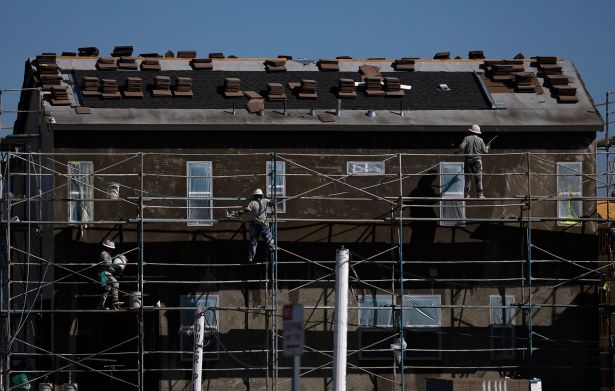
“CDBG traditionally has not allowed dollars to go to new housing construction, but there’s a provision in the ROAD Act to allow CDBG dollars to support new development,” explained Garcia. “That’s a big change, particularly where affordable housing development costs are often very high, so it could be useful to cities looking to get more affordable housing projects off the ground.”
The Build NOW Act within the larger bill will also require communities to create a public database on undeveloped land and report each year on any zoning policies that are restricting new development. It also authorizes HUD to streamline a national environmental review and offer bonus grant funding to communities that build more housing each year.
“This is significant because I don’t know if the federal government has ever conditioned federal dollars to housing production,” said Garcia. “It’s a pretty big recognition that cities will only support housing growth if they have real dollars attached to their outcomes.”
The law’s other new sweeteners include a novel competitive grant under HUD that incentivizes cities and states to streamline their regulatory process for homebuilding and development; an incentive for localities to prioritize pre-reviewed housing designs for new housing starts; a pilot grant program to fund the conversion of vacant commercial or industrial properties into affordable housing, particularly in economically distressed areas similar to Opportunity Zones; and a $200 million “innovation fund” for local governments that demonstrate reformed zoning codes and increased housing supply.
“The grant programs are tying money to measurable supply outcomes,” said Jeanna Kenney, economic professor at the Villanova University’s School of Business. “It’s saying, ‘Let’s look at how much you increased supply in the last year, and that’ll determine how much additional money you’ll get from us.’”
Other housing experts are far more doubtful, if not openly cynical, that these incentives will make any material difference.
“I really don’t see the incentives to cities and states moving the needle — it’s too small, “ said University of Utah’s Ghent. “I cannot see a local planning commission operating any differently just because they get a few more transportation dollars.”
Brad Dillman, chief economist at multifamily investor and developer RPM Living, was neither impressed by the incentive package nor overly concerned about the low housing supply metric, which he believes was impacted by recent immigration waves rather than a lack of building. He emphasized that since the Federal Reserve artificially compressed the 10-Year Treasury yield during the 2010s with its quantitative easing policies, mortgage rates and the price of homes have been artificially affected for the worse — a policy which Congress and the executive branch have little control over, for now.
“We throttled home prices in the sense of sending them upward due to rate interventions, and now savings will have to catch up to them,” said Dillman. “You’re getting these gigantic interventions in the normal function of the economy to distort long-term assets like real estate.”
More help needed
Despite the numerous acts and provisions attached to the new law, many housing experts believe the ROAD Act will ultimately fail to make a meaningful difference in the housing crisis. The prime reason is the federal legislation’s inability to change zoning laws, regulations and land-use restrictions, which have traditionally been delegated to state and local governments.
“The law’s biggest shortcoming is it didn’t address the local zoning regulations,” said Piskorski. “It’s a difficult balancing act. Local communities want control on what is built there, but there’s this NIMBY approach to these things.”
While some states and cities — notably California, Montana, Florida, New York City and Austin, Texas — have recently updated and reformed various zoning codes and ordinances to eliminate obtrusive regulations on new housing development, far too many localities still abhor any new development, particularly of multifamily homes and single-family rentals.
“Having sat on my local planning commission in Salt Lake City, nothing has illustrated the barrier to increasing housing supply quite so vividly,” said Ghent. “The city’s resistance to having increased housing is just insane and comes in all these different forms.”
3650 Capital’s Cobb recalled having experienced a three-and-a-half year delay to secure zoning approvals and a lease extension to build a 400-unit multifamily complex above a train station in Miami, a regulatory environment which he called “super difficult” even though 20 percent of the units he developed were reserved for affordable housing.
“Why should it take three and a half years to do anything?” he said. “The reality is every time you start trying to build in places that make sense you get pushback from a community. Density is what scares a crowd.”
When asked about an ideal federal housing law, or at least one that exceeds the aims of the ROAD Act, multiple housing experts called for Congress to establish a single national building code, one that could encourage standardization of construction processes and homebuilding at scale to dramatically lower costs for builders and buyers alike.
“We need to have a national building code, a standard building code with some regional variation, but only for wind load, snow load, wind speed and flood risk,” said Urban Land Institute’s Lubell. “Every state and locality adopts its own rules [right now], and, if you have a code that varies from one place to another, it’s very hard to achieve economies of scale, especially with outside construction.”

Shea of the Bipartisan Policy Center estimated that 25 percent of the costs of single-family home construction, and 40 percent of multifamily home construction costs, are due to regulations.
“The permitting process can be exceedingly long, and, when you have long permitting processes, it just adds costs to housing,” Shea said. “There’s a multiplicity of regulations that impacts that cost — it’s not just one, two or three — so I’d figure out the whole package of regulations and decide what is necessary and not necessary.”
Housing experts like Berkeley’s Garcia said it will take some time until we see increased supply and lower costs, as homebuilding often takes months. As a result, many of the provisions and guidelines adopted by the new law will require years, if not multiple administrations, before they impact the market.
More than anything, considering the power of local zoning laws, the ball for the future of American housing now sits outside Washington’s hands, and in the court of states and localities.
“The jury is out. It will come down to how state and local governments react,” said Villanova’s Kenney. “There is such low-hanging fruit in the supply process, and there’s so many small changes that local governments can make to make development easier.”
Brian Pascus can be reached at bpascus@commercialobserver.com.