

Higher Forever: How Surging Treasury Yields Are Impacting Commercial Real Estate
The rise in Treasury yields, coupled with a Federal Funds Rate increase and oil at $105 a barrel, has lenders and investors retrenching
By Brian Pascus September 28, 2026 6:30 am
reprints
As Green Day once sang, “Wake me up when September ends.”
Considering what happened to key borrowing rates recently, that might be good advice for commercial real estate folks.
On Sept. 23, yields on the 10-Year Treasury and 30-Year Treasury reached their highest levels in 19 years, with the 10-Year hitting 5.1 percent and the 30-Year touching 5.4 percent, levels not seen since just prior to the runup of the Global Financial Crisis in July 2007.
The announcement of yields reaching this threshold, while simultaneously recalling the chaos of 19 years prior, sent immediate shockwaves through commercial real estate, with memories of the GFC still fresh in the minds of many capital markets players.
As if not to be outdone by the bond market, one week earlier, on Sept. 16, new Federal Reserve Chairman Kevin Warsh announced the nation’s central bank was raising the Federal Funds Rate a quarter of a percentage point to 3.75 percent to 4 percent, in a rate hike unanimously voted 12-0 by the Federal Reserve board of governors.
For commercial real estate today, recent interest rate moves suggest an unappealing reality: The dreaded regime of “higher-for-longer” is now here to stay, and there’s no cavalry coming to the rescue.
“The big picture is it’s more difficult for borrowers, owners and operators alike because everybody was remaining hopeful that rates would ease back down,” Jonathan Roth, co-founder of 3650 Capital, said.
While the Federal Funds Rate is the overnight interbank lending rate closely correlated to short-term loans, floating-rate debt and construction financings, the 10-year Treasury yield sets the borrowing costs for the most critical aspects of the American economy: government debt, home mortgages, credit card and auto debt, corporate loans, and, of course, many commercial estate loans.
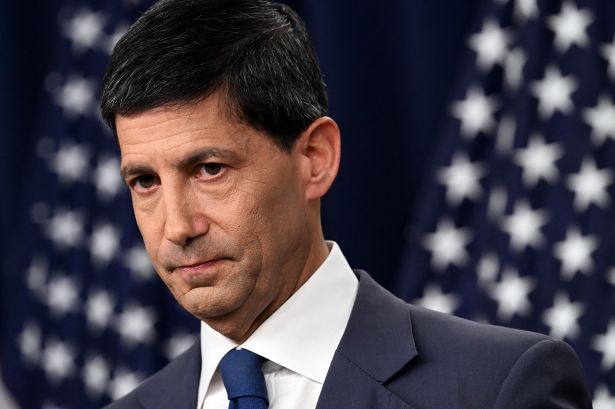
And, when Treasury yields increase to 5 percent, it pushes cap rates (the potential return investors make on properties) higher as well. Higher cap rates translate into falling CRE property values, and vice versa.
And this pain isn’t just limited to existing assets looking to refinance at lower rates, but glimmering new development projects, attractive value-add deals, and special situation rescue capital that must also pencil in higher prices and lower returns.
“It means it’s now very difficult to pencil out new developments or value-add situations or just regular acquisitions, and that means that new construction will become increasingly difficult,” said Brad Case, chief residential economist at Homes.com.
The seemingly permanent high-interest rate regime comes nearly five full years after sudden spikes in rates — the 10-Year jumped from 1.3 percent in November 2021 to 4.1 percent by November 2022 — and years now after the slogans “Stay alive `til `25” and “It’ll be fixed in `26” peppered the conversations at CRE cocktail parties with hope and optimism.
“A lot of properties and owners who were overlevered, or close to breaking covenant, or just needed more time to get through cycle, they were being saved by bridge lenders, or by CMBS, and that has finally come to a close for the most part,” said Jon McAvoy, chief investment officer at PRP Real Assets, referring to commercial mortgage-backed securities. “This belief that you can keep extending, this belief that the market was turning, has really started to erode.”
The reasons behind the erosion of financial trust are manifold, and include the aftereffects of high tariffs and their accompanying uncertainty; annual trillion-dollar federal budget deficits; a six-plus-month (and counting) war with Iran and closure of the Strait of Hormuz; an ensuing nasty spike in global oil prices; as well as White House antagonism toward Canada, the United States’ second largest trade partner.
“It’s symptomatic of the environment we find ourselves in,” said Ryan Severino, chief economist and head of research at BGO. “When we go through shocks like this, the world is reconciling the idea that this is just not your parents or grandparents’ CRE environment. It’s not what we’ve been operating in for 35 years, so 5 percent [yields] feels scary.”
Others have noted that deals are falling apart entirely.
“You’re seeing a lot of broken transactions where buyers and sellers were going out at certain prices, and then people pull back and say, ‘I’m not doing it at this price anymore,’ especially on the multifamily side,” said Scott Rechler, chairman and CEO of owner RXR.
Moreover, because so many deals financed during the record-low, post-COVID rates of 2021 and 2022 were done on five- to seven-year terms, the prospect of permanently higher rates could cause a cascade of selloffs that have been avoided over the last two to three years due to optimistic economic assumptions.
“The difference now is that the market in 2024 and 2025 expected rates to come down,” said Joe Biasi, managing director and head of commercial capital markets research at Newmark. “If you no longer expect rates to come down, and with so many loans being kicked down the road, transaction volumes might shift toward forced selling.”
For an experienced executive like Jeff DiModica, president of Starwood Property Trust, there’s no guarantee the industry will be able to perform in an environment where the Treasury stays elevated above 5 percent.
At Commercial Observer’s Sept. 16 Institutional Investor and Private Equity Forum, DiModica noted that in the previous instances when the industry performed through higher rates, it did so on the backs of persistent economic growth, as well as rising incomes and high property cash flows.
“I’m a little afraid we might not have it here,” he said. “I’m afraid this rate move is similar to what happened when I started in the business in the late 1980s.”
Back to the future
For a good period of time — at least within the last 45 years — a five percent Treasury yield wasn’t such a scary thing.
The 10-Year Treasury stood at 15.8 percent in January 1981 amid even higher inflation than today. The lowest level it reached across that entire decade was 6.9 percent.
In the 1990s, an era now fondly remembered as a golden age of economic growth and productivity, and one which even saw the U.S. government report several budget surpluses, yields hung around 5, 6 or 7 percent for those 10 years, briefly falling to a decade-low of 4.1 percent in October 1998, before spiking back up.
It was only in the 2000s that rates began to settle permanently below 5 percent — the average 10-Year Treasury yield that decade was 4.46 percent — as the Federal Reserve aggressively cut short-term rates following the dot-com crash of the early 2000s and the GFC nightmare in the back half of the decade.
“Rates have been disruptive for the last few years, and part of the issue is we went through a long period of inordinately low interest rates that had been structurally declining for 45 years, and as an industry we just got a little too used to that,” explained Severino. “As we went through this transformation, a lot of people [in real estate] confused their own genius with structurally declining interest rates.”
Today, aside from geopolitical shocks, tariffs and eye-popping budget deficits, a new ingredient is also complicating the Treasury picture: A.I.
“Think about how many resources are driving this A.I. buildout in terms of supplies, material, labor, capital, rather than going to the traditional economy,” said Rechler. “The quantum on these dollars is so large that it’s distorting the overall economy and it’s creating its own inflationary pressures.”
Between 2025 and 2032, the U.S. is expected to invest $10.3 trillion into data centers and related artificial-intelligence infrastructure, according to the Brookings Institute, with the Wall Street Journal reporting this capital expenditure dwarfs the country’s previous investments into the canals, railroads and the electric grid combined.
“A lot of this is related to the A.I./data center buildup,” said McAvoy. “It pulls debt buyers out of the Treasury market, because you can find equal credit strength in the private market on the balance sheets of hyperscalers.”
But the main reason why the investment situation is unlikely to improve for CRE, at least in the near term, is due to actions from the Federal Reserve, Congress and the White House.
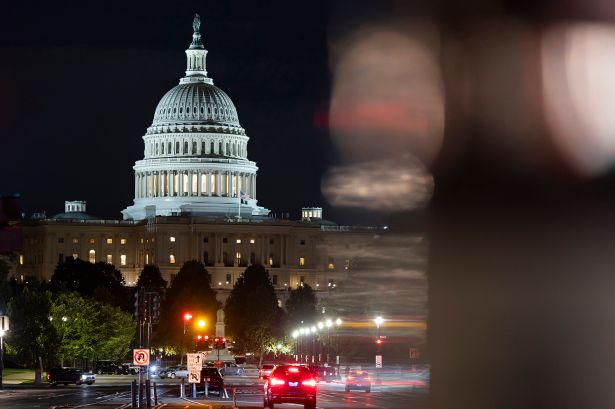
In his opening months as Federal Reserve chairman, Kevin Warsh has been adamant that it’s now time to get inflation under control, and Warsh has said he feels he can raise short-term rates without negatively affecting employment.
“What that signals to the market is if we think inflation continues to go up, we’ll raise rates further,” Newmark’s Biasi said. “All of that pushes up not only short-term rates, but long-term rates, because the expected average interest rate over the next five years goes up.”
To wit, the term premium — the yield investors demand for holding long-term bonds instead of short-term bonds — is at its highest point in 15 years, largely due to fiscal, political and geopolitical uncertainty, according to Case.
“Investors are worried about a change in economy and policy conditions, and both those are elevated right now,” he said. “They’re saying, ‘I need [a higher term premium] because I have uncertainty about what’s going on and I don’t want to be caught with my pants down.’”
Knowns and unknowns
If there’s a consensus on rates being higher, at least for the rest of the decade, then there’s little agreement on where commercial real estate will be hit the hardest, or whether this dislocation will instead create lucrative investment opportunities.
Dave Carswell, senior managing director of capital advisory at brokerage Lee & Associates, said the asset classes that will hurt the most are those, like multifamily, that were locked into floating-rate debt in the early part of the decade when interest rates were near zero.
“If there’s one sector struggling more than others, it’s multifamily,” he said. “It was priced like a bond, and bonds just got cheaper.”
PRP Real Assets’ McAvoy said that after “extend and pretend” bought the industry time, the multifamily domino effect is finally upon us, with most deals this summer lender-forced sales, and more to come.
“Preivously, lenders might have said, ‘You can take it to market and see if there’s any equity value there,’ or maybe they could be saved by a debt fund,” he explained. “Now it’s, ‘Enough kicking the can down the road, we’ve got to take it to market.’ There’s no more hope certificates.”
3650’s Roth pointed out that office has seen the greatest degradation of value in recent years, and the higher cost of capital will make workouts on loans secured by that asset class even tougher to resolve.
“There’s a lot of office in this country that will never be reoccupied, so an increase in rates, or higher for longer, won’t make that situation better, it will probably make it worse,” he said.
Conversely, BGO’s Severino argued that higher rates and increased dislocation will open the door for cunning investment deals.
“You still have elevated cap rates, transaction volumes stuck in neutral, so it’s creating this strange cycle where the capital markets side isn’t recovering yet, but fundamentals have mounted a recovery, which suggests opportunity,” he said.
If that bit of unconventional wisdom isn’t enough, using data from NCREIF (National Council of Real Estate Investment Fiduciaries), JLL Capital Markets found that since 2000, the average two-year real estate investment returns following an interest rate cut were 4.7 percent, while the average two-year real estate returns following an interest rate hike was 18.2 percent.
All that said, don’t expect any certainty in the near term, especially if the haunting spectre of inflation continues to prowl the capital markets landscape.
“The market expects more rate hikes, given the commentary and concerns about inflation, so it will depend on where inflation goes,” said Biasi. “But I’ve been doing this long enough to know that trying to predict where the 10-Year Treasury goes is a difficult, if not impossible task.”
Brian Pascus can be reached at bpascus@commercialobserver.com.


