U.S. Retail Construction Down Significantly in 2026: Report
By Mark Hallum April 8, 2026 9:53 am
reprints
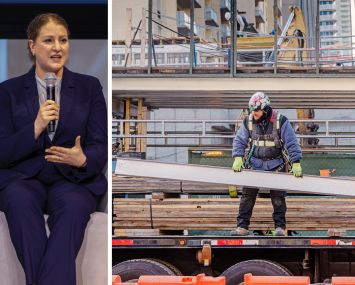
The retail market won’t be getting a surge of much-needed supply anytime soon as construction of new retail centers slowed significantly in the first quarter of 2026.
Only 64.2 million square feet of new retail space was under construction nationwide during the first quarter, a decline of roughly 8 percent from 70 million square feet in the first quarter of 2025 and well below the 10-year average of 90 million square feet, according to CoStar Group data.
“The pullback in construction reflects a development environment that remains difficult to pencil in most markets,” Brandon Svec, national director of retail analytics at CoStar, said in a statement. “The sharp rise in land prices, construction costs and interest rates over the past several years has pushed required rents well above prevailing market levels for many retail formats. Even in markets with strong population growth and leasing demand, achieving returns that justify ground-up construction has become increasingly challenging.”
The data for the first quarter was in contrast to the reality before the pandemic, when retail construction was coming off 120 million square feet built in certain periods of 2016 and 2017, according to CoStar.
Dallas, Houston and Austin saw the highest levels of retail construction in the nation, with the majority of that pipeline pre-leased. Dallas saw just under 7 million square feet under construction in the first quarter with Houston just under 4 million square feet and Austin a little over 3 million square feet.
Miami was one of the lowest-performing major metropolitan areas with less than 1 million square feet being built, though most of it is pre-leased. Detroit performed only slightly better, according to CoStar.
“Beyond cost pressures, developers remain cautious following years of heightened supply risk awareness, while retailers continue to favor measured, capital disciplined expansion strategies,” Svec said. “Competition for sites from higher-density residential, industrial and mixed-use projects further constrains retail development opportunities, particularly in infill locations. At the same time, ongoing competition with e-commerce for consumer spending, especially within soft goods categories, has reinforced a preference for smaller footprints and selective growth rather than broad-based expansion.”
In December, executives at ICSC New York, a major retail convention, were expressing economic jitters about the U.S. consumer alongside uncertainty around global events.
“I have a personal concern that you get to the spring of `26 and, if we have any more global uneasiness around tariffs not being settled and trade wars, it’s going to start impacting the consumer,” JLL’s Naveen Jaggi told Commercial Observer at the time. “It doesn’t matter how much you cut interest rates. If customers don’t have money in their pockets and they feel uneasy with their jobs, they won’t spend.”
Some of that uneasiness may have manifested in the U.S.-Israeli war with Iran, which began in earnest at the end of February. Since then, fuel prices have skyrocketed, impacting motorists in the U.S. at the pump, largely because of supply chain constraints at the Strait of Hormuz.
It’s unclear whether the two-week ceasefire announced Tuesday night will have any positive impact for consumers, but it would seem that Tehran will maintain control over the strait while hostilities continue despite the temporary truce.
And while the U.S. Supreme Court struck down President Donald Trump’s “Liberation Day” tariffs in March, the White House imposed another round of 10 percent import tax on almost all countries.
Those tariffs are facing legal challenges from at least 21 states.
Mark Hallum can be reached at mhallum@commercialobserver.com.