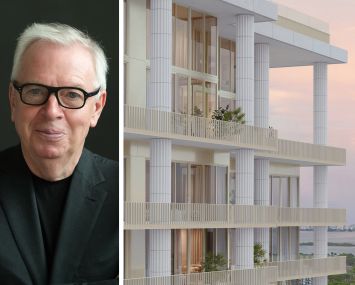
Sean Ouellette of Kast Construction: 5 Questions
By Jeff Ostrowski March 12, 2026 2:45 pm
reprints
Cranes continue to crowd South Florida skylines, and Sean Ouellette is at the center of the action.
Ouellette is president and chief operating officer of Kast Construction, a West Palm Beach-based general contractor whose projects include an oceanfront resort in Central Florida. Kast is also building the Mr. C Hotel and Residences, a West Palm Beach development affiliated with the Cipriani brand. (In February, a construction accident at the Mr. C project injured four workers. Ouellette declined to comment on that incident.)
Ouellette recently spoke with Commercial Observer about the status of Kast Construction’s pipeline, building safety, rising construction costs and labor challenges, particularly amid the Trump administration’s immigration crackdown.
The following interview has been edited for length and clarity.
Commercial Observer: You’ve got a full slate of projects. Give us the overview.
Sean Ouellette: Our average project size is probably $90 million. We’ve got several projects that are $250 million-plus. We just broke ground last year on a project in Downtown West Palm Beach, the Mr. C Hotel and Residences, which is right on Okeechobee Boulevard. That project is super high-end. That’s 30 stories or so, a very complicated job from a building and logistics standpoint, high profile, right in downtown.
We’ve also got a big project up in Cocoa Beach, a Westin convention center and resort, which is a nice project. It’s a very unique project for that market, definitely super high-end compared to what else is in that market currently.
The Surfside building collapse shone a light on building safety. Are you doing anything different on that front?
I wouldn’t say different on our end. When you look at that particular situation, when that building was constructed, there were very different building codes. A lot of the story behind that was deferred maintenance. I think the mandated recertification process by the state and what they’re dictating with reserves for homeowners associations is a great step, but from a new build perspective, we haven’t seen a lot of change in that respect. We’re designed to the most stringent wind codes in the country.
Specific to our business, we’ve built condominium projects, which are historically very litigious, and we have built a program in our company to deliver the highest quality. So we’ve always been very proactive, helping shape a lot of the details and quality things that go into a long-term sustainable building.
Ultimately when we turn it over to somebody, though, all buildings have to be maintained. We actually are pursuing some of that recertification work because we see it as a new opportunity in the marketplace that aligns with what we do really well. We’re very good at the quality side of what we do, and we think there’s a lot of value we can bring to the folks that are trying to restore their buildings.
During the pandemic, prices for lumber, paint and appliances skyrocketed. Is the supply chain back to normal?
Yeah, I would say probably for the last 12 to 18 months, we’ve seen things normalize in our world, or at least be more predictable. There’s still a little bit of higher inflation than normal, which I think every month gets better.
Certainly, tariffs caused a little bit of confusion in the market with some specific materials seeing increased cost. But I would consider it very manageable.
Labor is another ongoing challenge. What are you seeing on that front?
South Florida labor has always been a challenge because it’s somewhat of a transient workforce. During the boom in work following COVID, a lot of labor came back into the market, which is great. It’s something we’re always managing.
I think the advantage we have in most of our projects is that we are engaged in an extended preconstruction effort. So we’re working with the client and the architect and the subcontractors to shape the project. We use that time to really recruit and align ourselves with subcontractors that have a good handle on the market and labor.
It’s constantly a challenge. We’ve seen labor costs go up significantly.
Has Trump’s immigration policy squeezed your workforce in any way?
We’ve seen a little bit here and there with immigration enforcement, but it’s been pretty sporadic. We’ll hear about jobs, but none of our jobs really got hit. We heard some of our competitors got raided looking for certain individuals. The labor disappears for a couple days and comes back over time. But we haven’t seen anything significant recently.
Jeff Ostrowski can be reached at jostrowski@commercialobserver.com.