As Mamdani Moves Toward a Rent Freeze, New York’s Stabilized Building Owners Sweat
‘It’s a toxic product. People don’t want them on the books.’
By Aaron Short March 9, 2026 6:00 am
reprints
Mayor Zohran Mamdani is on his way to fulfilling a top campaign pledge to freeze many New Yorkers’ rents, an action that some owners warn would send shockwaves through the city’s rent-stabilized housing market.
In February, the mayor appointed six new members to the Rent Guidelines Board (RGB), giving his administration more influence over its authority to set rental rates on lease renewals for 1 million rent-stabilized apartments.
“The board will take a clear-eyed look at the complex housing landscape and the realities facing our city’s 2 million rent-stabilized tenants, and help us move closer to a fairer, more affordable New York,” Mamdani said in a statement. “At a moment when so many families are struggling to stay in their homes, this work could not be more important.”
Mamdani vowed throughout his mayoral campaign to halt rent adjustments on these units by appointing tenant-friendly representatives after the nine-member panel approved rent raises during each year of Mayor Eric Adams’s tenure. Last year, the board signed off on 3 percent increases for one-year leases and 4.5 percent increases for two-year leases.
In his last days in office, Adams sought to stack the panel with nominees who would likely continue that trend. But that gambit failed after several members chose to leave the board, allowing Mamdani to appoint a new chairperson, New York Community Trust Program Director Chantella Mitchell, and a majority of its members.
The new appointments do not guarantee that a rent freeze will occur. Board members must consult annual data regarding the costs of operating rent-stabilized apartments, which is expected to be released this month, and hold public hearings this spring before making their recommendation.
Voters who supported the mayor are counting on him to keep his rent-freeze promise. Mamdani has even floated imposing a citywide property tax hike, which owners would have to absorb, if his proposal to raise taxes on millionaires stalls in Albany.
But rent-stabilized owners say they need additional rent revenue to offset rising taxes, fuel prices, maintenance expenses and insurance premiums that have made managing thousands of aging buildings a financial burden. Nearly four out of five rent-regulated apartment buildings were built before 1974.
“Many of the city’s heavily rent-regulated buildings are facing severe financial distress, which continues to lower apartment supply and deteriorate the city’s housing stock,” James Whelan, president of the Real Estate Board of New York, said in a statement. “While it plays well on the campaign trail, a rent freeze is an ill-advised approach to addressing a complex issue.”
Landlords have been bracing for a rent freeze for months, but many are still unprepared to absorb it.
The cost to run regulated multifamily properties has ballooned over the past decade. An Enterprise Community Partners report found that operating expenses for 37,130 rent-stabilized homes in Enterprise and National Equity Fund’s portfolio have surged 40 percent since 2017. Insurance premiums have seen the most dramatic jump (up 110 percent) but other costs have likewise risen, such as administrative fees, including payroll taxes and staffing (up 51 percent) as well as maintenance and repairs (up 35 percent).
Rent collection within these buildings has also fallen since the pandemic, from 94.2 percent in 2019 to 90.6 percent in 2024, a sign that tenants continue to struggle with the high costs of living.
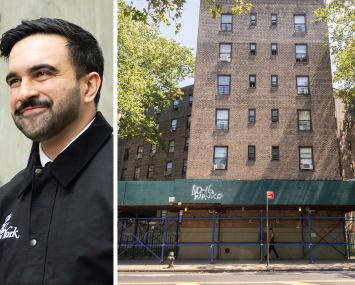
Kenny Burgos, CEO of the New York Apartment Association, a rent-stabilized landlord group, says the owners he represents are increasingly unable to rely on revenue from rents to meet their expenses, putting some on the path to financial ruin.
“A rent freeze threatens an acceleration of distress, foreclosure violations and overall lower-quality housing for tenants that call these properties their home,” Burgos said. “All of these owners of buildings are not in the same starting point based on rent levels and expenses, but they are all on the trajectory.”
There is little sign that expenses will be deflating anytime soon. The RGB found that the cost for buildings operating rent-stabilized units rose 6.3 percent between April 2024 and March 2025, nearly double the rate from the previous 12 months when total costs rose 3.9 percent.
Meanwhile, the median gross income for rent-stabilized buildings declined by 9 percent from 2019 to 2025, while their net operating income tumbled about 13 percent over that period, according to a New York University Furman Center study.
“Everybody else in the world when they have social housing requires that rents go up to cover operating costs, and if a tenant has an affordability issue, then another part of the government helps,” Mark Willis, a senior policy fellow at the Furman Center, said. “Here we expect the RGB to somehow flag a magic number between a zero increase and whatever is required to sustain these buildings, and somehow you can solve both problems when, in fact, you can’t.”
The consequences of curbing rents could affect more than owners’ bottom lines.
Landlords could stop spending money to maintain buildings, which could lead to more complaints from tenants and housing violations for repairs that go unfixed. If owners fall behind on their real estate tax payments, their properties could accumulate liens and fall into foreclosure while the city loses revenue. And if an owner can’t afford to pay their loans, the bank could seize the property and auction it off at a much lower value to recover the debts.
Thanks to rising operating expenses, mortgage maturities at high rates and laws strengthening tenant protections, the city’s stabilized properties have become one of its weaker asset classes.
The average price of New York’s rent-stabilized units sold on the market has fallen 40 percent since 2019, according to Ariel Property Advisors, an investment sales firm. Northern Manhattan properties had the steepest pricing declines at 47 percent, followed by the rest of Manhattan at 45 percent, while Bronx buildings dropped 44 percent. Some trades of regulated buildings occurred at 70 to 90 percent their 2019 values, Ariel found.
“We’re already in physical and financial stress when it comes to many rent-stabilized assets, but a freeze will accelerate the deterioration of values and physical assets,” said Shimon Shkury, president and founder of Ariel Property Advisors. “Landlords don’t have any means to put money back into the buildings. That’s the major issue.”
Three years after Signature Bank collapsed, too, putting its $15 billion multifamily rent-stabilized portfolio into receivership, investors have continued unloading their rent-stabilized portfolios even as their value has shrunk.
Last year, Related Companies sold its 2,000-unit portfolio of Bronx properties for $189.5 million, at about $90 per square foot or $93,762 per unit. In January, Pinnacle Group relinquished its 5,200-unit portfolio of rent-stabilized properties in bankruptcy court to Summit Group for $451 million, despite opposition from the Mamdani administration and the state attorney general’s office, which sought to block the sale. And Community Preservation Corporation, which is servicing Signature Bank’s 35,000 units, revealed at a state budget hearing last month that 70 percent of that portfolio’s loans are experiencing financial distress.
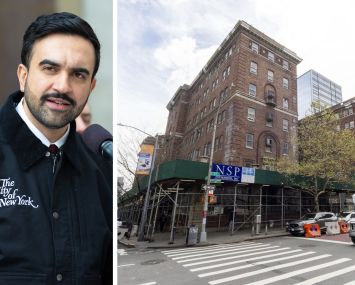
“It’s a toxic product. People don’t want them on the books,” Lev Mavashev, managing principal at Alpha Realty, said. “How do you value something with a decreasing cash flow? No investors are attracted to this asset class right now.”
With a rent freeze still likely, real estate leaders have floated other solutions to prevent owners from sinking underwater. Some want the state to revise its rental laws to allow owners to reset rents at a higher rate after money is spent to renovate a vacant unit. The proposal remains unpopular in Albany. Others support expanding the state’s Major Capital Improvement tax abatements that would give property tax relief to owners making expensive building-wide improvements, while lifting a 2 percent cap on the rate of recoupment.
Carlina Rivera, president and CEO of the New York State Association for Affordable Housing, is asking the state to allocate $150 million for an affordable housing relief fund for properties in distress.
“We need an infusion of cash for operational and capital costs for property managers who are truly in need, and we need that right away,” Rivera said. “Nobody wants to see people living in a building that’s in disrepair, and that’s going to be an issue if we don’t take this on.”
One unintended result of a rent freeze is that the city could end up acquiring some of these multifamily properties. But the costs of renovating them could be astronomical while the city is already facing a $7 billion budget gap.
“The economics keep deteriorating every year for buildings 100 percent dependent on rent-stabilized units if those rents don’t go up enough,” the Furman Center’s Willis said. “We have to do something unless you want all the properties to come back to the city, and then you need to be realistic about what it will cost to fix them up.”