Tishman Speyer CEO Rob Speyer On the Firm’s Current Thinking and Its Next Moves
The owner has had a hand in some of the biggest financing deals in the office market, and continues to branch out in life sciences, housing and hospitality
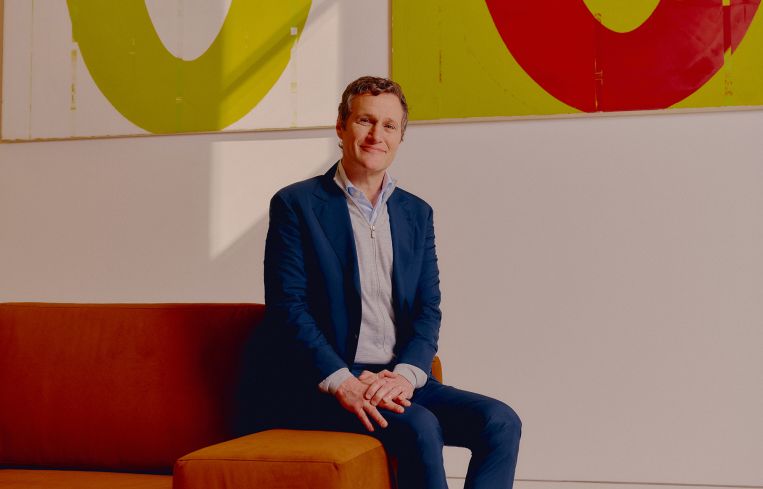
When they write the real estate history of this era, a notable turning point will be late 2024.
Rockefeller Center — Art Deco masterpiece; home of NBC and the Rainbow Room; bull’s-eye between Uptown, Downtown, the East Side and the West — scored a big, big commercial mortgage-backed securities (CMBS) refinancing.
But when you hear the dollar figure for the refinance, the previous sentence seems comically understated: $3.5 billion.
Then, in January 2025, Tishman Speyer landed the second half of a one-two punch: $2.8 billion for The Spiral, its mammoth, modern tower in Hudson Yards.
Suddenly, a previously moribund CMBS market was now lit up like a Rockefeller Center Christmas tree. (Oh, yeah. They did another $385 million in refinancing at 300 Park Avenue.)
That would certainly be enough to hang one’s hat on, but last summer Tishman Speyer boasted the opening of one of the most anticipated office properties in years: J.P. Morgan Chase’s headquarters at 270 Park Avenue.
The man in the CEO chair — Rob Speyer — seems a bit too friendly and self-effacing to be making such explosive moves.
Speyer, 56, was born into one of the most respected and storied real estate families in the city. He started out in journalism (Speyer’s reporting appeared in the New York Observer and Daily News long ago) before returning to real estate. Under his leadership — he took the reins in 2008 — Tishman Speyer is currently building housing across the country (9,000 units in the pipeline); mixed-use life sciences campuses in Massachusetts; more mixed-use in Washington, D.C.; another one in San Francisco — and that’s just the U.S.
Speyer met Commercial Observer on a frigid winter’s day at 45 Rockefeller Plaza. This reporter was greeted before he even got his earbuds off by a friendly guard who recognized him by name and offered to take him personally up to Speyer’s office.
“It wasn’t because it was you, Max,” Speyer vowed. “It’s the way we approach all of our customers.” (At The Spiral, one such hospitality greeter named Kimmy is an extremely popular dancer to Barry White songs and gets some of the best feedback of any employee at the building.)
Indeed, friendly. Welcoming. Just don’t ask him about the report that Tishman Speyer is in advanced talks to purchase the famed Chrysler Building.
This interview was edited for length and clarity.
What a year you guys had — it was late 2024 when you did the big CMBS deal, right?
Yes, two of them.
Two of them.
Yeah, it’s a good story. It started in January 2024, 18 months in advance of the maturity of the existing CMBS loan. And the environment was choppy. People were still very cautious about office, and that was reflected in the capital markets. So, I assembled a war room. We met every Friday morning at 8 a.m., and a group of us brainstormed different ideas about how to approach this loan. We thought about a sovereign wealth fund. We thought about an ultra-high-net-worth individual. We thought about innovative ways to syndicate it.
And, then, in the summer we noticed something interesting happening in the CMBS market, which is that there was a small — but still meaningful — uptick in demand from bondholders for CMBS offerings that were office-heavy.
We took a deep breath and decided now’s the time, because we can get “first mover” advantage. Rockefeller Center is a unique asset with a global stature. And right after Labor Day, we moved quick. We got into the bond market, and by the end of the month — by the end of September — we had triple the demand for our bonds as we had need.
We closed that loan. We did a collective fist bump. That was a Friday — on Monday morning we started the process to refinance The Spiral because we understood with this event, everybody’s gonna try to get in the market. And, the first week of January, we closed the Spiral CMBS with five times the demand.
Wow.
It was an important achievement for us, but I also think it sent a global signal that things had changed for office. That it was not just financeable, but it got people focusing on the fact that in cities like New York people were back in the office. And there was very strong demand for office space. And rents were rising. So, it was not just a signal about capital markets — it was also a broader recognition that the office sector had turned the corner.
A lot of office in New York and San Francisco has been buoyed by artificial intelligence. It does seem like one of these interesting, double-edged swords in the sense that AI is a great new tenant that might put a lot of people out of work. What are your thoughts about that?
We’re early in the adoption curve, so it’s hard to project. But we are also focused in cities like San Francisco, New York and Boston, where the most important innovators in AI are located and aggressively taking space. So that’s positive.
We also have a venture arm where since 2017 we’ve made 41 different investments. We’re investing into AI companies that are disrupting real estate in a positive way.
So, as an example, we are working with a company that has created the first autonomous excavation vehicles. They’re specializing in data centers and industrial real estate that do excavation at significant scale — and they can do it quicker and more cheaply. That’s an early-stage company, but something that I think someday is going to be quite a big company.
We invested in a company that puts a simple camera on the hard hat of our construction workers, and it basically has a video library of everything that’s happened on the site from beginning to end. So, when something goes wrong, you can use machine learning to immediately trace back to what actually happened and use that to attribute responsibility and deal with it. And those are just two examples.
Sam Altman is a good friend, and in 2016 when I asked him whether it was a good idea for us to do venture, he said, “Only do venture if it’s going to transform your business. Don’t do it as a side hustle.” You know, I think it’s transformed our business.
Nothing new is coming to the office market this year. Are you buying?
We’re actively in the market. We bought 148 Lafayette and are ahead of business plan in that investment — both in terms of velocity and rent. And we’re actively looking for other deals, both on the commercial and the residential side. And one of the important things I want to make sure we get to is how we’ve diversified the business.
Tell us.
Look, I had a long-term vision for the company over a decade ago, and despite all the turbulence, we never wavered from it. There were four aspects to that plan. The first was to diversify our business. This started long before the pandemic. The second was to put customers first, especially in office. The third was to keep leverage low. And the last was to have great local teams globally that execute the vision and do it with our trust. And it has been a tumultuous few years, but we never wavered from that vision. And it wasn’t diversifying out of office — it was diversifying beyond office.
Take residential. We have developed or acquired 17,000 units of residential in the U.S. and Europe, including 2,000 units under development at once in Jersey City.
During the pandemic, and given the lack of construction here in New York City, we saw an opportunity to accelerate the purchase. It’s the same playbook we used in Long Island City a decade ago in a site that we ventured with Bill Modell. When Bill Modell took me out there the first time in 2003, that site was where the Rikers Island bus let people out.
Oh, my gosh!
Bill was an incredible man and particularly an incredible salesman. And when he laid out his vision for his site … to say it was not obvious would be an understatement. But what we did see was the constraints on building housing in Manhattan, and the neighborhoods immediately adjacent by public transit would win over time — and Long Island City would be an early winner. Just like we’re doing with the 2,000 apartments in Jersey City.
We diversified into life science, where we’ve done 17 deals in the U.S. and Europe. We started that business in 2018 in a joint venture with the Belldegrun family. We call that business Breakthrough Properties, and the growth of that business was propelled by Harvard choosing us to be the developer of their mixed-use land next to their business, science and engineering schools. We just announced a deal with Roche to be the anchor of our life science development, and we literally, this week, completed our hotel. It’s our first hotel we’ve ever developed.
How has life sciences been? In 2020, a lot of amateurs — to put it politely — got into the space.
One of the reasons why we picked a partner was we understood both the physical infrastructure and the customer base was different. So we’ve done deals with Roche, Pfizer, AstraZeneca, Eli Lilly — the largest pharmaceutical companies in the world — along with a lot of earlier-stage and mid-stage biotech companies. And, between the Belldegruns’ relationships and some of our relationships, we took a different approach, because the business was a duopoly when we entered it in 2018. And our vision was to be in that business long term.
We also have an industrial platform. We have 12 assets in the U.S., in Europe, and then we have the venture platform that I spoke about where we’ve done 41 different investments since 2017. So we are on plan to significantly diversify the business beyond office and to do that globally.
Development in New York is tough. Is it easier to develop in Europe than it is in America?
No, but on one level we look for supply-constrained markets, because it means when you buy or build a building, you have a scarce resource — and scarce resources are generally more valuable than not. On the other hand, it’s a fine line. You don’t want it to be too hard to develop because it starts to choke off the growth of the city.
And I think one of the dynamics we see happening in New York City right now is it is too hard to build residential, and that’s creating affordability issues.
Sure.
I made a deal with Mayor de Blasio and his team on behalf of the Real Estate Board of New York in 2014. And I remember at the time some people were critical of that plan. I remember saying, “The next deal is going to be worse. And the one after that worse still.” The de Blasio deal ended up stimulating a lot of new residential construction and stabilized the market. Unfortunately, as that deal has been amended and cherry-picked, construction starts have slowed down dramatically, which is unhealthy for the city’s economy.
Have you talked to Zohran Mamdani?
Look, I’ve been a registered independent for more than 25 years. I stand right in the middle of the political spectrum. One of the things I admire about Mayor Mamdani is that he reached out immediately after the primary to people who didn’t support him — including me. He actively engaged and actively listened, as he solicited our views. And the typical public official doesn’t do that. They stand in an echo chamber of people who support them and people who just say yes. Mayor Mamdani is taking a different approach.
Would you like to see something similar to 421a come along?
The north star has to be creating more housing across all income levels. I think, if we are too precious about balancing all the different interests, you end up in a place like we are now, where the plan puts a temporary smile on people’s faces and then nothing gets produced. And that’s a bad outcome for everyone.
There’s Mamdani on the left. There’s Trump on the right, and this war between Trump and the Fed. Are you at all concerned about a big fight between the Federal Reserve and the executive branch?
I’m concerned more about the social fabric of our country and our city. Ultimately, that fabric is fundamental to what America is and who we are, and building bridges is the most important thing any public official can do.
Do you see any tremors across the sea in terms of overseas investment in America just because of some of these issues?
It’s not showing up in the numbers. New York today is the most in-demand city from our global investor base. We’re a global company. So, we’re in the U.S., Europe and Asia and broadly across most global capital cities. And New York’s position relative to the competition is stronger than it was a decade ago. And I would say that is true broadly about our country. It’s dangerous to bet against America as an investor.
Between the pure market position, the growth, the innovation, the productivity gains, it is dangerous to bet against America. When it comes to real estate, the same is true about New York City.
Your family has been in this business forever. When did you realize you wanted to do this?
You know, I used to do something different for a living.
Yes. I’m going to ask you about that, too.
In 1995, my father was working on putting together the deal to buy Rockefeller Center. And that deal over the course of the year zigged and zagged a million times. He and I are super close. Always have been — he’s been everything to me. But, as I heard him talk about the Rock Center deal, it just started resonating with me in a different way. And, at the time, I was thinking about different pivots in my own career within journalism. But the light bulb went on that maybe there was a different pivot.
It was the week of Thanksgiving, and I went into Martin Dunn’s office, who was the editor of The Daily News at the time, and has been a wonderful guy and was a great mentor to me as a young reporter. I said, “I’m gonna leave — thank you for everything. I love this. I’ve loved this deeply. But, it’s time for me to do something else.”
What got you into journalism originally?
So, when I was a senior at Columbia, I had won a Marshall Scholarship to do my graduate work at Oxford. And I was walking to a British history class and a riot broke out in front of the main Columbia administrative building. And I had written a column for the student newspaper, but it was more of a fun thing to do and not yet a calling. But I whipped out my notebook, and I started interviewing people in the midst of this riot.
It was the closest thing I’ve ever experienced to falling in love. At the time, I had an internship at the New York Observer. Graydon Carter was the editor. I sat with Terry Golway. I took the notes and we worked together on deadline because it was a Wednesday so the paper was going to print — and I thought to myself, “This is the most fun experience I’ve ever had in my life.” A few weeks later, I called the folks at the Marshall Scholarship fund and told them I wasn’t going to be taking the scholarship after all. I would say the only person who was happy about that decision was me.
What did your family say to you?
It was my family, Columbia, the Marshall Scholarship. It was probably the most counterintuitive decision of my life — but I like to think it put me on a path. It’s ended where I am today, and I have a really happy, purposeful life.
I was going to ask about a career highlight. Was it the Columbia riot?
No. That was an important moment in my life, but I still feel too young to think that way. I would say a career highlight was buying, within one year, the Lipstick Building, the New York Times Building and 200 Park — and making a great return for our investors in a very short period of time, and defying expectation both in buying them and selling them with a great outcome. That was like a real career highlight.
Can I ask a lowlight?
Listen, the key thing about lowlights is learning from them. One of my lessons coming out of the Global Financial Crisis was taking down our use of leverage and promising to stick to that. We talked about Rock Center and The Spiral — we could have borrowed more money on both of those offerings. We were three and five times oversubscribed. And, in both cases, we stuck to the plan. We kept the leverage low, and there will come a time, someday in the future, where we will be very happy we did that.
I’m sure.
I remember in 1999, we bought a piece of land on 41st between Second and Third. And we were planning to build a 400,000-square-foot office building. The market was rocketing — much like it is today. We pre-leased the entire building to Jones Day and to a startup called Scient — and I was feeling pretty good about myself. My grandfather — who was soft spoken and humble, but smart as hell — one day put his hand on my shoulder and he said, “Rob, I promise you, it isn’t always gonna be this easy.” It was not a year later, when Nasdaq crashed, and the world changed. I always remember that story.
I forgot to ask about 270 Park! Tell me the whole story.
We’re privileged to have a deep relationship with J.P. Morgan. And when they decided to start working on this, they asked us to help and be their development manager — we were the development manager, but Jamie Dimon was the developer. David Arena was the developer. We were there to help.
A couple of things really struck me. One was Jamie made a decision at the outset to take each important aspect of the building and to assign it to one of his key senior executives: The lobby. The amenities. The conference center. The art. The office space. So every member of the C-suite today has ownership over that building as it’s completed. So, it’s a collective victory.
Second, Jamie’s decision to go forward with that building in the depths of COVID — when everyone else thought office was dead — was like the ultimate validation of both office and New York City. And most people should have listened to him more closely because one of the key lessons as an executive is separating signal from noise. That was a signal.
And so now the building’s completed. It’s the best office building in the world — and I say that as a real subject matter expert.
Here’s the other thing that I love. I’m a lifelong New Yorker — and New York is about its skyline. New Yorkers look at that building and they feel like it belongs from day one on that skyline. In my lifetime, there’s never been a building that has taken its position of prominence on the skyline as quickly as 270 Park. It happened immediately. It happened because of the architecture. It happened because of Leo Villareal’s artwork at the top of the building, when it lights up. Whether it’s an abstract design or whether it is the American flag, New Yorkers feel proud of being New Yorkers. We need more of that.
Last question: There was a report in Crain’s that Tishman Speyer is in advanced talks to buy the Chrysler Building. What can you tell us?
I prefer to focus on the deals we’ve done, not rumors in the market.
Max Gross can be reached at mgross@commercialobserver.com.