SoCal’s Data Center Capacity to Double in Next Few Years
Sheer demand for digital infrastructure nationwide makes Southern California too big to ignore, despite high cost of energy and intense development oversight
By Nick Trombola February 24, 2026 6:10 pm
reprints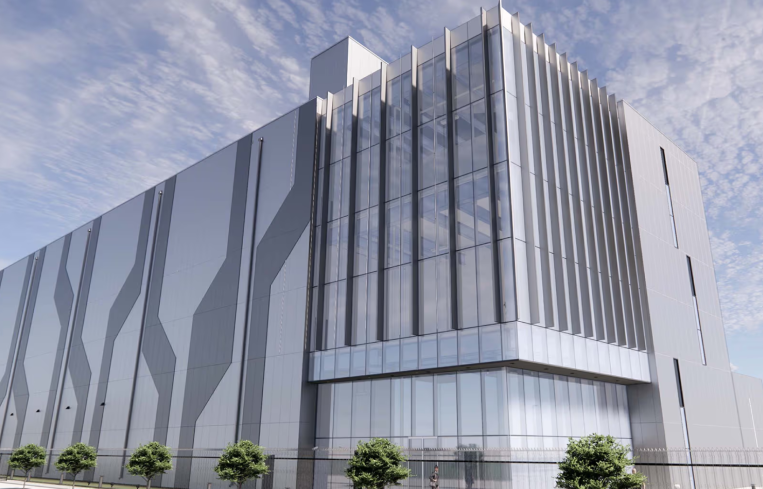
Texas and Northern Virginia are the pre-eminent data center capitals in the U.S., but even development-averse Southern California is set to greatly expand its digital infrastructure supply.
At just 335 megawatts (MWs) of capacity, Southern California is one of the smallest data center markets across North America, dwarfed by Northern Virginia, the Pacific Northwest and the Dallas-Fort Worth metropolitan area. Yet the region will effectively double its supply within the next few years as facilities come online due to sheer user demand, according to recent JLL research.
California doesn’t make it easy. Under state law, the California Energy Commission (CEC) sets restrictions for how big data centers can scale because their backup generators (typically powered by diesel or natural gas) are legally considered thermal power plants. The CEC has exclusive authority over any thermal power plant over 50 MWs, so any data center project with that level of capacity or higher is subject not just to local zoning restrictions, but state-level zoning oversight as well.
Projects between 50 and 100 MWs can apply for a Small Power Plant Exemption (SPPE) from state-level regulation, wherein the CEC determines a given project’s eligibility. If approved, the project is exempted from full CEC certification and is passed back to local permitting authority.
If not approved, the project must undergo CEC’s full certification process, full California Environmental Quality Act review, formal hearings and secure state-level approval before construction can even begin. The process can add years and millions of dollars to the pre-development process, which inherently limits investor and developer interest in the region despite its population and tech-hub status. In markets like Dallas-Fort Worth, data center approvals take just a fraction of the time and cost.
Not surprisingly, most data center projects in Southern California are just below 50 or 100 MWs to stay below those higher-oversight thresholds, Darren Eades, JLL senior managing director, told Commercial Observer. One such project is Goodman Group’s LAX01 Vernon, a 49.5-MW development in Vernon, about six miles southeast of Downtown Los Angeles.
“California just makes it a challenge,” Eades said. “We’re ranked probably 50th of all the states in approval processes and getting data centers done. … It’s unfortunate. The state’s losing billions of dollars to surrounding states and all over the nation just due to those constraints.”
On top of that, California’s average cost of electricity — an inherently crucial factor for viable data center development — far outweighs costs in other data center markets. Electricity rates in the state are 18 cents per kilowatt hour (kWh), more than double the rate in both Texas and Northern Virginia, per JLL research. It’s nearly double the rate of the Pacific Northwest, which averages at 10 cents per kWh.
Still, with average vacancy at just 1 percent nationwide, demand for data centers is insatiable and Southern California is simply too big to ignore. Many statewide legislation efforts are geared toward more oversight and cost containment, but some proposed bills are attempting to entice developers to reconsider the Golden State. State Sen. Steve Padilla’s Senate Bill 58, for example, would provide a partial sales and use tax exemption for data center projects that use sustainable energy practices.
“I think of all places, [California] should be leading,” Eades said. “But unfortunately, due to state legislation, it makes it a lot more cumbersome to get them done. The biggest thing is misinformation. … These groups that are going out to protest data centers are completely misinformed. They talk about power costs going up. Actually, power costs go down. They talk about water costs going up. Actually, water costs go down because a lot of these data centers are bringing in and paying for the infrastructure. They’re making these systems more efficient. And then downstream, all of the residents can benefit from it.
“The other big thing is the tax revenue associated with the community,” Eades added. “These communities are getting inundated with a ton of capital, which helps with schools, parks and critical infrastructure. So, the data center industry has done a bad, bad job with informing the general public about the benefits of data centers versus the negative aspects that are not reality.”
Nick Trombola can be reached at ntrombola@commercialobserver.com.