

New York’s Rent Guidelines Board Makeover Is Bad for the City’s Housing Stock
By Robert Knakal February 24, 2026 7:30 am
reprints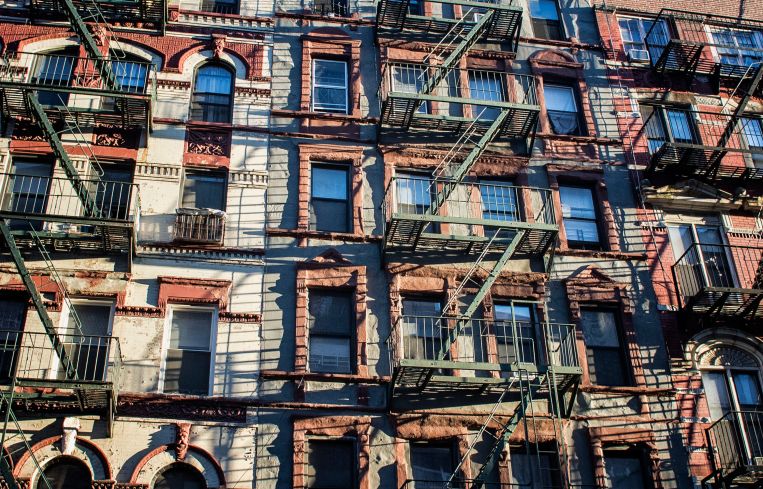
There is an old rule in real estate: When the math stops working, everything else eventually follows.
Mayor Zohran Mamdani has reshaped the New York City Rent Guidelines Board (RGB) in a way that makes his campaign pledge of a four-year freeze on rent-stabilized apartments far more likely to become a reality. At the same time, he is proposing to increase property taxes by nearly 10 percent.
Individually, each policy is significant. Together, they are combustible.
Last week, the mayor appointed six new members to the nine-member RGB, including a new chair. Because all RGB members are mayoral appointees, the composition of the board ultimately determines the direction of rent policy. Two tenant representatives, two owner representatives, and five public members traditionally serve as the balance point.
The public members are the swing votes. With these appointments, City Hall now has clear influence over the majority of the board. And while the RGB is legally independent, it is unrealistic to ignore the political alignment that now exists between the mayor’s stated policy goals and the individuals positioned to vote on rent increases.
During his campaign, Mamdani pledged to freeze regulated rents for four years. He cannot unilaterally impose that freeze. Only the RGB can set annual rent adjustments. So the composition of the board is everything.
Let’s be clear: Affordability is a real issue. But affordability policy that ignores economic reality ultimately produces the opposite of its intended result.
The RGB’s own data tells the story. The Price Index of Operating Costs (PIOC), which measures changes in landlord expenses, has shown sustained increases in operating costs. In recent years, annual expense growth has frequently ranged between 5 and 8 percent.
Insurance premiums have spiked dramatically, in some cases rising 20 to 30 percent over short periods. Fuel costs have been volatile. Labor expenses tied to union contracts continue to escalate. Real estate taxes trend upward with near mechanical consistency, regardless of the tangible downward pressure we have seen in property values (there is supposed to be a correlation).
Now, layer on a proposed 10 percent property tax increase. For rent-regulated buildings, real estate taxes already consume roughly 30 percent of gross income. A near-10 percent tax hike would push that burden closer to one-third of revenue. Property taxes are not discretionary. They are not optional. They must be paid whether rents increase or not (and even if tenants don’t pay their rent).
So here is the arithmetic: If expenses are rising 6 percent per year and rents are rising zero percent per year, net operating income does not simply stagnate. It erodes. And erosion compounds.
A building that experiences sustained income compression faces predictable consequences. First comes deferred maintenance. Then postponed capital projects. Then shrinking reserves. Then refinancing becomes more difficult because lenders underwrite cash flow, not ideology.
Eventually, distress follows. For thousands of buildings, that distress is already here.
Buildings do not fail overnight. They decline quietly: boiler by boiler, roof by roof, façade by façade. Since June 2019, this dynamic has been seeping into the market. Many rent-stabilized buildings were constructed prior to 1974. They require constant reinvestment. Elevators age. Heating systems fail. Compliance with local laws mandates capital expenditures. When income is constrained and expenses accelerate, the funds required for reinvestment simply are not there.
The 2019 Housing Stability and Tenant Protection Act already severely limited the ability to recapture capital investment through major capital improvements and individual apartment improvements. The incentive structure shifted dramatically. Investment slowed accordingly. That was not ideological. It was rational economic behavior. And, now, the mayor is contemplating freezing income while increasing taxes.
The broader question is this: How are repairs going to be paid for?
We do not subsidize food by forcing grocery stores to sell below cost and then raising their taxes. We do not subsidize electricity by capping utility revenue while increasing operating expenses. Yet, that is effectively what is being proposed for regulated housing.
If the objective is to protect tenants, policy must protect the financial viability of the buildings in which those tenants live. Suppressing income while increasing costs does the opposite. Policymakers have to wake up!
We have seen this movie before. When revenue is politically constrained and expenses are structurally rising, deterioration follows. Not immediately. Not dramatically. But steadily and undeniably. Will we get back to the 14 percent dilapidation rate we saw in the 1970s? It actually could get worse.
Affordable housing cannot survive without capital. And capital flows toward stability, predictability and rational economics. It retreats from environments where math is ignored. New York’s regulated housing stock represents a massive portion of the city’s rental inventory. Weakening its financial foundation does not create affordability. It creates fragility. Good intentions do not repair roofs. Political slogans do not replace boilers. Cash flow does.
When government policy suppresses revenue and simultaneously raises costs, the numbers eventually force an outcome. The question is not whether the math matters. The question is how long we pretend it doesn’t. And, in real estate, pretending rarely ends well.
Robert Knakal is founder, chairman and CEO of BK Real Estate Advisors.


