1Q13

1347978_19284953

Which Way is Up: Manhattan’s Market Boundaries are Beginning to Blur

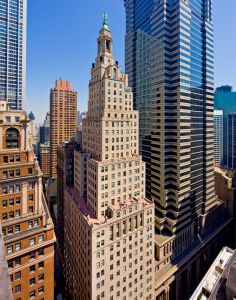
From the outside, 222 Broadway fits the stereotype of the Downtown financial office tower.

But when Bank of America downsized, leaving roughly 250,000 square feet of space vacant, a series of tours guided by its new owner, L&L Holdings, quickly blasted that stereotype away.

Condé Nast committed to 80,000 square feet at the tower in early March. WeWork, which provides collaborative workspace for tech and media companies, was next in line. Read More

The Sit-Down

IMG_7431

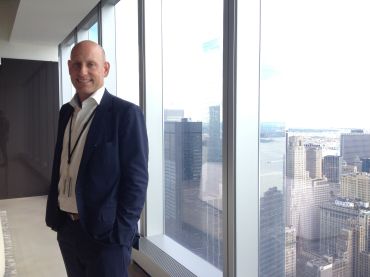
1.5 Million and Counting: Robert Becker of The Durst Organization on Leasing Remaining Space at 1 WTC

Robert Becker, senior leasing manager at The Durst Organization, joined the company eight months ago. Having previously worked closely with the firm as an executive with Bank of America’s global real estate transactions and leasing operations team, Mr. Becker jumped on board with inside knowledge of the firm’s pivotal role in shaping the landscape of Read More

Lower Manhattan 2013

Renderings of Fulton Center

Next Stop, Lower Manhattan: Fulton Center Transit Hub Chugs Forward

As Grand Central Terminal celebrates its centennial year as a crown of Midtown, the Fulton Center transit hub is being born three miles south.

It’s been a rocky delivery. Since 2004, when the Metropolitan Transportation Authority’s project—then known as the Fulton Street Transit Center—was introduced, its budget has ballooned from $750 million to $1.4 billion. And the completion date has been pushed back from 2007 to June of 2014.

Despite troubles common to a project of this scope, M.T.A. officials are optimistic that Fulton Center will transform commuting in lower Manhattan when it ultimately connects 11 previously separated subways lines and installs a pedestrian link to Santiago Calatrava’s World Trade Center PATH station, whose cost certain estimates put at $3.7 billion.

“Fulton Center is designed to create a focal point and an entranceway to Downtown,” said Aaron Donovan, a media liaison at the M.T.A. “Like Grand Central, it’s something everyone can gravitate toward. And lower Manhattan has not had that sort of landmark structure in the past.” Read More

Lease Beat

800px-100_Broadway_entrance

TD Ameritrade Lease at 100 Broadway Fills Void Left During Darker Days

TD Ameritrade has signed a 10-year, 9,509-square-foot lease for the ground floor and lower level at 100 Broadway, The Commercial Observer has learned.

The corner retail space in the 24-story office building features more than 170 feet of frontage along Broadway and Pine Streets.

“It’s a great corner space in the heart of the Financial District and steps from Wall Street, which lends itself well to a prominent financial institution like TD Ameritrade,” said Cushman & Wakefield’s Gene Spiegelman, who represented the landlord Madison Capital with Michael O’Neill. Read More

Lease Beat

222 Broadway

Condé Nast Bulks Up Downtown Presence, Signs For 80,000 Square Feet At 222 Broadway

[Update: This story had been corrected to reflect that Condé Nast is still in the final stages of discussions regarding this lease]

Condé Nast is in final negotiations to sign an 80,000-square-foot lease at 222 Broadway, building on the publishing giant’s footprint in Lower Manhattan as it prepares to move to 1 World Trade Center.

CBRE New York C.E.O. Mary Ann Tighe and Vice Chairman Gregory Tosko represented the tenant. David Berkey represented the landlord, L&L Holdings, in-house. Read More

The Sit-Down

Matt Van Buren

CBRE Tristate President Matt Van Buren on the Megadeal’s Comeback and the Post-Sandy Summer

It will be two years ago this summer that Matt Van Buren succeeded Mitch Rudin as CBRE’s tristate president. The Commercial Observer spoke with Mr. Van Buren about the state of the region—and of the Yankees—as the area prepares to emerge from its long, cold winter of discontent.

Since taking over as CBRE’s tristate president, what has been your biggest accomplishment and biggest setback?

I took over for a tristate region office that was in really good condition following Mitch Rudin’s presidency. The biggest accomplishment has been keeping that momentum going forward. When you’re number one, the goal is to stay number one. And we’ve been able to do that. Staying number one is one of the great unsung stories of the world. That’s why I respect the 2000 Yankees so much. [Laughs]

You run CBRE’s offices in Midtown, Downtown, Long Island, Westchester, New Jersey and Connecticut. Do the fortunes of the different metro area hubs often diverge or does a rising tide lift all boats?

To a certain degree it does. Although the highs are higher and the lows are lower in Manhattan. If you look at rents and availability statistics, Connecticut, Westchester, New Jersey and Long Island vary in a fairly narrow range even from boom to bust.

Frankly, New York will always have lower availability. But the prices will fluctuate high and low if you took a percentage off of a norm. Read More

Year in Real Estate

CP 12-18 Year in Leasing, Page 20

The Year in Real Estate: From GSA to Hurricane Sandy, A Look Back at 2012

Just when New York’s traditional geographic dividing lines were beginning to seem quaint, Hurricane Sandy made landfall and brought them back to light.

Downtown, which over the years had become harder and harder to distinguish from uptown, was plunged into darkness, sending the relatively young and vaguely creative well above 14th Street nosebleed territory in search of power. Only the Brooklyn side of the Williamsburg Bridge stayed illuminated, a stark metaphor for the borough’s slow transformation into a contender.

But in commercial real estate, boundaries continued to disappear. In January, Condé Nast expanded its 1.05-million-square-foot lease at 1 World Trade Center by 138,773 square feet, helping lower Manhattan shed its stodgy finance-centric reputation and prompting slight panic among the owners of Midtown media canteens like Michael’s. Read More

Stat of the Week

100,000 Square Feet or More.

Lower Manhattan Oozing With Big Blocks of Vacant Space

The overall Downtown vacancy rate—as it stands today, right now, this very moment—is 10.3 percent. If one were to take that 10.3 percent (FYI: it topped 20 percent in the mid-1990s and 15 percent in the early 2000s), the judgment would likely be that Downtown is back and better than ever, given the more vibrant nature of its existence (more housing, retail, cultural venues, much-improved transportation, etc.).

But there is one humongous reality to face, and that would be some seriously large empty office space about to slide into the vacancy rate figure. This is not exactly a surprise, as much of it has been advertised for months now. By our calculation, there are 21 buildings with at least 100,000 square feet of current or future availability being marketed. Read More

Lower Manhattan

Financial East submarket.

New Breed of Creative Class Tenant Heads to Financial East Submarket

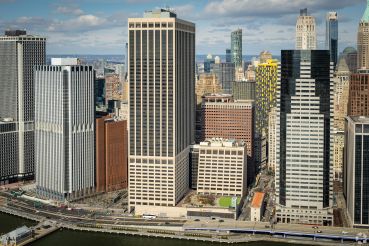
Silverstein Properties this month leased a 50,000-square-foot block of space at 120 Broadway to Beyer Blinder Belle Architects & Planners LLP, taking advantage of the incipient migration of a new breed of tenant into the Financial East area.

The prewar buildings that predominate in the submarket, which includes the financial landmarks along Broad and Wall Streets, have long since ceased attracting the biggest banks, law firms and insurers. Still, while vacancies in the submarket remain at almost 14 percent, local landlords and brokers say the flow of nontraditional tenants into the area is beginning to gain momentum. Read More

Lower Manhattan

World Financial submarket.

In World Financial Submarket, Silverstein, Brookfield Rule the Roost

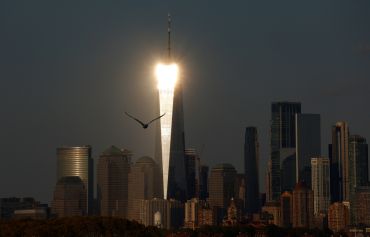
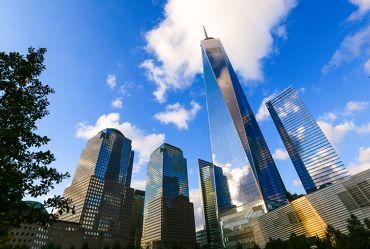
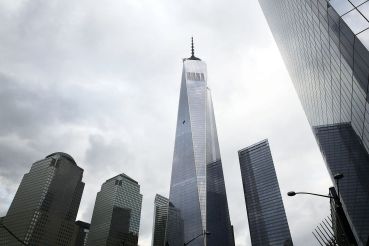
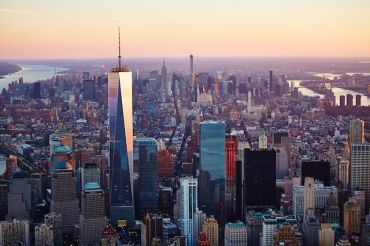
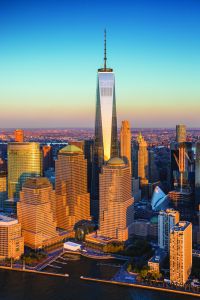
The 1 World Trade Center tower, which seems to spring into view from every vantage point these days, symbolizes different things to different people. To commercial landlords and brokers, it represents both a flagship for the Downtown area and a potential surge in competition. For those with a direct stake, it means the recovery from the terrorist attack is finally reaching the finish line.

“The sense of momentum and progress, which was not universal for years, is now palpable,” said Janno Lieber, who oversees design and construction at the site for Silverstein Properties, the landlord of the two towers that were destroyed 11 years ago. Read More

WTC Accidents

The scene of the crane accident at 4 WTC earlier this year (photo by Daniel Edward Rosen)

Construction Worker Injured at 3 World Trade Center

A construction worker fell 15 feet to the ground at 3 World Trade Center as he was installing a steel beam, the Fire Department of New York and the Port Authority of New York and New Jersey confirmed today.

The construction worker, described as a male in his 30s, was working on the installation of a beam at 1:27 p.m. when he slipped and fell 15 feet to the ground, authorities said. He suffered injuries to his head and arms and had to be taken to Bellevue Hospital Center, where he is listed in serious condition. Both of the man’s arms are believed be broken, an FDNY spokesperson said. He is an employee of Falcon Steel, sources said.  ”At the time of the fall, he was following all OSHA prescribed safety procedures,” said John Gallagher, a spokesman for Tishman Construction, which is serving as the construction manager for 3 World Trade Center. Read More

Postings

Postings

Watching the City’s Window Washers

The vast number of glass towers rising in the New York City skyline–think 1 World Trade Center, One57, 7 Bryant Park–and a recent New York Times article on the subject got The Commercial Observer wondering about the city’s window washers. 32BJ SEIU, the trade union that represents 70,000 building workers in New York City and Long Island, among them window cleaners, provided some details about the industry. As the square footage of their workspace continues to expand–1 World Trade Center’s podium, alone, will include more than 4,000 glass fins, measuring 13 feet 4 inches by two feet–these workers dangle dozens of stories up, suspended by safety belts and one New York State Department of Labor rule. Read More

Postings

Postings

Watching the City’s Window Washers

The vast number of glass towers rising in the New York City skyline–think 1 World Trade Center, One57, 7 Bryant Park–and a recent New York Times article on the subject got The Commercial Observer wondering about the city’s window washers. 32BJ SEIU, the trade union that represents 70,000 building works in New York City and Long Island, among them window cleaners, provided some details about the industry. As the square footage of their workspace continues to expand–1 World Trade Center’s podium, alone, will include more than 4,000 glass fins, measuring 13 feet 4 inches by two feet–these workers dangle dozens of stories up, suspended by safety belts and one New York State Department of Labor rule. After the jump, New York City’s window washing industry, by the numbers. Read More

Lead Indicator

San Chandan.

Downtown Redux

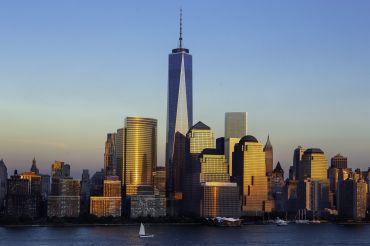
The rise of 1 World Trade Center is a visible reminder to every New Yorker that lower Manhattan is nearing the chief milestone in its renewal. The neighborhood that has emerged in the long aftermath of the attacks bears little resemblance to its antecedent.

Apart from their new, paramount significance in the national identity, the neighborhoods of lower Manhattan are now closer to dense urban enclaves than was ever envisaged when Radio Row gave way to what Lewis Mumford described in his book The Myth of the Machine as the “the purposeless giantism and technological exhibitionism that are now eviscerating the living tissue of every great city.” Read More